A Thanksgiving Cactus Has Pointed, Claw-Like Edges and Drops Its Buds if Moved Once They Form, N.C. Extension’s Brad Hardison Says
Many plants sold as Christmas cactus in November are really Thanksgiving cactus, and the difference shows in the edges of the stem segments. Brad Hardison, County Extension Director in Sampson County for N.C. Cooperative Extension, wrote in a November 2024 column that Thanksgiving cactus has pointed edges resembling small hooks or claws. He also advises that once buds form, the plant should not be relocated or rotated, because changes in light and temperature can cause bud drop.
Both points matter at this time of year, when the first buds are forming on plants sitting on windowsills and tables.
Reading the Edges of the Segments
Hardison describes three look-alikes. Thanksgiving cactus (Schlumbergera truncata) blooms in late November and has pointed segment edges. Christmas cactus blooms in December and has smooth edges with slight scalloping. Easter cactus (Hatiora gaertneri) blooms in spring, with oval segments, soft rounded edges and no sharp points. He notes that stores often mislabel them and that all three come from tropical forests, not deserts.
Other extension and garden sources agree. Purdue Extension’s Indiana Yard and Garden page says Thanksgiving cactus segments have two to four pointy teeth along the edges, while Christmas cactus segments are scalloped and bloom at the stem tips. University of Wisconsin-Madison Extension says S. truncata has pointed projections on its stem segments and blooms around Thanksgiving, while the Christmas type has rounder, scalloped edges and blooms closer to Christmas.
Madison Moulton of Epic Gardening adds two more clues in a November 2023 article. Thanksgiving cactus stems tend to grow upright, while Christmas cactus stems cascade, and the first blooms in late November while the second flowers in late December.
Why Buds Fall When the Pot Moves
Hardison puts the rule plainly: avoid moving or rotating the plant once buds form. Epic Gardening says bud drop comes from sudden changes in temperature or light, and less often humidity, and recommends keeping the plant where it is until flowering ends.
The University of Wisconsin guide calls bud drop flower bud abortion and says that moving a plant after buds form into a spot with very different light or temperature can cause buds to stop developing and fall. It adds that warm temperatures above 60 degrees Fahrenheit during the bud-setting period can also interfere with flowering.
The Old Farmer’s Almanac, in an Oct. 9, 2026 guide by Catherine Boeckmann, lists stress from changes in light or a sudden temperature shift as causes. It also says that letting the soil dry out too much while buds form can make them fall, so watering stays consistent through flowering. If buds drop one winter, the Almanac says, the plant should still bloom the following year.
Keeping Conditions Steady
For daily care, Hardison recommends bright, indirect light, since direct sun can scorch the leaves. Daytime temperatures run 60 to 70 degrees, slightly cooler at night, and away from drafts, vents and air conditioners. The top inch of soil should dry between waterings, and watering drops off a little after blooming.
Purdue says drafts and temperature extremes can make buds fall before opening, and that soil that gets too dry can do the same. It notes that cooler temperatures help blossoms last longer, and that fertilizer is not needed while the plant is blooming. Hardison likewise says to stop feeding in fall and winter.
The temperature advice varies by source. The Almanac says buds form best at 50 to 60 degrees with long nights, and Purdue says about 50 to 55 degrees can trigger blooming. Wisconsin Extension suggests nights of 55 to 60 degrees and days of 75 to 80. Epic Gardening gives about 70 degrees and humidity above 50 percent. The shared advice is to pick a spot with stable conditions and leave the pot there.
What Happens After the Flowers Fade
Hardison says to pinch off a few segments from each branch after flowering for a bushier plant with more flowers. The Almanac notes that all three holiday cacti share the same care routine, so the schedule works for whichever label is on the pot.
Gardeners curious about the December bloomer can read the site’s earlier piece on how a Christmas cactus needs 14 hours of unbroken darkness to set buds. Another seasonal bloomer, the poinsettia, has its own schedule in the site’s story on poinsettia darkness.
This article was produced with AI assistance and edited for accuracy against the sources linked above.
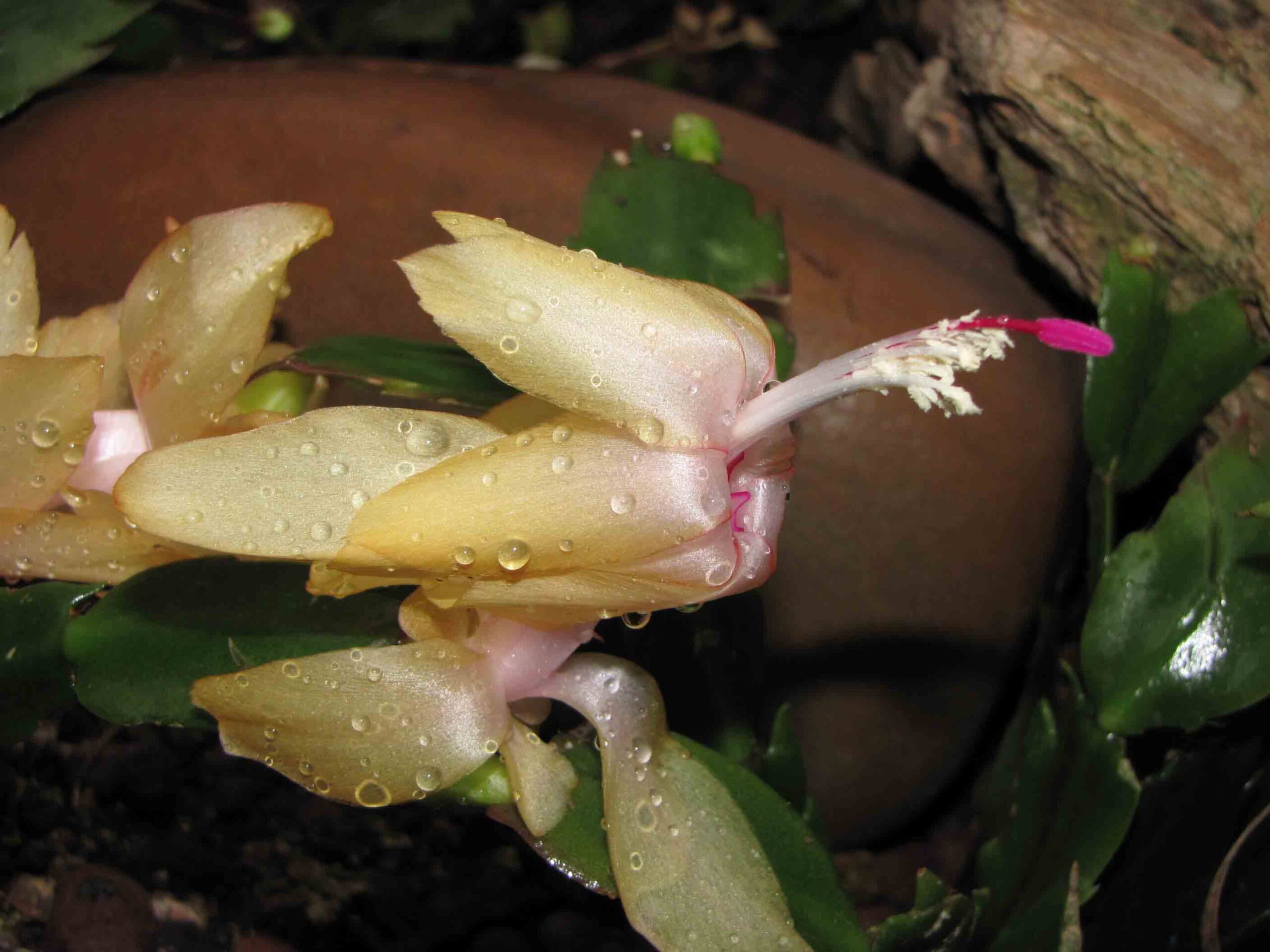
Image: “Schlumbergera truncata” by 阿橋 HQ, CC BY-SA 2.0, via Wikimedia Commons