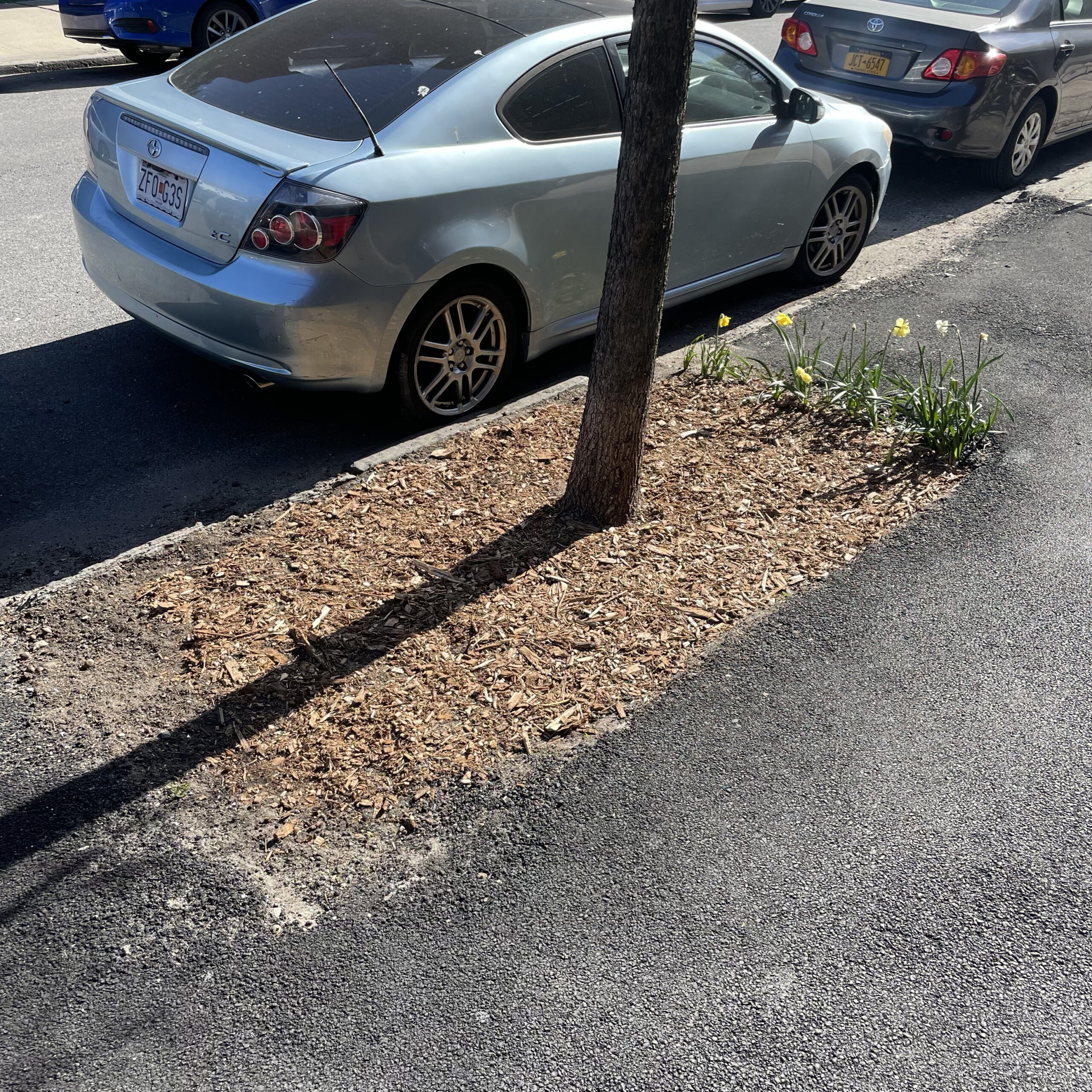
Mulch Piled Against a Tree Trunk Can Rot the Roots, and Illinois Extension Says to Keep It 4 Inches Back and No More Than 4 Inches Deep
The tall cone of wood chips around a tree trunk is one of the most common sights in American yards, and tree experts keep warning against it. University of Illinois Extension says mulch around trees should be 2 to 4 inches deep and kept at least 4 inches away from the trunk. Piled thicker and right up against the bark, it can hold enough moisture in the root zone to cause root rot.
Fall is when many homeowners top off beds after the leaves come down, which makes it a good time to check what is already around each tree.
What a Mulch Volcano Does
The damage happens in several ways. Illinois Extension’s proper mulching techniques sheet says thick mulch against the trunk can hold excess moisture in the root zone and cause root rot, and that “mulch against the tree can soften the bark, leading to insects, diseases, and root girdling.” Layers that are too thick can also mat down and block water and oxygen from reaching roots.
University of Minnesota Extension Master Gardeners in St. Louis County, writing in the Duluth News Tribune, add that excess mulch can kill the phloem, the inner bark layer that carries nutrients between roots and canopy, and that roots can grow around the trunk and eventually strangle the tree. The damage may not show right away, they write, but the practice shortens a tree’s life.
An Illinois Extension post on its A Merry Gardener blog spells out the end result: “Mulch applied in this fashion spells death for the tree.” Rot that reaches the cambium, the blog says, “cuts off the flow of water from the roots and kills the tree.”
The Rodent Problem
A deep mound of mulch is also shelter. Illinois’s fact sheet notes that excess mulch gives rodents places to hide and advises checking under the mulch for pests. The Merry Gardener post warns that mulch piled at the trunk can draw voles and mice, which may burrow nearby and chew the bark.
That risk climbs in winter, when voles and mice are looking for food and cover. A volcano left in place through December gives them both, right against the trunk.
How Deep, How Far and How Wide
The Illinois numbers are specific. Apply 2 to 4 inches of mulch on well-drained sites, with compost-based mulch at 2 to 3 inches and coarse mulch at 3 to 4. Keep it at least 4 inches from the trunk. Extend it toward the dripline or as far as practical, with a 3-foot radius as the maximum for most trees, a ring about 6 feet across.
Other experts set the depth the same way. The Minnesota master gardeners recommend about 2 to 4 inches, stressing that “thicker is not better,” and say “the root flare should be visible.” The Newton Tree Commission, citing the International Society of Arboriculture in a sheet shared by Maine’s agriculture department, says anything deeper than 4 inches is over-mulching. Mississippi State University Extension’s Susan Collins-Smith, in a guide to mulching, puts the gap from the trunk at a minimum of 2 to 3 inches and the ring at 3 to 6 feet out.
Illinois’s 4-inch clearance is the most cautious of the group, and the easiest to see at a glance: the soil at the base of the trunk should show.
Fixing a Volcano That’s Already There
The correction is mostly raking. Illinois says to pull mulch back from the trunk to expose the base if it has been piled against it. The Newton Tree Commission says to pull mulch away so the base of the trunk and the root crown show, then spread it out to the drip line or beyond.
Adding a fresh layer every year is how most volcanoes get built. Illinois advises waiting until old mulch has decomposed before adding more. The Newton sheet says that when the existing layer is already 2 to 4 inches deep, the better move is to rake it to loosen and break up mats rather than piling on new material.
What Mulch Does When It’s Done Right
A proper ring is one of the best things a yard tree can get. Collins-Smith lists the benefits: mulch holds moisture in the soil, suppresses weeds, moderates soil temperature and protects trunks from lawn equipment.
Those benefits come from a wide, shallow layer, not a tall one. For homeowners spreading shredded leaves or chips around trees this fall, the guide from Illinois is easy to remember: four inches deep at most, and four inches back from the bark. The site has also covered how shredded fall leaves can become free mulch for garden beds.
Get stories like this by email. Sign up for The Parent Diaries Letter.
This article was produced with AI assistance and edited for accuracy against the sources linked above.
Image: Wil540 art – CC BY-SA 4.0/Wikimedia Commons