Peonies Get Cut to the Ground Only After a Hard Freeze Kills the Leaves, Which Iowa State Says Usually Happens in Late October or Early November
Peony stems that have gone limp and brown after the first real freeze are ready to come down. Iowa State University Extension says the right time to cut back peonies is after a hard freeze has destroyed the foliage, and in Iowa that is generally late October or early November. The stems should be cut off near ground level.
Waiting for that freeze matters. Iowa State warns that cutting peonies back in August or early September may lead to fewer blooms the following spring.
Why the Leaves Should Stay Until Frost
Peony foliage spends late summer and early fall feeding the plant’s roots for next year. Iowa State’s answer on cutting back peony foliage is direct: wait until a hard freeze has destroyed the foliage, then cut the stems near ground level. Cutting back early in the season, while leaves are still working, can mean fewer blooms than fall cutting.
Cornell Cooperative Extension’s Thomas Kowalsick, in a Suffolk County guide to growing peonies, describes the same moment: once the tops have dried out late in the season, cut them down to ground level and collect all of the removed foliage.
Once a hard freeze has blackened the leaves, there is nothing left to gain from them. That is the point at which cutting back becomes a cleanup job rather than a loss.
The Disease That Waits in the Debris
Fall cleanup is also disease control. Botrytis blight, caused by the fungus Botrytis paeoniae, attacks peony stems, buds and leaves. Iowa State horticulturist Aaron Steil, in a guide to managing peony problems, says the fungus survives in plant debris over winter, so stalks should be cut at ground level in fall and the debris removed from the garden and destroyed. In spring, withered buds and spent flowers should come off too.
University of Minnesota Extension’s fact sheet Diseases of Peony, by F.L. Pfleger, J.L. Fetzer and W.J. White-McDougall, says good sanitation greatly reduces botrytis problems. Diseased plants should be cut back to the ground or just below it, and for leaf and stem spots, old top growth should be removed in fall with stems cut at ground level.
Leaf Blotch and Mildew Too
Botrytis isn’t the only fungus that overwinters on old peony leaves. Steil’s guide says that for powdery mildew and peony leaf blotch, diseased leaves should be removed in fall and discarded to prevent reinfection, adding that “diseased leaves should not be composted.”
The University of Washington’s Elisabeth C. Miller Library describes leaf blotch, also called measles or stem spot, as glossy purplish-brown spots on upper leaf surfaces with chestnut-brown spots underneath and reddish-brown streaks on stems. Summarizing Iowa State and the Royal Horticultural Society, the library notes that blight can kill a plant or keep it from sprouting the next spring. For a badly affected plant, the RHS advice it cites is to remove the plant along with surrounding soil, since the fungus can survive in soil for years.
Where the Cut Stems Should Go
Healthy peony foliage can go on the compost pile like other garden waste, and Cornell’s guide allows for either destroying or composting removed foliage. Stems and leaves from a plant that had botrytis, leaf blotch or mildew are different. The Minnesota fact sheet says flatly not to put infected debris in the compost pile, and the Miller Library says infected material should be burned where allowed or sealed in a bag for the trash.
The Minnesota authors add two cleanup habits. Pruners should be disinfected with a 10% bleach solution or 70% rubbing alcohol after cutting diseased material and before moving to healthy plants, and the work goes best on a dry, calm day.
Setting Up a Healthier Plant for Spring
A fall cut is one step. The Miller Library’s summary adds good air circulation, thinning crowded shoots, avoiding wet leaves when watering and going easy on nitrogen fertilizer. The Minnesota fact sheet suggests a light mulch of well-composted organic material worked into the top inch or two of soil in early fall.
Gardeners planting or dividing peonies this fall can also check depth. Kowalsick writes that the eyes on top of the root should face up and “should not be over two inches below the ground level,” and the site has covered why peony eyes buried too deep often won’t bloom. For established clumps, the job right now is simple: after the hard freeze, cut to the ground, bag anything that looked sick, and let the plant rest until its red shoots return in spring.
Get stories like this by email. Sign up for The Parent Diaries Letter.
This article was produced with AI assistance and edited for accuracy against the sources linked above.
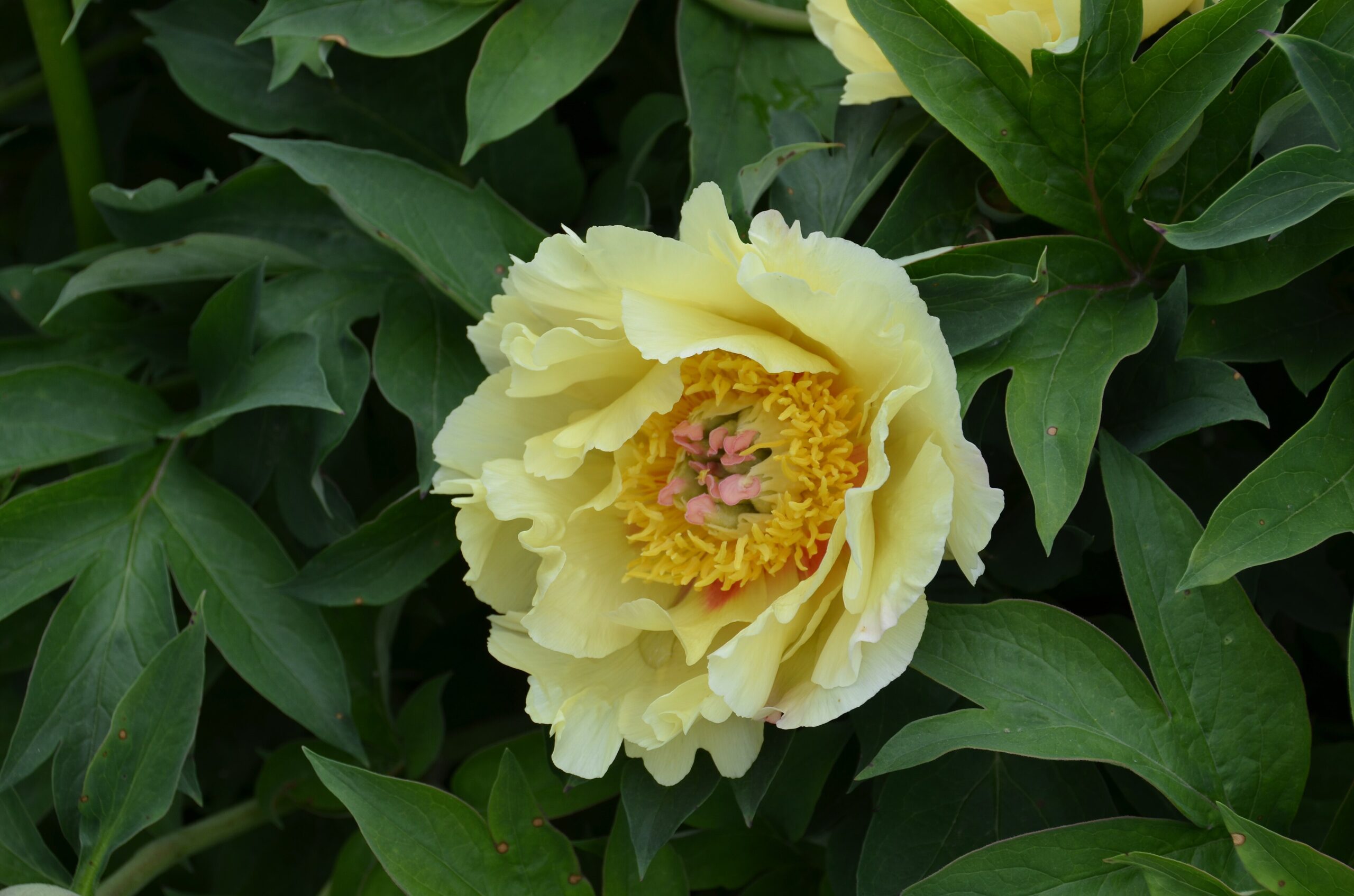
Image: F. D. Richards from Clinton, MI – CC BY-SA 2.0/Wikimedia Commons