A Gardener Turned a College Charity’s Rock-Filled Rental Lawn Into a Beautiful Food Garden With Herbs, Strawberries, and Tomatoes, Then the Tenants’ Lease Wasn’t Renewed Before They Could Enjoy the Harvest
A person shared his story about helping a group of college students transform an ordinary rental lawn into something far more useful and beautiful. The students were involved in a local charity that distributed food, organized community events, and helped people in their area. Despite all the good work happening around the property, they were less than thrilled with the patch of grass outside their rental home.
The lawn was not exactly the sort of green paradise most landlords dream about, either. The students disliked maintaining it, and the ground beneath it presented problems that made traditional mowing a frustrating chore. Fortunately, they had an idea that could turn the entire space into something productive, and they knew someone who might help them make it happen.
A Foraging Class Started an Unexpected Gardening Project
The students met the gardener while attending a foraging class he was teaching, which turned an ordinary lesson into the beginning of an ambitious landscaping project. During their conversation, they explained that they would much rather have a garden than struggle with a lawn they did not enjoy. The gardener saw an opportunity to help them create something attractive while making better use of the available space.
The students also believed their landlord would be comfortable with the change, so the conversation quickly moved from wishful thinking to practical planning. The gardener spoke with the landlord as well, ensuring that the proposed transformation was not simply a tenant’s unauthorized landscaping experiment. With that understanding in place, the team could begin replacing the troublesome lawn with a garden full of life, food, and personality.
The Lawn Had a Hidden Problem Beneath the Surface
At first glance, the property might have looked like a typical yard that needed a little digging, compost, and a few carefully chosen plants. However, the gardener soon discovered that the ground was far more complicated than a simple patch of grass. Beneath a thin layer of soil lay gravel, rocks, and plastic landscaping fabric that made the area difficult to work with.
The hidden mess also explained why the students had disliked mowing the lawn in the first place. Rather than enjoying the satisfying routine of trimming grass, they had to worry about their mower kicking up rocks from the uneven surface. What seemed like a straightforward gardening project was turning into a small excavation job, with plenty of unwanted material to deal with before anything productive could grow.
Removing the Plastic Fabric Became a Project of Its Own
One of the biggest challenges was dealing with the landscaping fabric buried beneath the surface. According to the gardener, sections of it could be found roughly a foot down, while other portions were buried as deep as three feet. Pulling it out meant uncovering more of the property’s messy history than anyone could have anticipated when the project first began.
Once the fabric was removed, the team still had to figure out what to do with all the displaced dirt and rocks. There was no magical truck arriving to carry everything away, and the materials could not simply disappear because the new garden design looked better without them. The gardener instead worked with what was already available, turning the unwanted soil into raised growing areas and finding a place for the mountains of rocks.
The Gardener Used Logs and Compost to Create an Herb Spiral
Rather than treating the yard’s problems as a reason to abandon the project, the gardener got creative with the materials at hand. He brought in logs and compost to build an herb spiral, a raised structure that creates different growing conditions within a relatively small space. The unusual shape added visual interest while giving the garden a distinctive centerpiece that was more exciting than a rectangle of ordinary lawn.
The compost also helped introduce more suitable growing material into an area that had been difficult to cultivate. Herbs could now become part of a landscape designed around food production instead of constant mowing. What had once been a troublesome rental lawn was beginning to resemble a miniature edible garden, complete with its own curves, textures, and natural building materials.
Invasive Honeysuckle and Mulberry Found a Second Purpose
The transformation did not stop with the soil and the herb spiral. The gardener also cut back invasive honeysuckle and mulberry growing around the property, clearing space and gathering branches that could be put to practical use. Instead of treating every discarded branch as waste, he used the material to weave additional garden beds.
Those beds were then filled with compost and prepared for planting, giving the reclaimed branches a new purpose. It was an appealing example of creative reuse, especially because the property already contained so many materials that needed to be moved or managed. The garden was not built by purchasing an endless collection of decorative supplies but by combining ingenuity, hard work, and resources that were available.
The New Garden Looked Nothing Like the Old Lawn
As the work progressed, the yard developed into a patchwork of growing areas with distinct shapes and textures. The herb spiral created a focal point, while the woven beds provided spaces for an assortment of plants. Instead of one uniform strip of grass, the property became a more complex landscape designed for growing things rather than simply keeping them short.
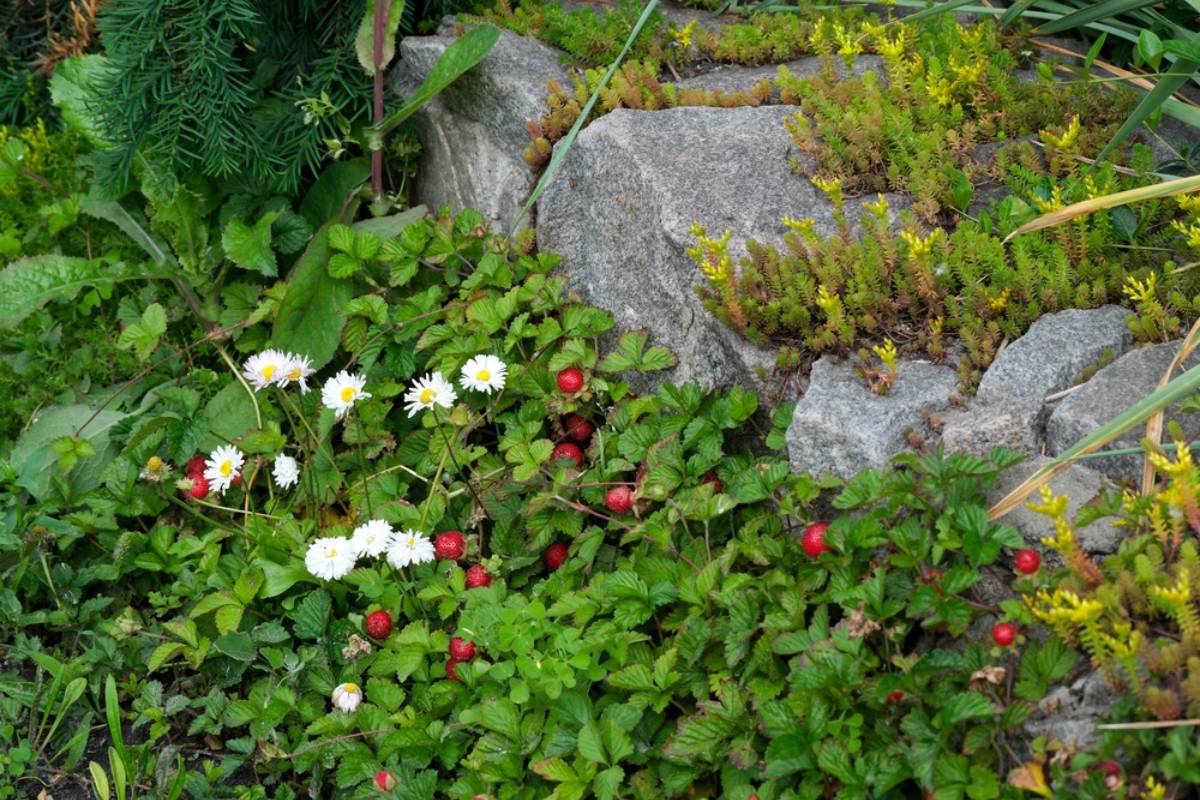
The rocks remained a major part of the scene, creating a dramatic contrast with the compost-filled planting beds. Some people might have assumed that a beautiful garden required every stone to be removed, every surface leveled, and every inch covered with fresh soil. This project showed a different approach, using the garden beds to accommodate the soil while keeping the existing rock material in the places where it had to go.
The Rock Piles Became the Most Unexpected Feature
A response from a person admired the design of the new garden but raised concerns about the amount of rock left throughout the property. The person pointed out that rocks can make gardening more difficult in some circumstances because weeds may grow through them, the ground can heat up, and managing the soil beneath a thick layer of stone can be challenging. It was a reasonable question for anyone looking at the finished landscape and wondering how easy it would be to maintain.
The gardener explained that the stones were not decorative gravel he had deliberately purchased for the project. They were already part of the ground beneath the old lawn, and removing them would have created an enormous disposal problem. He had to work with the conditions he inherited, which meant the rock-filled areas were not a design choice so much as the practical result of transforming a difficult site.
Someone Asked How the Garden Could Grow Among So Many Rocks
Another response from a person joked about how the rocks had apparently grown in such unusual patterns. The playful question highlighted just how striking the contrast between the stone-covered ground and the planted beds looked in the finished space. From a distance, it could almost seem as though someone had deliberately arranged the rocks to create an elaborate landscape feature.
The explanation was much less mysterious and considerably more labor-intensive. The original lawn had been built over gravel and stones, with plastic fabric separating those materials from the thin covering of dirt above. Once the gardener started removing the artificial barrier and redistributing the soil, the rocks became impossible to ignore, turning an ordinary landscaping job into a project that required both physical effort and creative problem-solving.
The Debate Over Rock and Soil Health Added Another Twist
The garden’s appearance also sparked a wider discussion about whether leaving so many rocks in place was good for the plants. One person worried that the stones could make weed removal harder and create hotter conditions that might harm soil organisms. These concerns can matter in gardens where a thick layer of rock mulch is deliberately placed over growing soil, particularly when the material creates unwanted conditions for the plants underneath.
However, the gardener argued that the situation on this property was different. The rock-covered sections were not a thin layer of stone placed over healthy garden soil; they were areas that had contained large amounts of gravel and rock beneath the former lawn. There was little point in pretending the site was an ordinary planting bed when the underlying conditions made that impossible, so the gardener concentrated on creating suitable growing spaces wherever the materials allowed.
The Students Finally Had a Garden Instead of a Mowing Headache
The project gave the students a yard that better reflected their interests and their community-minded outlook. Herbs, vegetables, and other plants replaced much of the conventional lawn, creating a space that could produce food as well as provide visual appeal. For people already involved in charitable activities and food distribution, an edible garden was a particularly fitting addition to their everyday surroundings.
The gardener also managed to turn materials that initially seemed like obstacles into useful parts of the landscape. Logs became building materials, discarded branches became woven borders, and compost provided growing space where the existing ground was unsuitable. The results showed what can happen when someone approaches an imperfect yard with patience instead of assuming that everything must be removed and replaced.
Then the Tenants’ Lease Wasn’t Renewed
Just as the garden was beginning to settle into its new identity, an unwelcome development changed the story. The students’ lease was not renewed, meaning they would not continue living at the property long enough to enjoy the garden as they had planned. The person who had helped create the space had managed to transform the lawn, but the people who inspired the project were suddenly facing the prospect of leaving it behind.
The timing made the outcome especially frustrating because gardening rarely rewards people immediately. Fruit bushes, vegetables, and herbs need time to establish themselves, and even fast-growing plants require regular care before they begin producing meaningful harvests. The students had helped create something with long-term potential, only to lose the opportunity to experience much of that potential themselves.
All That Work Produced Just One Strawberry and Two Tomatoes
The gardener’s account included a particularly memorable detail about the harvest: he had managed to get approximately one strawberry and two tomatoes before the tenants’ lease ended. After all the digging, composting, bed-building, and planting, those few pieces of fruit and vegetables were what he remembered actually harvesting from the project. It was a wonderfully awkward result for a garden that had demanded so much effort.
Of course, a handful of tomatoes and a single strawberry do not necessarily mean the garden failed. Newly established planting areas often need time to mature, and the value of a garden cannot be measured only by what it produces during its first growing season. Still, the contrast between the scale of the work and the size of the harvest gave the story its bittersweet punchline: the garden had barely begun to pay its creators back when circumstances changed.
A Beautiful Garden Became a Lesson in Gardening on Borrowed Ground
The experience highlights a familiar challenge for renters who want to make meaningful improvements to the places where they live. A landlord’s permission can make it possible to transform a yard, but permission alone cannot guarantee that tenants will remain there long enough to enjoy the results. Unlike a portable collection of pots, an elaborate garden built into the landscape can be difficult to take along when a lease ends.
For renters considering a similar project, it can be worth discussing the expected length of the tenancy, future maintenance responsibilities, and what happens to permanent improvements if the lease ends. Raised beds, containers, and modular planters may provide more flexibility when a long-term commitment to the property is uncertain. Even when a landlord supports a garden, the people doing the planting can benefit from making a plan for the possibility that they will have to leave.
The Garden’s Biggest Success Was the Transformation Itself
Although the students did not get to enjoy a large harvest, their former lawn had become something far more interesting than the rocky patch they started with. The project demonstrated how compost, logs, branches, and existing materials could be combined to create a useful garden on difficult ground. It also showed that a successful transformation does not always require a perfectly prepared site or an unlimited budget.
The story ended on a bittersweet note, with the garden’s creators leaving before they could enjoy much of its produce. Still, their work changed the space from a mowing problem into a landscape filled with growing potential, and the ingenuity behind the design remained the most impressive part of the tale. Sometimes a garden’s most memorable harvest is not a basket of vegetables at all, but the reminder that even a rocky, frustrating lawn can become something beautiful when someone is willing to dig a little deeper.