A Man Spent Twenty Years Building a Garden Around a Tree His Father Planted the Day He Was Born, Then a Survey Showed the Tree Was Never on His Property
When Daniel Mercer first learned that the tree in his backyard did not belong to him, he was standing beneath its branches with a garden hose in his hand. The tree had been there his entire life, planted by his father on the day Daniel was born.
For twenty years, Daniel had built flower beds, stone paths, benches, and a small vegetable garden around it. Then a property survey forced him to confront a possibility he had never considered: the tree, and a narrow piece of land beneath it, belonged to someone else.
The Tree His Father Planted
Daniel was born in a small Pennsylvania town where houses sat close enough together that neighbors often knew one another’s routines. His father, Robert, had always loved gardening, and when Daniel was born, he decided the family needed something that would grow alongside his son.
He planted a young maple near the back fence.
Robert later told Daniel that he had chosen the spot because it received good sunlight and was far enough from the house to let the roots spread. Every spring, he would take Daniel outside and show him how much the tree had grown.
By the time Daniel was old enough to remember those conversations, the maple had already become enormous. Its trunk was thick, its branches stretched over the lawn, and its leaves turned bright red every fall.
A Backyard Becomes a Lifelong Project
Robert died when Daniel was sixteen, but Daniel continued taking care of the property. Gardening became the one thing that made him feel close to his father.
After graduating from college, Daniel moved back into the house and began transforming the backyard. He installed a stone walkway that curved around the maple instead of cutting through its roots.
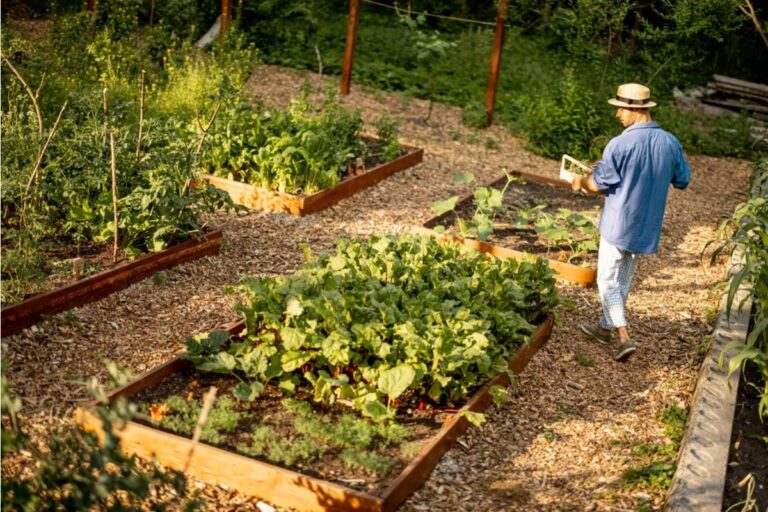
Then came raised beds for tomatoes, peppers, and herbs.
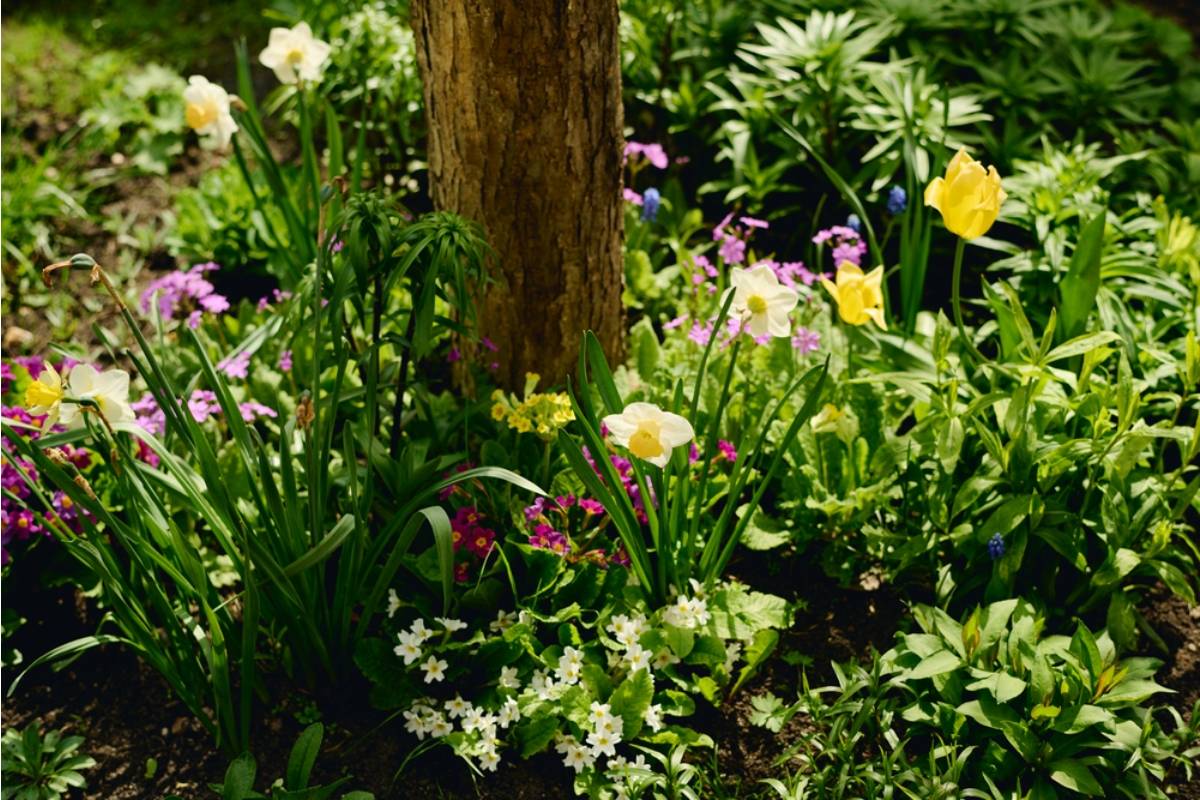
He built a wooden bench beneath the tree and placed an old metal watering can beside it. The garden eventually became so carefully arranged that visitors assumed Daniel had hired a professional landscaper.
“No professional would understand this tree,” Daniel would say whenever someone complimented the yard.
To him, the maple was not landscaping. It was family history.
The Neighbor Who Wanted to Sell
The problem began when Daniel’s longtime neighbor, Harold Bennett, decided to sell his house.
Harold had lived next door for almost thirty years. He and Daniel occasionally spoke over the fence, borrowed tools, and complained about squirrels eating their vegetables.
One afternoon, Harold mentioned that a buyer was interested in his property.
“Surveyor is coming next week,” Harold said.
Daniel barely looked up from the garden bed he was repairing.
“Good luck with the sale,” he replied.
Neither man thought much more about the conversation.
Daniel assumed the survey would confirm what everyone had believed for decades. The fence separated the two properties, and the maple stood several feet inside what Daniel understood to be his backyard.
There was no reason to question it.
The Surveyor Stops at the Tree
A few days later, Daniel noticed a surveyor walking around Harold’s property with measuring equipment.
At first, Daniel ignored him.
Then he noticed the man repeatedly checking a stake near the maple.
Daniel walked over.
“Everything okay?” he asked.
The surveyor looked at his paperwork before answering.
“I’m trying to confirm the rear boundary.”
Daniel pointed toward the fence.
“That’s the line.”
The surveyor hesitated.
“Actually, I don’t think it is.”
Daniel laughed because he assumed the man was joking.
Then the surveyor showed him the preliminary measurements.
The legal boundary appeared to run through Daniel’s garden and directly across the base of the maple.
Daniel stared at the paper.
“That can’t be right.”
The surveyor simply replied, “That’s why we’re recommending a full boundary survey.”
The Old Fence Suddenly Meant Something Different
Daniel spent that evening walking around his backyard.
For the first time, he looked at the fence differently.
It had been there longer than he could remember. He had always assumed it marked the property line, but nobody in the family had ever checked.
He called his mother.
“Mom, do you remember Dad putting up the back fence?”
There was a pause.
“Of course,” she said.
“Do you remember exactly where the property line was?”
Another pause followed.
“Your father never talked about property lines. He just built things.”
That answer bothered Daniel more than he expected.
He went outside and stood beneath the maple.
For twenty years, he had never questioned where the tree stood.
Now he could not stop looking at it.
The Deed Brings an Uncomfortable Discovery
The next morning, Daniel pulled the original property documents from a box in the basement.
He found an old deed, a mortgage document, and several handwritten notes from his father.
The deed described the property using measurements and boundary references rather than the simple fence line Daniel had grown up trusting.
He called a local survey company and arranged for a complete survey.
When the surveyor returned, Daniel stood beside him while the measurements were taken.
This time, there was no uncertainty.
The legal boundary crossed approximately six feet inside Daniel’s backyard.
The maple was not on his property.
Neither was a portion of the stone path.
Neither was part of the flower bed.
Daniel felt sick.
Harold Knocks on the Door
That evening, Harold knocked on Daniel’s front door.
He looked uncomfortable.
“I heard about the survey,” Harold said.
Daniel stepped aside and let him in.
Harold explained that the buyer’s attorney had discovered the same boundary issue during the sale process. The buyer wanted everything clearly documented before closing.
“So the tree is technically mine?” Daniel asked.
Harold nodded reluctantly.
“Looks that way.”
Daniel stared at him.
“Your family never said anything.”
Harold shook his head.
“My father thought the fence was the line too.”
That revelation changed the situation.
For decades, both families had believed the same thing.
Neither had been trying to take land from the other.
The mistake had simply survived because nobody had bothered to verify it.
The Garden Becomes the Center of the Dispute
The problem was that Daniel’s garden was now sitting partly on Harold’s property.
The stone path crossed the boundary.
One of the raised vegetable beds crossed it too.
Most importantly, the maple stood almost entirely on Harold’s side.
Harold said he did not want the tree removed.
Daniel was relieved until Harold explained that the buyer might have concerns.
“The buyer doesn’t want a dispute with the neighbor,” Harold said.
Daniel folded his arms.
“There has never been a dispute.”
“I know.”
“Then why does it feel like there is one now?”
Harold had no answer.
The Buyer Makes an Unexpected Request
A week later, Harold returned with the prospective buyer, a woman named Melissa Carter.
Daniel expected her to demand that the garden be removed.
Instead, she asked to see the tree.
They walked into the backyard together.
Melissa stood beneath the maple and looked up through the branches.
“This is beautiful,” she said.
Daniel explained that his father had planted it when he was born.
She looked at him for several seconds.
“I don’t want to cut it down.”
Daniel visibly relaxed.
Then she explained her concern.
“I just need to know what happens if I buy the property.”
The question was reasonable, but Daniel realized that reason was not going to make the situation emotionally easier.
The tree was becoming part of a real estate transaction.
A Lawyer Finds an Old Clue
Daniel decided to speak with a property attorney.
The attorney examined the deed, survey, and historical documents.
Then he asked Daniel an unexpected question.
“Has that fence always been in the same place?”
“As far as I know.”
The attorney leaned back.
“Then there may be another issue.”
He explained that long-standing use of land can sometimes become legally significant depending on state law and the specific circumstances. The fact that Daniel’s family had openly maintained the disputed section for decades could matter.
But there was no guarantee.
Daniel left the office more confused than when he arrived.
For the first time, he realized that twenty years of gardening did not automatically make the land his.
Daniel Finds His Father’s Notebook
While searching through his father’s belongings again, Daniel found an old gardening notebook.
It contained planting dates, fertilizer notes, sketches of flower beds, and measurements for the backyard.
Near the back was a rough drawing of the property.
Daniel stared at it.
His father had drawn the fence line and marked the maple with a small circle.
Beside it were the words, “Daniel’s tree.”
There was nothing legal about the note.
It could not change a deed.
But it showed that Robert had genuinely believed the tree belonged to his family.
Daniel sat at the kitchen table holding the notebook and suddenly understood how the mistake had happened.
His father had never knowingly planted the tree on someone else’s land.
He simply believed the fence marked the boundary.
Harold Changes His Mind
The situation took another turn when Harold called Daniel one Saturday morning.
“The buyer backed out,” he said.
Daniel immediately assumed the property dispute had caused it.
Instead, Harold said the buyer had discovered other complications with the house and decided not to proceed.
“So what happens now?” Daniel asked.
“I’m not sure.”
There was silence.
Then Harold said something Daniel did not expect.
“If I sell later, I want the tree issue settled first.”
Daniel appreciated the honesty.
They met in the backyard that afternoon.
For the first time, they discussed the land without treating it as an argument.
Daniel offered to pay for the narrow strip containing the tree.
Harold considered it.
“I don’t really need that piece,” he said.
The Tree Nearly Gets Cut Down Anyway
Before they could reach an agreement, another complication appeared.
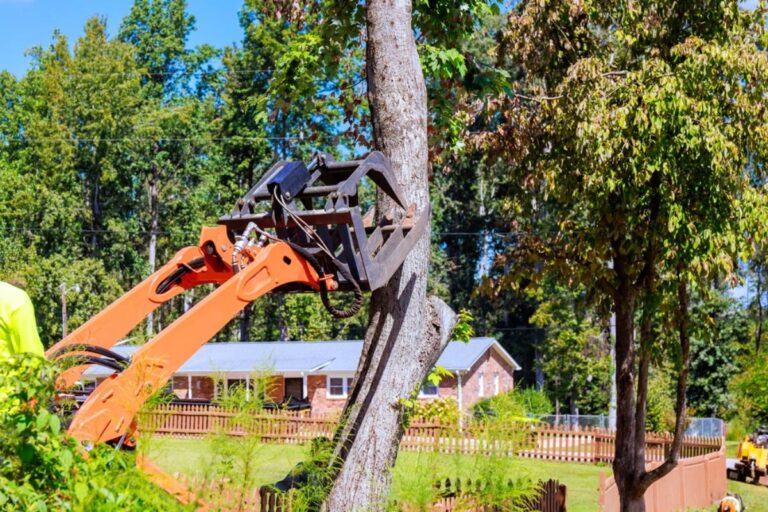
A tree service inspecting the maple discovered that one of its major limbs was dangerously weakened.
The limb stretched toward both houses.
The arborist recommended removing it immediately.
Daniel felt as though someone had punched him.
“Can it be saved?” he asked.
“Most of it,” the arborist said. “But that limb has to come down.”
Daniel agreed.
He stood beneath the tree while the crew worked.
When the damaged branch finally crashed onto the lawn, Daniel instinctively looked toward the spot where his father had planted the maple decades earlier.
For the first time, the tree looked smaller.
But it was still standing.
The Families Finally Redraw the Boundary
Harold and Daniel eventually reached an agreement.
Harold would retain the narrow strip containing the maple, but he would grant Daniel permanent rights to maintain the garden around it.
They also agreed to move the old fence to the actual property line.
The new boundary looked strange at first.
Daniel’s garden became slightly smaller, while Harold’s backyard gained an oddly shaped section around the tree.
Neither man wanted to pretend the mistake had never happened.
They wanted it documented properly.
The new agreement was recorded with the property documents, and both families signed it.
The maple finally had a legal home.
It just was not the home Daniel had always assumed.
Daniel Plants Another Tree
Several months later, Daniel planted a second maple.
This one went well inside his property.
He measured the location himself.
Then he checked the survey.
Then he checked it again.
Harold watched from the other side of the new fence and laughed.
“Paranoid?” he called.
“Experienced,” Daniel replied.
They both laughed.
The old maple continued standing between the two properties, its branches extending across the fence as if the boundary meant nothing to it.
Daniel still maintained the garden beneath it.
Harold still owned the ground where its roots grew.
The arrangement was unusual, but it worked.
What Daniel Finally Understood
Daniel had spent twenty years believing the garden belonged entirely to his family.
In reality, part of it had always belonged to someone else.
Yet the discovery did not erase what the garden meant to him.
His father had planted that maple with the belief that one day his son would grow up beneath it. He had been right about that part, even though he had been wrong about the property line.
Years later, Daniel still sits on the old bench beneath the maple.
Sometimes Harold joins him.
They talk about the garden, the houses, and the strange mistake that neither family discovered for decades.
Daniel no longer calls the tree “his.”
He calls it “Dad’s tree.”
That feels more accurate.
And every fall, when the maple turns red and drops its leaves across both properties, neither neighbor bothers to decide whose side they belong on.