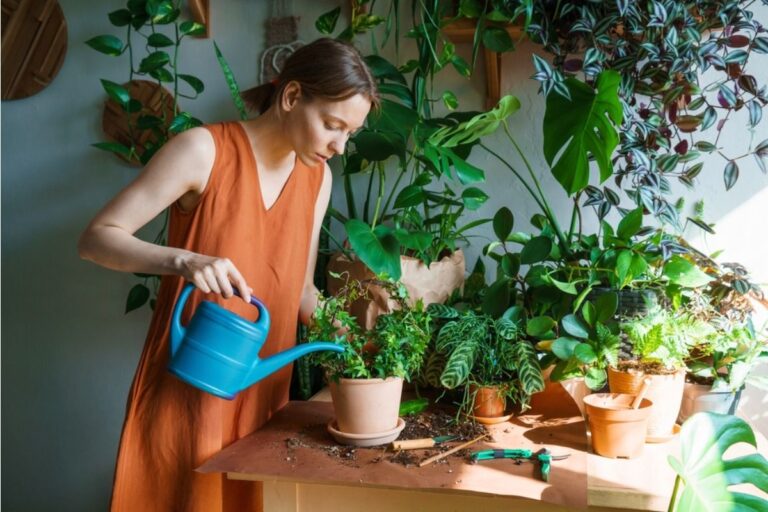

A Plant Lover Filled Her Home With Thriving Houseplants in Beautiful Decorative Pots, Then Realized Her Friends Would Not Take Any More, and Selling Them Online Became a Bigger Headache Than Growing Them
A person shared his story about reaching a point where his beloved houseplant collection had simply become too much to manage. The plants were healthy, thriving, and full of life, but there were more of them than he could comfortably keep. What once brought joy to his home had slowly turned into a leafy situation that required a little intervention.
The collection included familiar favorites such as snake plants, pileas, and dracaenas. These were not struggling plants waiting for someone to rescue them, either, but sturdy specimens that had clearly received plenty of care. The real challenge was figuring out how to find them new homes without turning the entire process into another exhausting hobby.
Friends Had Already Received Their Share of Green Gifts
Before considering selling anything, the plant owner had already tried giving plants away to friends. Unfortunately, that generous approach eventually reached its limit, as the people in his personal circle apparently did not want to add any more greenery to their homes. Even the most enthusiastic plant parent can run out of friends willing to adopt another leafy roommate.
That left the owner with a collection that continued growing while the list of potential recipients stayed stubbornly short. It was an awkward position because the plants were perfectly healthy and deserved to be appreciated. Rather than throwing them away or allowing them to crowd every available surface, he decided it was time to explore other options.
The Plants Were Ordinary, but Their Pots Were Anything but Ordinary
There was another detail that made the situation more complicated than a typical plant giveaway. Many of the plants were sitting in decorative or relatively expensive planters that the owner had purchased specifically for his permanent collection. The foliage ranged from roughly six to eighteen inches, making the plants substantial enough to look attractive without necessarily qualifying as rare collector’s items.
Those pots represented a meaningful part of the collection’s value, and the owner did not want to give them away for next to nothing. Transferring every plant into inexpensive nursery containers would mean spending extra time and potentially damaging roots in the process. The question became whether buyers would appreciate the complete package or simply see another common houseplant.
Selling Common Houseplants Turned Out to Be Surprisingly Difficult
The owner had noticed that the online plant market often seemed more excited about exotic varieties than familiar household favorites. Rare philodendrons and unusual anthuriums could attract attention, while ordinary snake plants and dracaenas sometimes struggled to generate the same excitement. That created a frustrating problem for someone whose plants were healthy and attractive but not particularly unusual.
There was no shortage of greenery to offer, yet finding interested buyers was another matter entirely. A beautiful plant can still be difficult to sell when potential customers believe they can purchase something similar from a local nursery. The owner needed a selling strategy that recognized the plants’ condition and their decorative containers without pricing them beyond what people were willing to pay.
Facebook Marketplace Was Not the Easy Solution He Expected
Facebook Marketplace seemed like an obvious place to begin because it allowed local buyers and sellers to connect. However, a response from a person described a familiar frustration with the platform: interested buyers would send messages, disappear, or fail to show up when arrangements had been made. What should have been a straightforward exchange could become a waste of time.
The original plant owner also explained that constantly answering messages that went nowhere was exhausting. It was especially irritating because each conversation created the expectation that another plant might finally find a home. Instead of spending time caring for greenery, the seller risked spending more time managing flaky potential customers.
Some Buyers Wanted Plants, but Only at Bargain Prices
One response from a person suggested that pricing the plants low could make them much easier to sell. This approach had worked for people who regularly purchased houseplants through local online listings, where affordable greenery could attract buyers quickly. For sellers trying to clear space, a fast sale might be more valuable than squeezing every possible dollar out of each pot.
However, the suggestion came with a difficult trade-off. The owner had invested money in both the plants and their attractive containers, so selling everything cheaply could feel like accepting a substantial loss. A plant might be easy to replace, but a decorative planter that perfectly suited someone’s home could be much harder to part with at a discount.
The Decorative Pots Created a Second Problem
The planters were not merely temporary containers picked up during a gardening trip. They had been selected to complement the plants and were part of the reason the collection looked the way it did. Selling each plant with its pot meant asking buyers to pay for something they might not particularly want.
A response from a person suggested treating the planter as a separate part of the price rather than expecting every buyer to value it equally. Someone searching for a basic snake plant might prefer a cheaper option in a simple plastic container, while another buyer could be interested in the decorative pot itself. Separating those values could make the listings more appealing without forcing the seller to give away everything together.
Local Plant Groups Offered a More Promising Route
Although general marketplaces could be frustrating, dedicated local houseplant groups offered another possibility. People who joined these groups were already interested in greenery, making them a more targeted audience than random shoppers browsing unrelated listings. Even common plants might attract attention when presented to people who genuinely enjoyed collecting and caring for them.
A response from a person explained that local houseplant groups had been more successful for finding homes for unwanted plants. Free listings, in particular, could attract plenty of people willing to collect them. For someone eager to reduce a collection, reaching an audience that understood the appeal of healthy plants could be far more useful than repeatedly messaging uninterested strangers.
A Yard Sale Could Bring the Garden Directly to Buyers
Another suggestion was to organize a yard sale, where people could inspect the plants in person before deciding whether to buy them. One response from a person described a neighbor who regularly sold plants at yard sales, with prices ranging from inexpensive little specimens to much more valuable offerings. The idea offered a way to turn an overflowing collection into a small neighborhood shopping opportunity.
Unlike online listings, a yard sale would allow buyers to see the foliage, examine the pots, and judge the plants’ size without relying on photographs. It could also eliminate the endless cycle of answering messages and arranging separate pickups. For the owner, the possibility of selling several plants in one afternoon sounded much more appealing than managing dozens of individual conversations.
Neighbors Could Turn a Plant Sale Into a Community Event
A response from a person took the yard sale idea a step further by suggesting that neighbors could organize a shared event. Instead of one homeowner trying to attract enough customers alone, several households could combine their unwanted items and plants into a larger sale. More variety might encourage visitors to stop by, especially if they were already interested in gardening.
The idea also offered a chance to meet other plant enthusiasts who might otherwise remain strangers. Someone selling a dracaena could discover that a neighbor was searching for exactly that kind of greenery, while another visitor might be drawn in by the decorative planters. What began as a problem with an overcrowded collection could potentially become a pleasant neighborhood gathering.
Plant Swaps Sounded Fun, but There Was One Catch
Plant swaps were another appealing suggestion because they allowed enthusiasts to exchange greenery rather than simply sell it. These gatherings could help plants find new homes while giving people an opportunity to connect with others who shared their interests. For someone tired of watching plants accumulate at home, however, the idea came with an obvious danger.
The owner admitted that plant swaps could be tempting because it was easy to exchange one plant and return home with two. Other enthusiasts understood that struggle, describing how their collections had become increasingly jungle-like even as they tried to reduce them. Trading plants might solve one problem while quietly creating another, especially for anyone whose greatest weakness was bringing home just one more leafy treasure.
Some People Suggested Trading Plants for Gardening Supplies
One particularly playful suggestion involved exchanging plants for supplies rather than money. A response from a person imagined trading a desirable philodendron for materials such as coco husks or other growing media. The idea made sense for gardeners who needed supplies but also had healthy plants they were willing to part with.
Such exchanges could benefit both sides without requiring anyone to negotiate a cash price. The seller could reduce the collection while acquiring useful materials for the plants that remained. It was an imaginative solution, although finding someone whose needs matched the available plants would still require a little coordination.
Libraries and Community Organizations Could Offer Another Option
Not every plant needed to be sold, especially if finding buyers became more trouble than the plants were worth. A response from a person suggested checking whether local libraries accepted plant donations or organized plant swap events. Other people mentioned community centers, nursing homes, and similar organizations as places worth contacting.
Healthy houseplants could bring a little life to shared indoor spaces, provided the receiving organization wanted them and could care for them properly. The owner would need to ask first rather than simply dropping off a collection of pots. Still, this approach offered a way to find appreciative recipients without spending days negotiating prices and arranging pickups.
The Simplest Solution Might Be Selling Plants and Pots Separately
As the discussion continued, the practical advice became increasingly clear: not every buyer wanted the same thing. Some people were looking for inexpensive greenery, while others were more interested in attractive ceramic containers. Listing plants and planters separately could help the owner appeal to both groups instead of relying on one combined price.
Another response from a person recommended using inexpensive nursery pots for the plants and creating separate listings for the decorative containers. Clear photographs, measurements, and grouped listings could make the items easier to evaluate. Although repotting everything would require effort, this approach might help the owner recover more of the planters’ value without pricing ordinary houseplants out of the market.
The Real Lesson Was That Healthy Plants Deserve the Right Homes
The situation highlighted an amusing contradiction in the world of houseplants: growing plants successfully can be easier than finding someone willing to take them off your hands. The owner had managed to create a thriving collection, yet the next stage required a different set of skills involving pricing, advertising, and finding interested buyers. Even a green thumb could not guarantee a smooth selling experience.
Ultimately, the suggestions ranged from local plant groups and yard sales to swaps, donations, and separate listings for decorative pots. There was no single perfect solution, but each option offered a different way to reduce the collection without wasting healthy greenery. And perhaps the biggest twist was that the plants were not the problem at all; the real challenge was finding people who appreciated them as much as their original owner did.