A Renter Was Told to Make His Weed-Filled North Florida Lawn HOA Perfect, Then He Discovered the Real Problem Wasn’t His Mowing
A person shared his story after receiving an HOA violation over the condition of the lawn at the North Florida rental home where he lived. The yard had St. Augustine grass, plenty of weeds, and what appeared to be an endless supply of fire ants hiding somewhere in the black sandy soil. The biggest problem was that the weeds seemed determined to grow faster than the actual grass, turning an ordinary mowing chore into a losing battle.
The renter wasn’t looking to transform the property into a golf course or spend thousands of dollars rebuilding someone else’s lawn. He simply wanted to make enough improvement to satisfy the HOA without tearing everything apart. Unfortunately, the photograph of the yard made the situation look considerably more complicated than simply needing a quick pass with a mower.
The Yard Had Been Trouble From the Start
The renter explained that much of the lawn had already been weeds when they moved into the property. That detail made the violation especially frustrating because the yard wasn’t exactly starting from a healthy, established lawn that had been neglected. They had inherited a problem and were now being asked to correct it while renting the property.
The soil wasn’t helping either, because it was described as essentially black sand. The St. Augustine grass also had a reputation for being prickly and difficult to manage, while weeds appeared to have found the property unusually welcoming. Even the fire ants seemed to have decided that the yard was their personal kingdom.
The HOA Wanted the Weeds Gone
The violation itself was straightforward enough: the HOA wanted the weeds removed from the lawn. Unfortunately, removing weeds from an established turf lawn isn’t always as simple as grabbing the strongest herbicide available and spraying everything green. The wrong product could damage the grass along with the weeds, potentially leaving an even bigger bare patch behind.
That left the renter stuck between two competing problems. Doing too little could lead to escalating HOA fines, while doing too much could damage the lawn and potentially create another complaint. Since the renter didn’t own the property, spending heavily on a complete lawn renovation didn’t make much sense either.
The Lease Changed Everything
At first, several responses from people suggested that the renter should simply send the HOA to the landlord. That advice sounded appealing because the lawn was ultimately part of someone else’s property, and many people felt that major improvements should be the owner’s responsibility. But then the renter revealed a crucial detail buried inside the lease.
The lease specifically required the tenant to maintain the property, including mowing regularly, edging, weeding the grass, pruning shrubs, watering landscaped areas, and removing debris. The landlord had also instructed the renter to apply a weed treatment and provide proof that it had been done. Suddenly, the situation wasn’t nearly as simple as telling the HOA to call somebody else.
The Fine Print Came Back to Life
The lease created a surprisingly large gray area between basic lawn maintenance and actually treating a failing lawn. Mowing, edging, and pulling weeds sounded like ordinary tenant responsibilities, but chemical treatments and restoring a badly established lawn felt like a different category altogether. That distinction became one of the biggest points of disagreement among the people responding to the story.
Some believed the renter should handle whatever the lease specifically required, while others argued that an owner shouldn’t expect a tenant to rehabilitate a lawn that was already in poor condition. One response from a person pointed out that the exact wording of the lease mattered enormously. In this case, however, the wording clearly included weeding, making the renter’s situation considerably less comfortable.
Then Came the Question of the Grass
The photograph created another mystery because several people weren’t convinced that every tall plant visible in the yard was simply a weed invading St. Augustine. Some suspected that parts of the lawn contained Bahia grass, particularly because of the tall seed heads appearing throughout the yard. That possibility mattered because Bahia can produce seed heads with astonishing speed during the warm Florida growing season.
One person explained that Bahia had once appeared in a former cow pasture and could behave more like pasture grass than traditional turf. Another response suggested that the lawn could still look good with the right mowing schedule, but it required more frequent attention. Suddenly, the renter’s weekly mowing schedule looked less like laziness and more like a battle against plants operating on a completely different timetable.
Weekly Mowing Wasn’t Winning
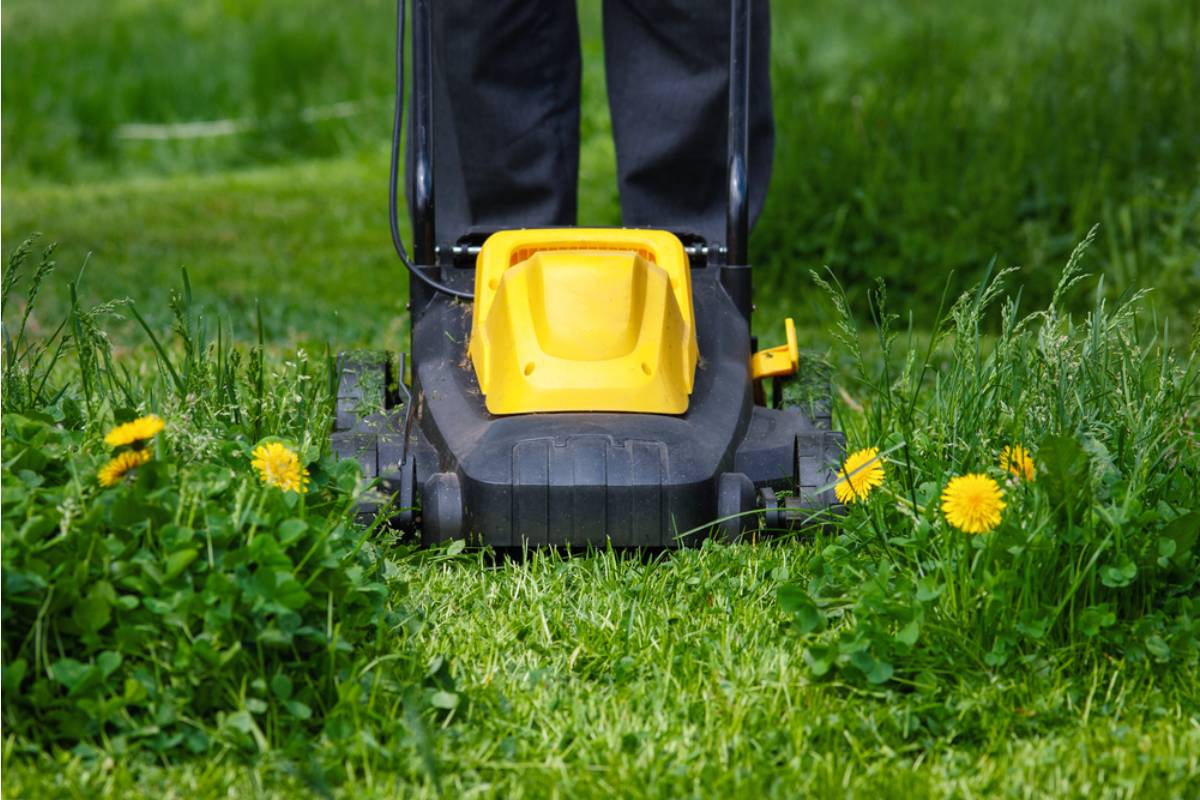
The renter later clarified that the lawn was already being mowed once every week. The problem was that the fast-growing plants could shoot upward between mowing sessions and quickly become more noticeable than the grass itself. By the time the mower returned, the weeds seemed to have gained another advantage.
That detail caused some people to question whether mowing frequency was part of the problem. If the suspected Bahia seed heads were appearing every few days, a weekly schedule might not be enough to keep the yard looking uniformly maintained. The renter wasn’t necessarily ignoring the lawn, but the lawn appeared to be playing by its own rules.
The Fire Ants Added Another Headache
Then there were the fire ants, which turned the yard from a cosmetic problem into something considerably less pleasant. The renter described having a huge fire ant issue throughout the lawn, adding another obstacle to the idea of simply spending hours working around the property. Even if the HOA only cared about weeds, the ants made the entire lawn less inviting to maintain.
The black sandy soil also contributed to the strange personality of the yard. North Florida lawns can face intense heat, rapid growth, sandy soil, and recurring weeds all at once, creating conditions where a struggling turf area can quickly become a patchwork of competing plants. The renter wasn’t dealing with one isolated weed problem but an entire ecosystem that seemed determined to defeat the HOA’s expectations.
People Started Arguing About Responsibility
As the story spread, the discussion shifted away from grass and toward the unusual relationship between landlords, renters, and HOAs. One response from a person argued that the renter shouldn’t spend money improving a property that wasn’t theirs. Another pointed out that a lease can specifically assign lawn maintenance duties to the tenant, including responsibility for certain HOA-related problems.
A particularly important response emphasized that the owner had rented out a poorly established lawn in the first place. From that perspective, expecting a renter to perform ordinary maintenance was one thing, while expecting the renter to restore the property’s landscaping was another. The distinction wasn’t academic, because the difference could mean hundreds or even thousands of dollars.
The HOA Fine Made It More Urgent
The HOA’s enforcement system made the situation harder to ignore. According to the renter, the first violation carried a $25 fine, while subsequent violations for the same issue could double and then triple. That meant the seemingly small lawn complaint could become much more expensive if the problem wasn’t corrected quickly.
The landlord therefore had an obvious reason to push the renter toward action. The renter also had an obvious reason to comply, since the lease specifically mentioned maintaining the lawn. What started as a few weeds had now become a three-way pressure point involving the HOA, the landlord, and the person actually standing in the yard with the mower.
The Suggested Solution Was Chemical Warfare
Several responses recommended using a selective herbicide appropriate for warm-season turf rather than simply attacking everything growing in the lawn. One person suggested a product commonly used for post-emergent weed control in warm-season grasses, followed by fertilizer once the weeds died back. The basic strategy was to remove the competition first and then encourage the remaining turf to fill the empty spaces.
Others also mentioned pre-emergent treatment as a way of reducing future weed pressure. The important catch was that the exact grass species needed to be confirmed before applying anything, because a product safe for one turf type could cause serious damage to another. One response specifically advised getting approval from the landlord before using a weed killer that might harm the unidentified grass.
Then the Renter Went Shopping
Rather than immediately committing to an expensive lawn renovation, the renter chose a cheaper approach. A trip to Tractor Supply produced an agricultural-grade weed killer intended for the flower beds, which contained lava rock rather than turf. The renter also purchased a large bag of weed-and-feed designed for the grass type they believed was growing in the yard.
The plan was simple: treat the problem, hope the grass responded, and provide the landlord with evidence that the requested work had been completed. It wasn’t a dramatic landscaping makeover, but it fit the renter’s original goal of spending as little as reasonably possible. For the moment, the renter was betting that a few bags and bottles could accomplish what the HOA apparently expected from the entire property.
The Real Twist Was Hiding in the Lawn
The most interesting part of the story wasn’t the weed killer or even the HOA violation. It was the possibility that the lawn itself might not have been what everyone assumed it was. If the tall plants were actually Bahia or another grass-like invader, simply treating the yard as a straightforward St. Augustine lawn could create an entirely different problem.
That possibility explained why several responses disagreed so strongly about the correct solution. Some people saw an untidy lawn that needed more mowing, while others saw a poorly established turf system that needed proper treatment. The renter had walked into the situation thinking the HOA wanted weeds removed, only to discover that identifying exactly what was growing might be the first challenge.
The Responses Became a Second Story
The reactions also revealed just how differently people viewed HOA life. Some people argued that HOAs provide useful structure and can protect neighborhoods from genuinely serious neglect, while others described them as organizations that can become obsessed with minor details. One response from a person even described a situation where an HOA complained because a homeowner’s grass was considered too green.
Another person shared a story about a neighborhood representative photographing properties constantly and reporting something as trivial as a car tire being removed during a brief repair. Those stories didn’t solve the North Florida lawn problem, but they gave the renter plenty of company in the frustration department. The lawn might have been the immediate battlefield, but the deeper argument was about how much control a neighborhood should have over somebody else’s yard.
The Landlord Was Still Part of the Equation
Despite all the debate, one practical point remained difficult to escape: the landlord had already instructed the renter to treat the lawn. That meant the renter couldn’t simply pretend the HOA notice didn’t exist, especially with the lease language spelling out lawn-care duties. Even people who believed the owner should pay for major rehabilitation generally agreed that the lease had to be examined before deciding who was responsible.
The renter therefore found himself in an awkward position. He didn’t own the lawn, didn’t want to spend heavily on it, and hadn’t created the original weed problem, yet he was contractually responsible for keeping the property maintained. The HOA had essentially pushed the landlord, the landlord had pushed the renter, and the renter was left standing in a sandy yard wondering which plant was actually the enemy.
A Cheap Fix Could Reveal a Bigger Problem
The immediate treatment might make the lawn look better, but killing weeds could expose just how little healthy turf was underneath them. If large sections of the yard were occupied by unwanted plants, removing those plants could leave bare patches that the HOA might find just as objectionable. The renter could therefore satisfy one violation only to discover the next stage of the lawn problem waiting underneath.
That was why some responses recommended patience rather than expecting an instant transformation. Treating weeds, maintaining the proper mowing height, fertilizing appropriately, and encouraging the turf to spread could take time. In a rental property, that timeline becomes especially awkward because the tenant may be expected to produce a polished result without having control over the lawn’s original condition.
The Lawn Had Become a Tug-of-War
By the end, the situation was no longer simply about weeds. It was about a renter trying to satisfy an HOA, a landlord trying to avoid fines, a lease assigning specific maintenance duties, and a lawn that may have been struggling long before the tenant arrived. Every side had a reasonable argument, which was precisely what made the situation so frustrating.
The funniest twist was that nobody seemed to agree on what the lawn actually needed. Some people wanted more mowing, others wanted selective herbicide, others wanted fertilizer and pre-emergent treatment, and several wanted the landlord involved. The renter had started by asking how to get rid of a few weeds without spending a fortune, but ended up uncovering a much bigger mystery hiding beneath the grass.
The HOA Wanted a Perfect Lawn, but Nature Had Other Plans
For the renter, the immediate goal remained remarkably modest: make the yard look maintained enough that the HOA would stop sending violations. There was no desire for a showpiece lawn, an expensive resodding project, or a professional landscaping overhaul. The hope was simply that the treatment would knock the weeds back, the grass would fill in, and the next inspection would pass without another envelope arriving.
Whether that plan would completely solve the problem remained uncertain. North Florida’s heat, sandy soil, aggressive weeds, possible Bahia grass, and fire ants weren’t going anywhere just because an HOA issued a notice. The renter had entered the battle with a mower and a bag of weed-and-feed, but the real challenge was figuring out whether the lawn could ever become the perfectly uniform green carpet the HOA seemed to expect.