A Landscaper Told a Homeowner the 18 Arborvitae He Planted to Screen Out His Neighbor’s Yard Had Been Deliberately Damaged on the Sides Facing the Neighbor
“All the evidence points to it.” That is how one homeowner put it after a landscaper looked over a row of dying arborvitae along the back fence, according to Cheezburger’s Sept. 24 write-up of the homeowner’s account.
The homeowner had planted 18 of the evergreens to screen off a neighbor’s yard. After winter, the landscaper found every one of them dead on the same side, the side facing the neighbor’s house, and said he believed the trees had been deliberately poisoned. He told the homeowner he had seen it happen “a handful of times.”
A Green Screen Against a Tarp-Covered Shed
The trees went in for a simple reason. The neighbor’s backyard, which sits behind the homeowner’s, was poorly kept and held a large makeshift shed covered in tarps, according to the account Cheezburger published. The fence between the yards was too short to block the view.
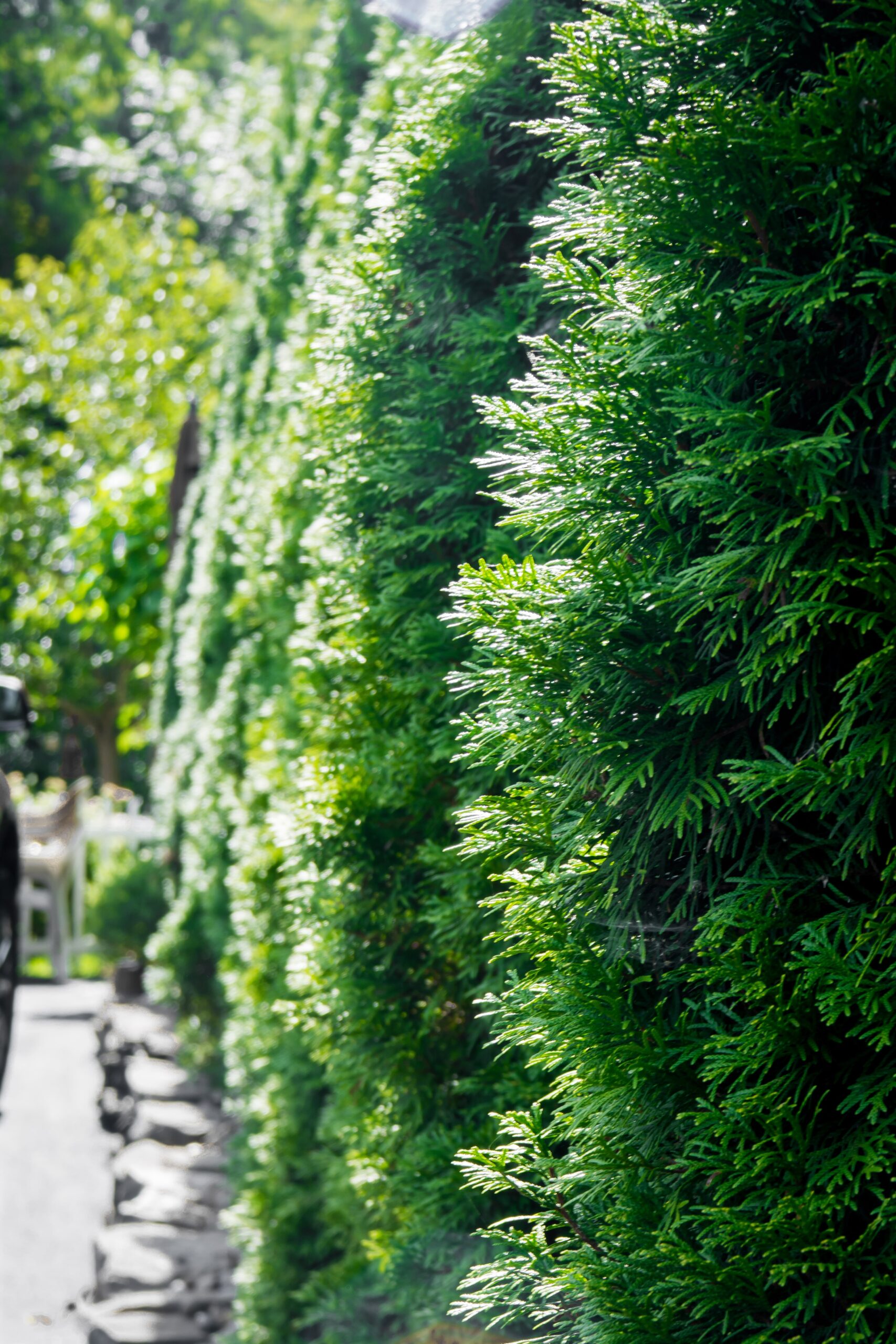
So the previous year, the homeowner planted a row of arborvitae along the fence line, 18 trees in all. Arborvitae are a common choice for this kind of living privacy screen. The Arbor Day Foundation advises that before planting any tree, “it is important to know what the tree will look like as it nears maturity,” so it fits the space it is meant to fill.
The neighbors never brought up the new trees. They simply stopped speaking to the homeowner after the planting, the homeowner said.
Dead on One Side, All 18 the Same
At first the losses seemed easy to explain. A few trees died over the winter, and the homeowner put it down to a harsh season. Then the landscaper visited and looked more closely.
His assessment was that every tree was dead on its back side, the side closest to the neighbor’s house. In a later update, the homeowner said all 18 trees showed the same pattern, and that the dead portion was on the trees’ own side of the line nearest the neighbor’s home, not on the neighbor’s property.
That pattern is what made the landscaper suspicious. Damage confined to one face of every tree in a row, and specifically the face nearest a single neighbor, is harder to put down to chance than a scattering of losses up and down the line.
The homeowner admitted there was no video or other proof of anyone tampering with the trees. Cheezburger did not name the homeowner, the landscaper or the neighbors, and it did not report any independent testing of the trees or soil.
Accusations like this have played out before on this site, including one where an arborist found drill holes in fence-line palms and the neighbor eventually admitted it, and a dispute in England over a neighbor’s 10-foot evergreens blocking a view.
Winter Burn Can Leave a Similar Mark
Not everyone who read the account was convinced it was sabotage. Some commenters pointed out that arborvitae sometimes die for no clear reason, and that one side of a row can suffer simply because it gets less light.
Weather can also brown one face of an evergreen. The University of Wisconsin–Madison Division of Extension’s guide to winter burn says it is “a common problem of evergreens,” especially those in open, unprotected spots, and that “foliage facing south, southwest or west is most often affected.” Sun warms the foliage during the day while “the ground is frozen” and roots “cannot take up water,” and strong winter winds, long cold spells and road salt can make damage worse. Plants with shallow or poorly developed root systems are more prone to it, and a warm fall that delays dormancy can leave evergreens unready for a sudden freeze.
Whether that explains a row planted the year before depends on details the account did not include, such as which direction the dead sides face and how the trees were watered going into winter.
Testing the Trees Before Pointing Fingers
Several commenters urged the homeowner to gather evidence before acting, including having a university agricultural program test the trees and soil. Testing is the step that separates a suspicion from a provable case.
Records made early carry the most weight. Photos showing which side of each tree browned, when the damage first appeared and how the row sits relative to the property line would all matter to any agency, arborist or attorney asked to look at it later.
If herbicide is suspected, there is an official place to take it. The National Pesticide Information Center at Oregon State University says “each state has its own pesticide regulatory agency, which handles most pesticide-related matters,” and it directs reports of suspected misuse, such as applications that ignore the label, to that state agency. The center also takes questions by phone at 800-858-7378 for people unsure where to turn.
Chemicals that kill trees can harm far more than the target. The U.S. Forest Service urges home gardeners to avoid pesticides wherever they can and, when one is truly needed, to pick the least toxic product, read the label closely and apply it in the evening when pollinators are less active.
Replanting, This Time With a Camera
The homeowner wanted to replant the screen but worried the same thing would happen again, and was considering putting up a camera to watch the fence line. A camera would not bring back the 18 arborvitae, but it would answer the question the dead trees could not.
Cheezburger’s account ends there, with no word on whether the neighbors were ever asked about the trees or whether any testing was carried out. For now, the homeowner has a row of half-brown evergreens, a landscaper’s opinion and a neighbor who has not said a word about any of it.
This article was produced with AI assistance and edited for accuracy against the sources linked above.
Image: Jess Mann – CC BY-SA 4.0/Wikimedia Commons