A Clear Creek County Man Kicked a Charging Bear Near His Trash Cans at 1 a.m., Colorado’s 12th Reported Bear Attack of 2026
Noises on his deck drew a homeowner on Castlewood Drive in Clear Creek County, Colorado, outside around 1 a.m. on Thursday, Oct. 23. He found a black bear by his trash cans, and the bear charged him twice before he kicked it and it fled, according to Colorado Parks and Wildlife’s account of the incident. The man was hurt and sought medical treatment.
It was the 12th bear attack reported to Colorado Parks and Wildlife in 2026, the agency said. Its release on the Clear Creek County case did not describe the other 11 attacks.
What the homeowner told wildlife officers
The sequence came from the homeowner’s own description to CPW. After he found the bear near the trash cans, he yelled to scare it off. Instead of leaving, the bear moved toward him. He pushed it away, and it backed off, then charged again. He kicked it in self-defense, and the bear ran off the property.
Wildlife officers searched the area afterward but did not find the bear, KRDO reported. CPW said officers would continue to look for bear activity in the neighborhood. Neither CPW nor local news outlets described the extent of the man’s injuries, and CPW did not report trapping or euthanizing a bear in connection with the incident. CPW did not release the homeowner’s name.
The agency used the incident to repeat its standing request to residents: remove trash and other attractants, and follow the BearWise program’s basic steps for living near bears.
Why bears are at their hungriest now
Late October falls in the last stretch of the season when Colorado bears are most driven by food. CPW’s Living with Bears guidance says bears enter a period of intense overeating in the fall, called hyperphagia, feeding up to 22 hours a day to take in the roughly 20,000 calories a day they need to prepare for hibernation. Most Colorado bears are active from mid-March through early November.
BearWise, the bear-safety program CPW pointed residents to, puts the fall intake at about 20,000 calories a day or more, roughly ten times what bears eat in spring and summer. During this stretch, it says, bears seldom sleep more than three or four hours a day and spend the rest searching for food. In the wild that means berries, acorns and nuts. Near homes, it often means garbage.
BearWise’s guidance on never feeding or approaching bears says leaving anything that smells or tastes like food within reach “teaches bears to approach homes and people looking for more.” Its list of unintentional food sources includes trash, bird feeders, grills and pet food, and it notes that bears “even love pumpkins.”
A bear that learns to find food at a house loses its natural fear of people, BearWise says, and “Bears will defend themselves if a person gets too close.”
BearWise also lists the warning signs a bear gives when it wants more room: teeth clacking, moaning, blowing, huffing, stomping, standing up and bluff charges, in which a bear runs toward a person and then stops short. The program says those signals mean the bear wants distance, not that an attack is certain. In the Clear Creek County case, CPW’s account describes the bear charging, retreating and charging a second time before the homeowner kicked it.
Trash rules and what to do in an encounter
In Colorado, attractants are more than a courtesy issue. CPW’s guidance says leaving trash cans or bird feeders, including hummingbird, suet and seed feeders, where bears can reach them violates state law and some local ordinances. The agency’s advice is direct: “Always keep trash indoors overnight.” Intentionally feeding bears is also illegal under Colorado law.
BearWise’s guidance on food and garbage adds specifics for households:
- Store garbage in a bear-resistant container or inside a sturdy building until pickup, and keep bear-resistant cans closed and latched.
- Put containers out the morning of pickup, “never the night before.”
- Check with the trash hauler before buying a bear-resistant can to make sure it will be serviced.
- Rinse containers and packaging, freeze smelly food scraps until trash day, and haul garbage away at least once a week where pickup is not available.
CPW’s release on the Clear Creek County incident also asked residents to take down bird feeders while bears are active, feed pets indoors and store pet food out of sight and smell, clean grills after each use and store them in a secure area, and tell neighbors when bears are around.
For face-to-face encounters, CPW’s guidance says black bears seldom attack but will fight back if they feel threatened. A bear that knowingly approaches a person may be food-conditioned. The agency advises standing ground, yelling or throwing small rocks, and using bear spray when the bear is about 40 feet away. If a black bear attacks, CPW says not to play dead and to fight back with anything available, which is close to what the Castlewood Drive homeowner did.
CPW’s Living with Wildlife page says anyone who sees a person feeding bears or other protected wildlife can report it to CPW’s Denver headquarters at 303-297-1192 or any CPW office, or anonymously through Operation Game Thief at 877-265-6648, which may pay a reward when a tip leads to a citation.
To report a bear encounter, CPW asks residents to contact the agency during business hours, Monday through Friday from 8 a.m. to 5 p.m., and to call the Colorado State Patrol or the local sheriff’s office after hours.
Get stories like this by email. Sign up for The Parent Diaries Letter.
This article was produced with AI assistance and edited for accuracy against the sources linked above.
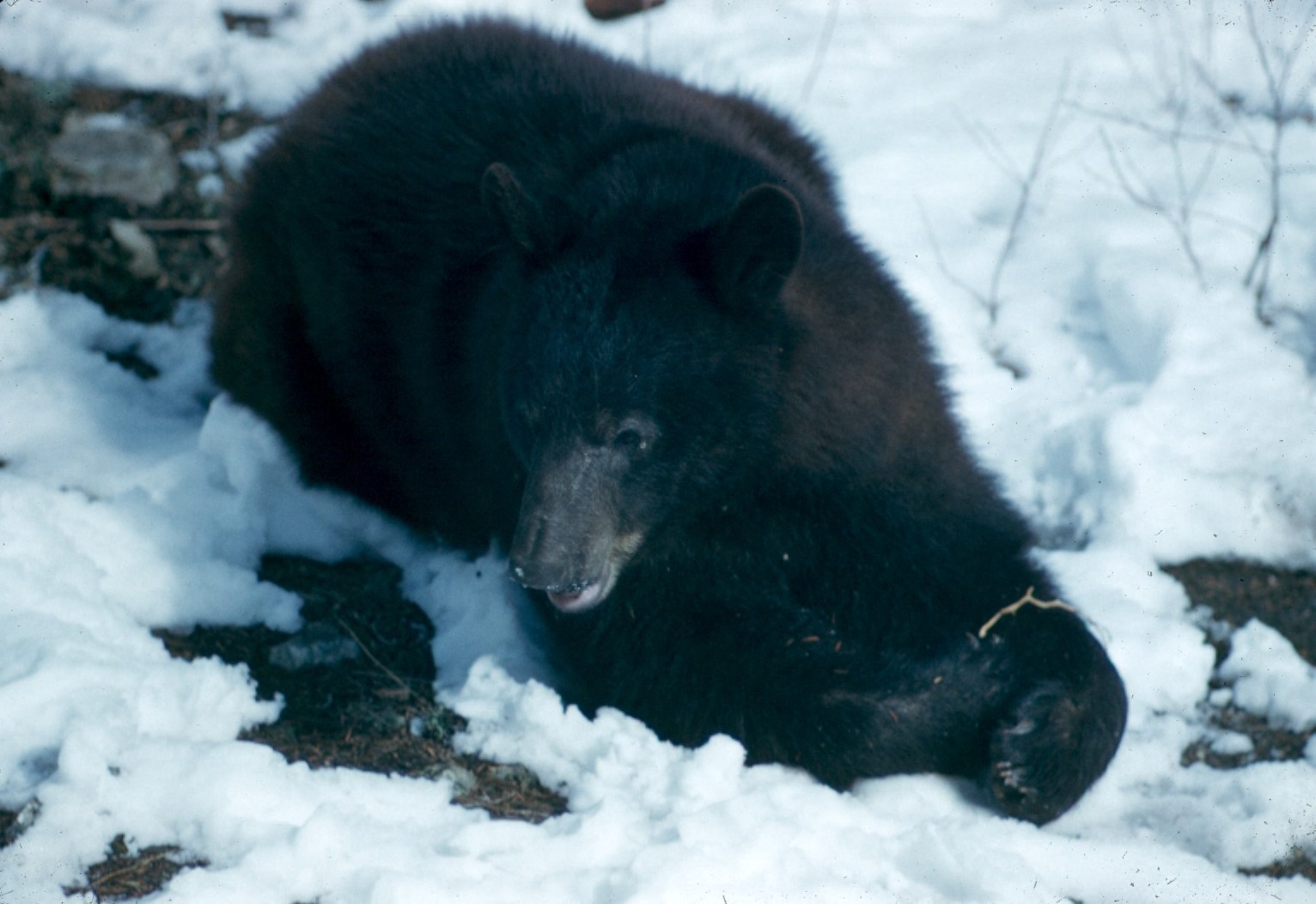
Image: Garst, Warren, 1922-2016, photographer – CC BY-SA 4.0/Wikimedia Commons