HGTV’s Julie Martens Forney Names ‘Fortune,’ ‘Ice Follies’ and ‘Dutch Master’ as Daffodils That Naturalize, and Says Plant Them in Swaths This Fall
Three daffodil names come up again and again when gardeners ask which bulbs will multiply on their own: ‘Fortune,’ ‘Ice Follies’ and ‘Dutch Master.’ HGTV gardening contributor Julie Martens Forney lists all three as reliable naturalizers in her “17 Last-Minute Fall Garden Projects”, and she advises planting them in swaths this fall.
The idea is that a swath of naturalizing daffodils grows into a larger display each year as the bulbs multiply and spread. Forney, who describes more than 25 years of gardening experience across the Midwest, Florida, the Appalachians and the Susquehanna River basin, adds that the varieties that naturalize best differ by region.
Why swaths work better than rows
Extension horticulturists make the same case for grouping. Aaron Steil of Iowa State University Extension recommends planting in drifts, clusters or groups for the greatest visual impact. He suggests at least five bulbs of the larger varieties, with groupings of 10 or more looking best, and at least 25 of the small types, with 50 or more looking best.
Longfield Gardens, a bulb supplier, takes the same approach to its naturalizing list. It suggests planting each variety in drifts, such as a block of all yellow ‘Dutch Master’ or all white ‘Mount Hood,’ and lists ‘Ice Follies’ among the early bloomers and ‘Dutch Master’ among the midseason ones. Mixing bloom seasons can stretch the show to six weeks or more, the company says, and it advises checking bulb size before buying a naturalizing mix, since some contain small bulbs.
Where ‘Fortune,’ ‘Ice Follies’ and ‘Dutch Master’ fit
The three names do not appear together in every source, which is normal for a regional list. Longfield Gardens includes ‘Ice Follies’ and ‘Dutch Master’ on its naturalizing list but not ‘Fortune,’ so the HGTV list is the only one of these sources to name all three. The sources do agree on the practical advice: pick varieties known to do well locally, and plant them in numbers.
Penn State Extension names ‘Ice Follies’ as a Division 2, large-cupped variety in its guide to the daffodil, written by Master Gardener County Coordinator Mandy Smith and last updated June 24, 2024. The guide notes that Peter Barr popularized naturalizing daffodils in the landscape, and it suggests mixing early, mid and late bloomers for a longer season.
How deep and how far apart
Depth recommendations vary a little by region. Iowa State puts the rule at about three times the bulb’s height, with most daffodils going 6 to 8 inches deep and small cultivars such as ‘Tete-a-Tete’ going 4 to 6 inches deep. Spacing is about 6 inches for most daffodils and 4 inches for small ones.
Penn State describes the depth as twice the bulb’s height, measured from ground level to the top of the bulb, and warns that planting too deep or too shallow can prevent blooming. Its typical spacing is 4 to 6 inches apart. The University of Missouri Extension’s David Trinklein, in a 2018 article, puts the base of the bulb about 6 inches below the surface, or up to 8 inches in lighter soils, with 6 to 12 inches between bulbs.
Timing, shrubs and the rest of the fall list
Penn State says to plant from October through early November, before the ground freezes, so the bulbs can grow roots, and that night temperatures of 55 degrees or cooler help root growth start. Iowa State says October is ideal in Iowa, September planting can bring foliage up in fall, and bulbs can still go in as late as December if the ground is not frozen.
Forney’s list does not stop at daffodils. She says shrubs and trees should be planted before a hard frost so roots can establish before serious cold arrives, and that new plantings need water until the ground freezes. In mild-winter regions where the ground does not freeze, she says to water through winter during dry spells.
For the planting site itself, Trinklein says daffodils need at least five hours of sunlight a day, or can be planted under or near trees, since they grow early before the trees leaf out. He recommends good drainage, with organic matter added to improve it, and a balanced fertilizer such as 5-10-10 mixed into the soil rather than placed in the planting hole. High-nitrogen fertilizer should be avoided. Newly planted bulbs get a good watering if rainfall is scarce, and a mulch of pine needles helps hold moisture.
Clumps that have been in place for years eventually crowd. Trinklein advises dividing them every 5 to 10 years, or when the flowers get smaller.
What happens after the bloom
A swath of daffodils asks for patience in spring. Iowa State says to leave the foliage until it turns brown and dies, usually by late June or early July, because the leaves make the food the bulbs need to bloom the next year. Once brown, it can be cut at ground level. The leaves should not be tied or braided, which reduces their ability to make food.
Penn State agrees that foliage should stay on after blooming until it turns brown, because the leaves feed the bulb for the next year’s flowers, and it suggests planting perennials or early annuals nearby to hide the floppy leaves. Planting ornamental grasses, hostas, daylilies and other perennials among the bulbs hides the yellowing foliage, Iowa State suggests. Daffodils are also resistant to browsing by deer and rabbits, unlike tulips, the university adds. For gardeners who already planted tulips this fall, this site’s note on tulip planting depths in zones 6 and 7 covers the other half of the bulb bed.
This article was produced with AI assistance and edited for accuracy against the sources linked above.
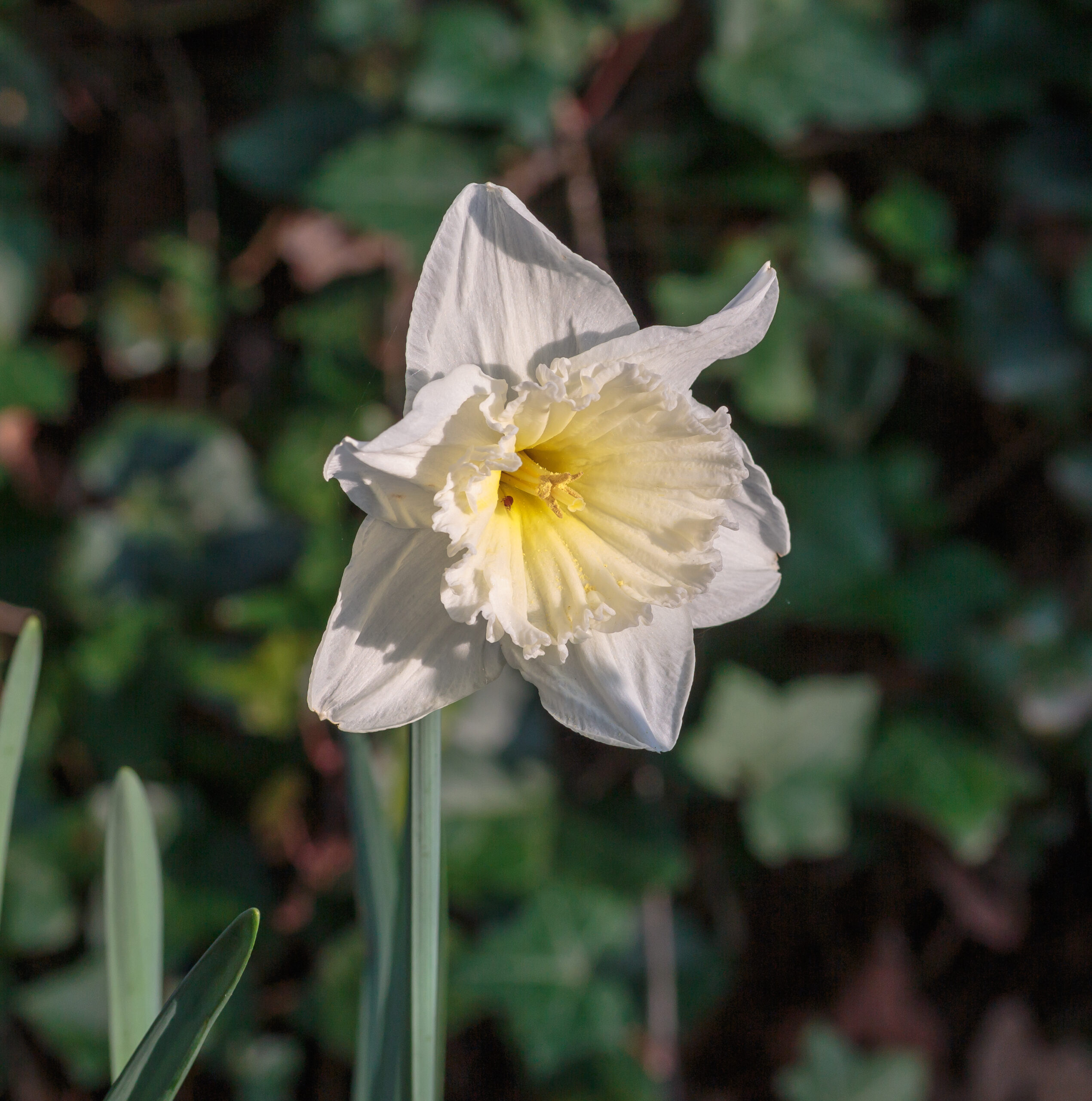
Image: “Narcissus ‘Ice Follies’ 02” by Dominicus Johannes Bergsma is licensed under CC BY-SA 4.0.