Florida’s Attorney General Says Tree Removal Is Covered by the State’s Price-Gouging Law After Hurricane Isaias, and Warns of Scam Texts Offering Tree Service
Florida homeowners who get a tree-removal bill that looks wildly out of line after Hurricane Isaias can report it to the state at 1-866-9NO-SCAM or through MyFloridaLegal.com. The Office of the Attorney General’s price-gouging page lists tree removal, water remediation and roof repair among the services covered by the state’s price-gouging law. Attorney General James Uthmeier has also warned about text messages offering tree service that he said appear to be scams.
Tree Removal Is on the Attorney General’s List of Covered Services
The Attorney General’s page says state law prohibits an unconscionable increase in the price of essential commodities when the increase results directly from a declared emergency caused by a hurricane or other natural disaster. Alongside storm staples such as food, water, ice, gas, lodging and lumber, it names “certain services including tree removal, water remediation, and roof repair services.”
The page adds a caveat: what counts as an essential commodity “may change depending on the length and the nature” of a declared state of emergency.
The law itself, Section 501.160 of the Florida Statutes, defines a commodity broadly as “any goods, services, materials, merchandise, supplies, equipment, resources, or other article of commerce.” A price can be judged unconscionable if it shows a gross disparity from the average price charged in the 30 days before the emergency was declared, or if it grossly exceeds the average price for the same or a similar commodity in the trade area over that period. Increases tied to a seller’s added costs, or to regional, national or international market trends, are excluded.
In its news release activating the hotline for Isaias, Uthmeier’s office said violators face a civil penalty of $1,000 per violation and up to $25,000 for multiple violations committed within a single 24-hour period, and that criminal sanctions may also apply. The statute allows enforcement by the state attorney’s office or the Department of Legal Affairs.
The Tree-Service Texts Uthmeier Called Scams
Uthmeier said his office had received reports of text messages offering tree service in coordination with the recipient’s insurance company, News4JAX reported. He said the messages appear to be scams and urged residents not to respond to them.
“This happens to be the time when some scammers come into play,” Uthmeier said, according to the station. He said his office had already received a handful of price-gouging reports at the time.
Florida Chief Financial Officer Blaise Ingoglia, who also serves as state fire marshal, said the state was deploying three disaster-fraud strike teams to some of the hardest-hit areas, News4JAX reported. Ingoglia urged residents to verify contractors’ credentials, to avoid signing contracts until they have confirmed who they are dealing with, and to document damage with photos, including before and after repairs.
The warnings echo a pattern seen after earlier storms. On the Gulf Coast, Naples police say a landscaper who left a family’s Hurricane Ian yard repairs unfinished came back four years later demanding $100,000.
Which 27 Counties Are Under the Isaias Emergency, and Until When
The price-gouging law applies only inside an area covered by a governor’s state of emergency. Gov. Ron DeSantis signed Executive Order 26-202 on Oct. 6, when the system was still Tropical Depression Nine, declaring an emergency for 25 counties. Section 9 of that order cites Section 501.160 and makes it unlawful to sell or offer to sell essential commodities at an unconscionable price within the declared area.
A day later, Executive Order 26-211 added Citrus and Levy counties, bringing the total to 27: Baker, Bay, Calhoun, Citrus, Columbia, Dixie, Escambia, Franklin, Gadsden, Gilchrist, Gulf, Hamilton, Holmes, Jackson, Jefferson, Lafayette, Leon, Levy, Liberty, Madison, Okaloosa, Santa Rosa, Suwannee, Taylor, Wakulla, Walton and Washington. Early news coverage, including the News4JAX report, cited the original 25-county figure.
Executive Order 26-202 expires 60 days from its signing unless extended, which puts its end date at Dec. 5, and the amended order runs as long as the original does. The statute likewise limits the price-gouging protections under an initial declaration to 60 days, with extensions possible by executive order. As of Oct. 29, the emergency remains in effect.
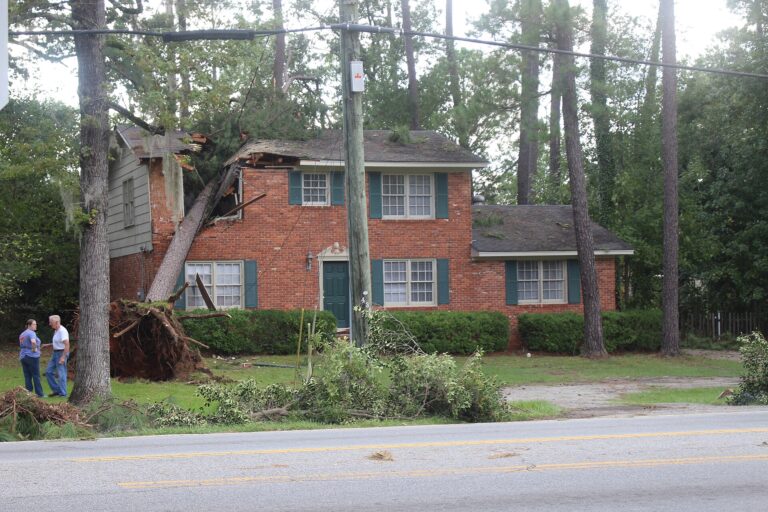
Isaias came ashore around 9:30 p.m. EDT on a Friday near Destin as a Category 2 hurricane, News4JAX reported. The Florida Division of Emergency Management’s Isaias page lists 15 counties for federal Public Assistance in the state’s Major Disaster Declaration request: Bay, Calhoun, Escambia, Franklin, Gadsden, Gulf, Holmes, Jackson, Jefferson, Liberty, Okaloosa, Santa Rosa, Wakulla, Walton and Washington. The same page repeats the hotline number. Readers who followed the landfall may remember the falling trees that crushed homes in Birmingham and Escambia County.
What the Attorney General’s Price-Gouging Complaint Form Asks For
The online complaint starts by asking the filer to pick the declared emergency and confirm that the complaint involves an essential commodity. From there, the form asks for the business’s name, which is required, along with its address, phone number and website if known.
It then asks for the date of the transaction, the amount paid, and the item’s previous price if the filer knows it, plus a required description of what happened. There are four slots for uploading documentation of the purchase.
The form also asks whether the person filing is 60 or older. According to the Attorney General’s page, penalties can be enhanced for victimizing people over 60, a detail that matters for older homeowners facing large cleanup jobs after the storm.
For tree work in particular, the advice from state officials comes down to three steps: confirm who the company is before signing anything, photograph the damage before and after the work, and ignore unsolicited texts that claim to be working with an insurer. If a bill later turns out to be far above what the same job cost in the 30 days before Isaias, the transaction date, the amount paid and any documentation are what the complaint form asks for.
Get stories like this by email. Sign up for The Parent Diaries Letter.
This article was produced with AI assistance and edited for accuracy against the sources linked above.
Image: Michael Rivera, CC BY-SA 4.0, via Wikimedia Commons