A Billboard Company Cleared a 500-Foot Stretch of Trees Near Charlotte’s Plaza Midwood Under a 2024 State Law, and Neighbors Say No One Asked Them
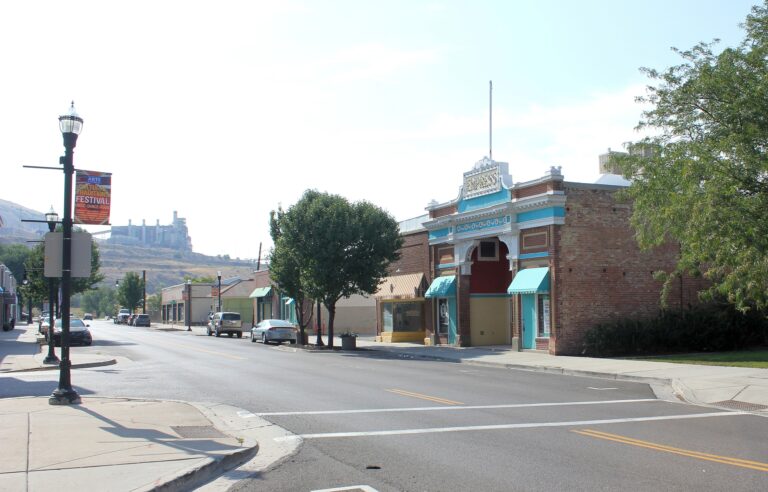
A stand of tall pines that screened a Charlotte neighborhood from Independence Boulevard came down this week so drivers can see a highway billboard. The clearing, between Plaza Midwood and the boulevard, was approved by the North Carolina Department of Transportation for Adams Outdoor Advertising, and nearby business owners say they found out only when the trees were already on the ground.
The strip is a small patch of green on a busy road, but it has reopened an old argument in Charlotte about who gets a say when roadside trees come down for a sign.
A wall of pines gone overnight near Plaza Midwood
Todd Hubber owns Undercurrent Coffee, about a block from the cleared strip. He told WSOC-TV that only a day earlier the site had been “a beautiful wall of pine trees and vegetative foliage,” and that he grew emotional watching the crews work.
Hubber listed what the neighborhood loses along with the trees: a buffer against highway noise, a screen against the view of traffic, and the roots that held soil on the slope between the road and the properties behind it. He told the station he had no idea the clearing was planned.
His larger complaint is about who benefits. “For the benefit of a very small piece of one business, the entirety of so many other businesses are being forsaken,” he said.
Adams Outdoor answered the station’s questions by sending over the NCDOT permit that authorized the work.
The 2024 change that set a 500-foot cut zone
The rule that applies is Session Law 2024-15, which the General Assembly passed with a section titled “Revise Outdoor Advertising Law.” Section 17 of that law rewrote how the vegetation cut zone around a billboard is measured. On roads posted above 35 mph, the zone runs 500 feet. On roads posted at 35 mph or below, it runs 350 feet. The change applies to permit applications submitted on or after July 1, 2024.
The same section let sign owners cut vegetation between sign faces on one structure, or in areas perpendicular to the structure, for a fee of $150 per caliper inch. It also narrowed the protected native-tree exception to dogwoods alone, dropping redbuds, and pushed the distance for trimming small trees without a permit from 200 feet to 300 feet from the sign.
The current text of the statute, G.S. 136-133.1, allows a sign owner to cut “any tree, shrub, or underbrush” inside the zone. Trees that were at least 4 inches in diameter when the sign went up count as existing trees. Removing those requires a reimbursement payment, the removal of two nonconforming signs for each sign at the site, or a beautification and replanting plan. Native dogwoods must be preserved under the statute.
Sustain Charlotte’s Shannon Binns told WSOC that “it’s the taller mature pines that are in their way,” and called the clearing a sign of what happens when protections for neighborhoods are weakened.
Why the state will not pay to replant
When WSOC asked whether part of the buffer could be replanted while keeping the billboard visible, an NCDOT spokeswoman said state law does not allow highway funds to be used for that.
The statute backs that up. Under a replanting plan, NCDOT decides the sites and plant types after consulting with the sign owner and local governments, and the sign owner carries out and maintains the planting. No additional Highway Trust Fund money may be spent on it.
That leaves any new greenery along this stretch in the hands of the billboard company.
Charlotte’s canopy numbers and the limits of city rules
Charlotte has tracked its tree cover closely for years. Sustain Charlotte reported that the city’s canopy measured 46.8 percent based on 2016 data, down from 47.1 percent in 2012, a loss of roughly 400 to 520 acres of trees. The City Council adopted a goal of 50 percent canopy by 2050 back in 2011.
The city spends money to keep trees elsewhere. Its Tree Canopy Preservation Program takes fees developers pay in place of saving trees on site and uses them to buy and conserve wooded land, often with conservation easements. It also runs a Canopy Care program to help residents with their trees.
Those programs operate under the city’s own tree ordinance. Trees on state highway right-of-way, like the pines near Plaza Midwood, fall under the state statute, and the billboard permits are issued by NCDOT rather than by City Hall.
What neighbors want from Adams Outdoor
Binns has asked the company to work with the neighborhood on a plan, either to slow the clearing or to replant shorter vegetation that would not block the sign, WSOC reported. The statute already allows that kind of replanting plan if the sign owner chooses it.
For homeowners and small business owners along Charlotte’s highways, the lesson is that a green screen on the state’s side of the property line can vanish with little warning. Similar fights over mature trees have played out this fall elsewhere, including the Morgan Hill neighbors fighting for a coast live oak and the 62 oaks removed from front yards in Viera.
For now the view from Hubber’s corner is open highway. Whether anything green returns depends on Adams Outdoor, since state money cannot pay for it.
Get stories like this by email. Sign up for The Parent Diaries Letter.
This article was produced with AI assistance and edited for accuracy against the sources linked above.
Image: Jdshide – CC0/Wikimedia Commons