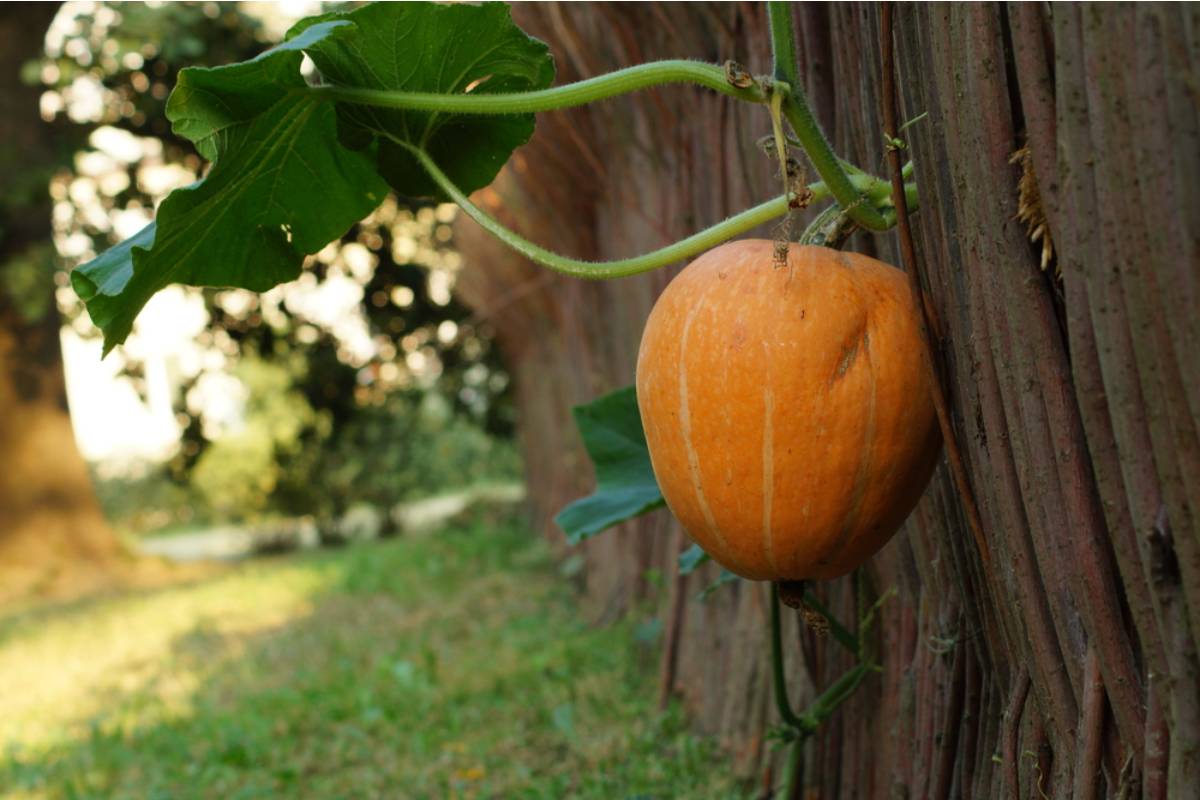
Homeowner Says a Neighbor’s Pumpkin Vine Climbed Onto His Fence, Then One Mowing Session Turned Into a Full-Blown Garden Feud
A person shared his story after what should have been an ordinary afternoon of mowing the lawn somehow turned into a neighborhood garden dispute. The problem started with a few vines crawling across a fence, the kind of greenery that can easily look like an annoying patch of weeds when nobody has explained where it came from. By the end of the afternoon, however, the argument was no longer just about a pumpkin plant.
It Started With a Completely Ordinary Lawn Mowing
The homeowner explained that he had been doing something as routine as mowing his yard when he noticed vines spreading across his fence. At first glance, there was nothing especially mysterious about them, and he assumed they were simply weeds that had wandered where they were not supposed to be. He kept mowing, not realizing he was about to become the accidental villain in someone else’s gardening drama.
It was only after the mower had already done its work that he discovered the vines were actually part of a pumpkin plant. The plant had grown over from the neighboring yard and stretched onto his side of the fence, where the mower eventually found it. What looked like an ordinary bit of yard cleanup had suddenly become a very personal gardening offense.
The Pumpkin Vine Was Much More Important Than It Looked
The neighbor was apparently not amused by the discovery. According to the homeowner, the man came over banging on the door and demanded that they head into the backyard because his garden had supposedly been ruined. That made the situation awkward almost immediately, because the person mowing had not knowingly touched anything belonging to the neighbor.
The homeowner said he apologized and explained that he genuinely did not know what the vine was when he cut it. He even admitted that a simple warning ahead of time probably would have changed everything, because he would have been happy to avoid mowing over something deliberately growing across the fence. Unfortunately, the explanation did not seem to calm the situation down.
A Simple Apology Did Not End the Argument
Instead of accepting the apology, the neighbor continued yelling about the damaged garden. The homeowner said he tried explaining several times that the cut had been an honest mistake, but the conversation kept circling back to blame. At that point, what began as a gardening accident started feeling less like a misunderstanding and more like a full-scale feud.
The homeowner eventually pointed out that he did not mind what the neighbor chose to grow in his own yard. His frustration was with plants spreading across the fence and onto his side without any conversation beforehand. It was the sort of distinction many gardeners would understand immediately: grow what you like, but do not assume the neighboring yard is part of the planting plan.
Then the Fence Suddenly Became Part of the Fight
Just when it seemed the argument could not get stranger, the neighbor reportedly made an unexpected claim about the fence itself. He told the homeowner that the fence actually belonged to him, despite the fact that it had already been standing before the neighbor moved in. That turned a disagreement over a pumpkin vine into a much bigger question about boundaries, ownership, and who had the right to attach what to the structure.
The homeowner found the claim especially bizarre because the neighbor had apparently used his fence as one side of his own enclosed yard. Rather than building four separate sides, the neighbor had constructed additional sections and treated the existing fence as part of his setup. Suddenly, the pumpkin was only one chapter in a much longer fence story.
The Homeowner Had Been Letting the Fence Arrangement Slide
The homeowner explained that the old neighbors had not even had a fence in that arrangement. After the new neighbor moved in, he built his own sections and simply incorporated the existing structure into the enclosure. The homeowner said he never gave permission, but he also never made an issue of it because he considered himself a fairly easygoing person.
That decision may have saved everyone an argument for a while, but it also left the boundary arrangement strangely informal. Nobody apparently expected a pumpkin vine to bring all those questions rushing back to the surface. A harmless-looking garden plant had managed to uncover a problem that had been quietly sitting beside the property line all along.
A Response From a Person Raised the Property-Line Question
A response from a person pointed out that the age of a fence does not automatically settle who owns it. The important question, they suggested, would be where the structure actually sits in relation to the property line. That distinction mattered because the homeowner had initially focused on the fact that the fence existed before the neighbor arrived.
The homeowner later clarified that the fence was on his side of the property. That changed the picture considerably, because the dispute was no longer based solely on who had lived there longer or who had attached newer sections to the structure. The gardening argument suddenly had a much more concrete boundary underneath it.
Then Came the Detail That Changed Everything
Eventually, the homeowner revealed that he had actually had the property surveyed before installing the fence in the first place. That meant he was not simply guessing about where the boundary was or relying on an old memory of the yard. He had documentation from the process that established where his property sat.
There was another wrinkle, too, involving a utility easement that was supposed to remain clear between the two yards. According to the homeowner, the neighbor had not followed that arrangement when building his enclosure. What started with a wandering pumpkin plant was now tangled up with fences, surveys, and an overlooked strip of land.
The Pumpkin Was Growing Where the Lawn Mower Could Reach It
The homeowner clarified that most of the vine was still on the neighbor’s side of the fence. Only the portion that had crossed over onto the homeowner’s side was cut during the mowing. In other words, the mower had not gone searching for the pumpkin plant or torn apart an entire garden.
That detail became important because the homeowner said he only removed the section that had reached his side. For someone simply trying to keep his own lawn trimmed, the vine was apparently no different from any other plant growing where it was not wanted. The pumpkin may have been treasured next door, but it had traveled into a different gardening zone.
Another Response From a Person Offered a Different Perspective
A response from a person suggested that, depending on the local rules, property owners can sometimes trim vegetation that crosses onto their side of a boundary. The person also noted that exact laws vary by location and that plant damage can become a separate issue under some circumstances. It was presented more as a general observation than a definitive legal answer.
Other responses focused on a simpler gardening principle: plants tend to ignore human boundaries. Vines, runners, branches, and roots can wander wherever the conditions are good, even when the people on either side of the fence have very different plans. The pumpkin was simply following its instincts, while the humans were apparently keeping score.
Then Someone Suggested a Very Different Kind of Garden
Once the story turned toward the fence dispute, a few people jokingly imagined fighting greenery with even more aggressive greenery. Suggestions ranged from mint to clover, with the usual warnings that some plants can spread much farther than anyone expects. The joke quickly became a discussion about which ground covers are helpful and which ones can become a gardener’s next lifelong project.
Mint in particular became the star of the revenge-garden fantasy, although more experienced gardeners immediately pointed out that it can be surprisingly difficult to remove once established. Another response from a person compared invasive planting to creating a second problem in your own yard while trying to annoy someone else’s. In gardening, revenge has a funny habit of producing weeds for everybody.
Bamboo Entered the Conversation, and Gardeners Immediately Got Nervous
Then the conversation took an even more dramatic turn when bamboo was brought up as the ultimate gardening weapon. The suggestion was clearly meant as a joke, but gardeners know that bamboo can inspire a special kind of fear when it appears somewhere nobody planned for it. One response from a person even mentioned a family connection to a major legal fight involving bamboo.
That was enough to turn the joke into a warning about invasive plants. The general gardening lesson was much simpler than the prank itself: choosing an aggressive plant just because it spreads quickly can create years of work for the very person doing the planting. A fence feud does not need a botanical arms race.
Even the Mowing Scent Became Part of the Comedy
Some responses moved away from revenge entirely and discussed alternatives such as clover and other low-maintenance ground covers. One person pointed out that certain plants can stay green through dry weather and may even smell pleasant when freshly mowed. Suddenly, a conversation that began with a damaged pumpkin vine had wandered into a surprisingly detailed lawn debate.
There were also playful suggestions involving catnip and other members of the mint family. Those ideas came with their own warnings, but the humor helped reveal how quickly gardening disagreements can spiral into absurd territory. One minute everyone is discussing a pumpkin vine, and the next minute the backyard sounds like a laboratory for experimental lawn design.
The Neighbor’s Final Remark Took the Argument Somewhere Else
The homeowner said the dispute ended with a personal remark from the neighbor that had nothing to do with pumpkins, lawns, or fences. Because the homeowner and his fiancé are a gay couple, the comment crossed beyond a simple disagreement over gardening and became openly insulting. What had already been a frustrating confrontation suddenly became much more personal.
Still, the homeowner’s retelling of the incident kept a sarcastic edge rather than ending on pure anger. He responded to the insult with a joke of his own, making it clear that he had no interest in playing along with the neighbor’s crude attempt to provoke him. After all, there was already more than enough unnecessary drama growing along that fence.
In the End, the Pumpkin Was Only the Beginning
The strangest part of the whole story may be that the pumpkin vine was never really the biggest issue. The plant merely exposed a collection of unresolved questions about where one yard ended, where another began, and who had decided that an existing fence could become part of a new enclosure. A single pass with a lawn mower brought all of those questions out into the open.
The homeowner’s story is a good reminder that gardens rarely respect the invisible lines people draw around them. A pumpkin vine can stretch across a fence, a branch can reach into another yard, and a seemingly minor gardening mistake can become a neighborhood legend. Sometimes the real plot twist is not what was growing in the garden, but what the garden reveals about the people standing beside it.