Homeowner Says a Storm Left One Neighbor’s Tree Wedged Into Another, With Both Hanging Directly Over the Backyard Fire Pit
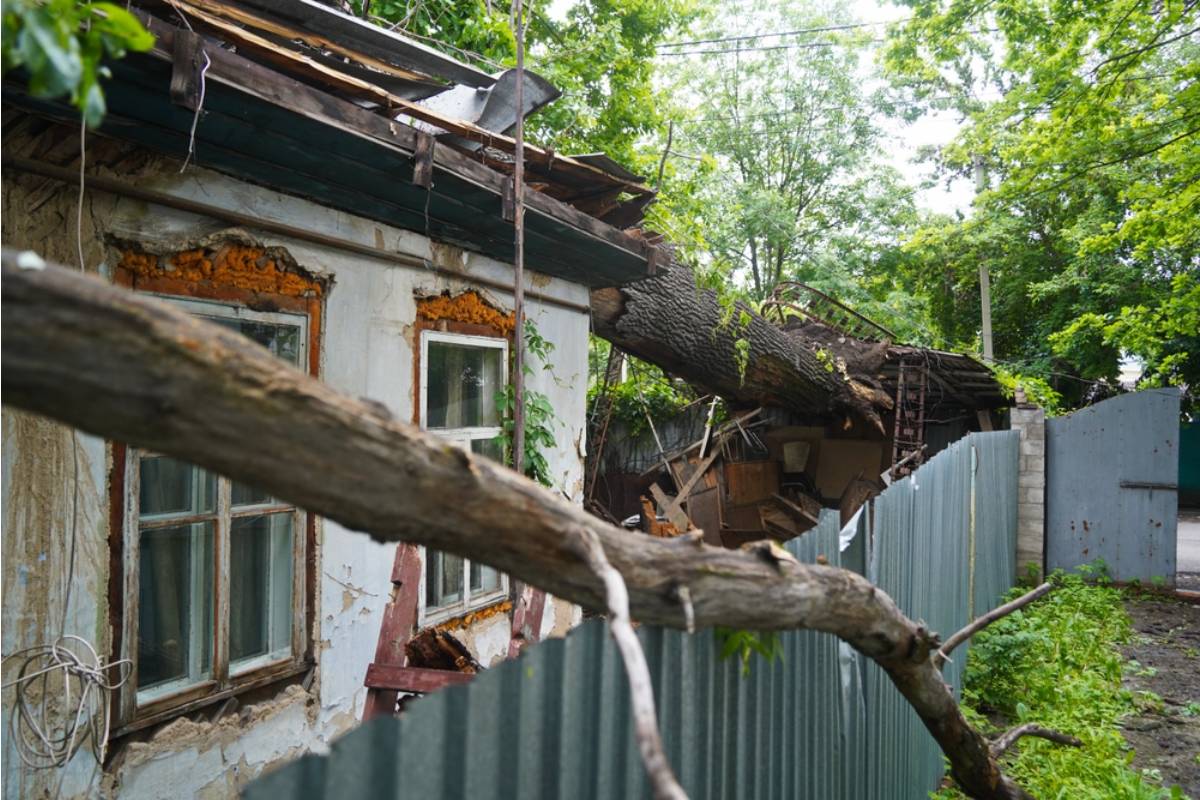
A person shared his story after a powerful round of storms left an unusual problem hanging over his backyard. One tree had fallen into another tree, and both were now suspended above the homeowner’s fire pit. The trees belonged to neighboring properties, which made the situation far more complicated than simply cleaning up a fallen branch.
At first glance, it looked like the kind of storm damage that could be handled with a little yard work and a pole saw. The homeowner, however, quickly realized that the tree was still attached to its original location, meaning cutting it could potentially involve someone else’s property. With the broken trees positioned over an area where the family normally gathered, waiting around didn’t feel particularly appealing either.
Two Trees Created One Very Strange Problem
The unusual part was how the trees had ended up positioned. Rather than falling cleanly to the ground, one tree appeared to have twisted as it came down and became lodged against another tree. The result was a tangled structure that looked almost as if the storm had deliberately stacked one tree on top of another.
That created several problems at once. The trees weren’t simply lying harmlessly across a lawn because part of the damaged structure was still connected to standing trees on neighboring property. Any attempt to cut the wrong limb could change the balance and send a heavy section crashing somewhere nobody intended.
The Fire Pit Suddenly Became the Worst Place to Stand
Under normal circumstances, the fire pit was probably one of the more enjoyable parts of the backyard. After the storm, however, it had become the exact spot underneath a suspended collection of damaged wood. What had previously been a place for relaxing outdoors suddenly looked like a place nobody should be sitting.
The homeowner wasn’t only worried about property damage. The bigger concern was that the trees could shift without warning, especially because the storm had already broken their natural support. A heavy limb hanging over a fire pit might look stable for hours and then move suddenly because of wind, gravity, or another damaged section giving way.
The Property Line Made the Situation More Complicated
The homeowner knew the trees were on neighboring properties, which immediately raised an important question about responsibility. He planned to speak with the neighbors but wasn’t sure whether the cleanup technically belonged to them or whether he would be expected to handle anything that had crossed into his yard. That uncertainty made grabbing a saw and getting started seem like a risky decision.
There was also a major difference between cleaning up debris and cutting a living or partially attached tree. Branches that have already fallen into someone’s yard can be one thing, while a tree that remains attached across a property line can involve completely different concerns. The homeowner understood that distinction and wanted to avoid making a bad situation worse.
The Pole Saw Seemed Like an Easy Solution
One idea that crossed his mind was using a pole saw to remove some of the limbs around the damaged tree. From the ground, that might seem like a reasonable way to make the situation safer without physically entering the neighbor’s yard. The problem was that nobody could know exactly how the suspended tree would react once those supporting limbs were removed.
The homeowner specifically wondered whether the tree might break apart at the existing split. That was the detail that turned a simple cleanup job into something much more unpredictable. Removing one limb could potentially release stored tension and cause another section to swing, drop, or roll in a completely different direction.
A Simple Cut Could Have Triggered a Bigger Problem
Storm-damaged trees can behave very differently from healthy trees. Wood under tension can move unexpectedly when another section is cut, and a tree that appears firmly wedged can suddenly become unstable. In this case, the fact that one tree had twisted while falling made the situation even harder to predict.
A person responding to the story pointed out that there were high odds of the damaged tree completely separating at the existing break because of the way it had twisted. That observation added another layer of concern to the homeowner’s original plan. If the tree was already close to separating, cutting around it could potentially be the moment everything finally came loose.
One Response Changed the Direction of the Story
Another response from a person offered much more direct advice: this was not a good situation for a homeowner to experiment with. The person suggested that professional arborists would likely consider cutting the tree personally a dangerous move. Suddenly, the pole saw that had seemed like a convenient solution looked considerably less attractive.
The homeowner took the advice seriously. He admitted that he had initially posted the question in a place that might not have been the best fit for the situation and appreciated the guidance. Instead of rushing outside with equipment, he now had a much clearer reason to slow down and figure out who should handle the damaged trees.
The Most Important Detail Was What Nobody Could See
The visible part of the problem was the tree hanging above the fire pit. What couldn’t be seen from the ground was the amount of tension and weight hidden inside the damaged structure. A broken trunk can contain forces that aren’t obvious simply by looking at the split.
That made the situation particularly dangerous for someone working alone. The homeowner might have been able to predict where a small branch would fall, but predicting the movement of a large storm-damaged tree was an entirely different challenge. The strange angle of the trees meant even a seemingly minor cut could change the entire balance.
The Backyard Had Become a Temporary No-Go Zone
For the time being, the fire pit was no longer a place for evening gatherings. Keeping people away from the area was the simplest way to remove the immediate temptation to treat the problem like ordinary garden cleanup. A few days without using the fire pit was a small price compared with dealing with a falling tree.
The rest of the yard also deserved caution. Storm damage doesn’t always end when the rain stops, because weakened branches can continue dropping later as wind moves through the canopy. The homeowner’s situation showed how a backyard can look mostly normal while one damaged section remains capable of causing serious trouble.
Talking to the Neighbor Was the Natural Next Step
The homeowner planned to speak with the neighbor rather than immediately taking matters into his own hands. That was important because the trees were still connected to property that wasn’t his. A conversation could also help establish whether the neighbors had already noticed the damage or planned to call someone.
The discussion didn’t necessarily need to become complicated. The homeowner could simply explain that the storm had left the trees hanging over his fire pit and that he was concerned about the unstable structure. Once everyone understood the danger, the next step could focus on getting the damaged trees assessed rather than arguing over who should grab the first saw.
The Garden Was Caught in the Middle
Although the main concern was the fire pit, the incident also demonstrated how storm damage can spill directly into someone’s garden and outdoor living space. A tree doesn’t care where a property line runs once gravity takes over. Branches can cross fences, trunks can land in planting beds, and roots can destabilize surrounding soil.
For gardeners, that can create an especially frustrating situation. A carefully maintained backyard can be disrupted in minutes by a storm that nobody can control. Even worse, attempting to rescue plants or clear debris too quickly can put a person directly underneath unstable branches.
The Twist Was That the Tree Wasn’t Really Finished Falling
The strangest part of the story was that the fallen tree had not completed its fall. It had twisted into another tree and become stuck, leaving the entire structure suspended instead of allowing gravity to finish the job. That created a bizarre middle stage where the trees were neither safely standing nor safely on the ground.
The response from a person suggested that the twisted break could eventually separate completely. If that happened naturally, the tree could finally fall without warning, making the homeowner’s concern about the fire pit even more important. What looked like a tree that had already fallen was actually a tree that might still have one more dramatic move left.
Waiting for Professional Help Made More Sense
Once the unusual structure was understood, the safest course became clearer. Rather than trying to determine the tree’s balance with a pole saw, the homeowner could have a qualified tree professional assess the damaged trees and determine how they should be removed. That approach also avoided casually cutting into a tree that was still attached to someone else’s property.
Professional assessment was especially important because the situation involved storm damage, a split, two intertwined trees, and a structure suspended over an occupied part of the backyard. Those factors combined to make the job much more complicated than ordinary pruning. A professional could evaluate the direction of force and determine how to bring the damaged wood down under controlled conditions.
The Fire Pit Could Wait
For a gardener, there is always a temptation to get outside and fix storm damage immediately. Fallen branches make the yard look messy, and waiting can feel frustrating when the tools are sitting in the shed. In this case, however, the best cleanup decision was probably to leave the most dangerous part alone.
The fire pit wasn’t going anywhere. The trees, on the other hand, could move without permission, and nobody wanted to discover that at the worst possible moment. Until the damaged structure was safely handled, keeping people away from the area was a far better solution than trying to reclaim the backyard in a hurry.
A Storm Left Behind More Than Broken Wood
The incident began with a familiar problem for homeowners: a powerful storm had damaged trees. What made it memorable was the bizarre way the damage unfolded, with one tree becoming lodged in another and both hanging over a backyard fire pit. The homeowner’s first instinct was to consider a pole saw, but the responses pushed him toward a much safer way of thinking.
In the end, the real lesson wasn’t about how to cut the trees. It was about recognizing when storm cleanup has crossed the line into a dangerous tree-removal situation. The garden could wait, the fire pit could stay unused, and the trees could be dealt with properly before anyone tried to turn a tangled storm disaster into a weekend DIY project.
The Backyard Was Finally Given the One Thing It Needed
The unusual storm damage served as a reminder that not every fallen branch belongs on a homeowner’s weekend chore list. When trees remain attached, become wedged together, or hang over areas where people spend time, the safest response is to stop and assess the situation before touching anything. In this case, that pause may have prevented a simple storm cleanup from becoming a much more serious accident.
The homeowner had started with a practical question about responsibility and cleanup, but the responses revealed a more important issue hiding underneath it. The real danger wasn’t the mess beneath the trees, but the unpredictable movement waiting above it. Until the damaged trees were professionally dealt with, the smartest gardening decision was to leave the saw on the ground and let the fire pit stay quiet.