Homeowner Says Her Neighbor Planted Trees Along Her Property Line, Then Claimed Her Garden and Seawall Belonged to Him
A person shared his story about buying a fixer-upper lake house that was supposed to become a forever home, only for the arrival of a new neighbor to completely change that plan. What began with a laminated warning on a family member’s windshield eventually grew into property-line disputes, cameras, trees blocking windows, noisy decorations, and a greenhouse placed just feet from the house. After years of investing time and money into the property, the homeowner eventually found himself struggling to even enjoy being there.
The situation became so stressful that he needed professional help and eventually moved to a new home in a rural area. For a while, getting away from the lake house seemed to bring his peace of mind back. Then, while the old property was still being prepared for sale, the neighbor contacted his fiancée with another demand involving the landscaping. Suddenly, the conflict that had already driven him away seemed determined to follow him.
The Lake House Was Supposed to Be Forever
The homeowner had purchased the lake house as a fixer-upper about five years earlier, apparently expecting it to become a long-term family home. Over the years, he and his fiancée poured substantial money and effort into improving the property. The house sat on a relatively small lot of roughly 4,000 square feet, but its location on the water made it especially valuable to them. At that point, there was little reason to believe the property would eventually become something they would desperately want to escape.
Everything changed roughly two years after the purchase, when the troublesome neighbors moved into the property next door. Their arrival turned what had been a project and future home into a source of constant tension. Instead of simply having different personalities, the two households quickly found themselves involved in repeated disputes. The homeowner soon realized the relationship was going to be anything but ordinary.
The First Warning Came Before They Even Met
The first confrontation happened before the homeowner had personally met the new neighbors. His father had visited and parked his car slightly over the edge of the driveway because there was limited room around the small property. After only about twenty minutes, he returned to discover a laminated message attached to the windshield.
The message warned that the neighbor had recorded the vehicle and its license plate and would contact police if the car was parked that way again. The homeowner found the level of formality and hostility bizarre, especially because the vehicle had been there for such a short time. When he confronted the neighbor, the man reportedly explained that he had assumed the vehicle belonged to a contractor. That explanation did little to make the homeowner feel reassured, particularly because the neighbor had apparently been prepared to escalate the situation immediately.
The Neighbor Had Already Decided to Be Difficult
During that first conversation, the neighbor reportedly mentioned that he intended to pursue legal action against the person who had sold him the property. That detail immediately gave the homeowner an unusual impression of the new arrival. Instead of a simple disagreement between two people sharing a property line, there already seemed to be a willingness to turn ordinary problems into major disputes.
The homeowner also noticed that the neighbor had purchased his property for more than a million dollars, yet the behavior around the neighboring homes quickly became a source of friction. Their property was reportedly much larger, consisting of several lots or roughly a quarter acre. By comparison, the homeowner’s property had only about 4,000 square feet of land. That difference would become important as the neighbor began making decisions that affected the smaller property.
The Wind Chimes Became an Unexpected Problem
The new neighbors filled their yard with numerous decorative objects that the homeowner described as gaudy. Among those additions were around ten wind chimes positioned outside the homeowner’s window. What might have been pleasant background noise to one household became something entirely different for someone trying to sleep in the neighboring house.
The homeowner said the wind chimes could wake him during the night, turning a decorative choice into a daily source of irritation. He also felt the placement was especially inconsiderate because the neighboring property had considerably more space. There appeared to be plenty of room for decorations without putting them directly outside another person’s window. Yet the conflict did not stop with noise.
Then Trees Started Blocking the Windows
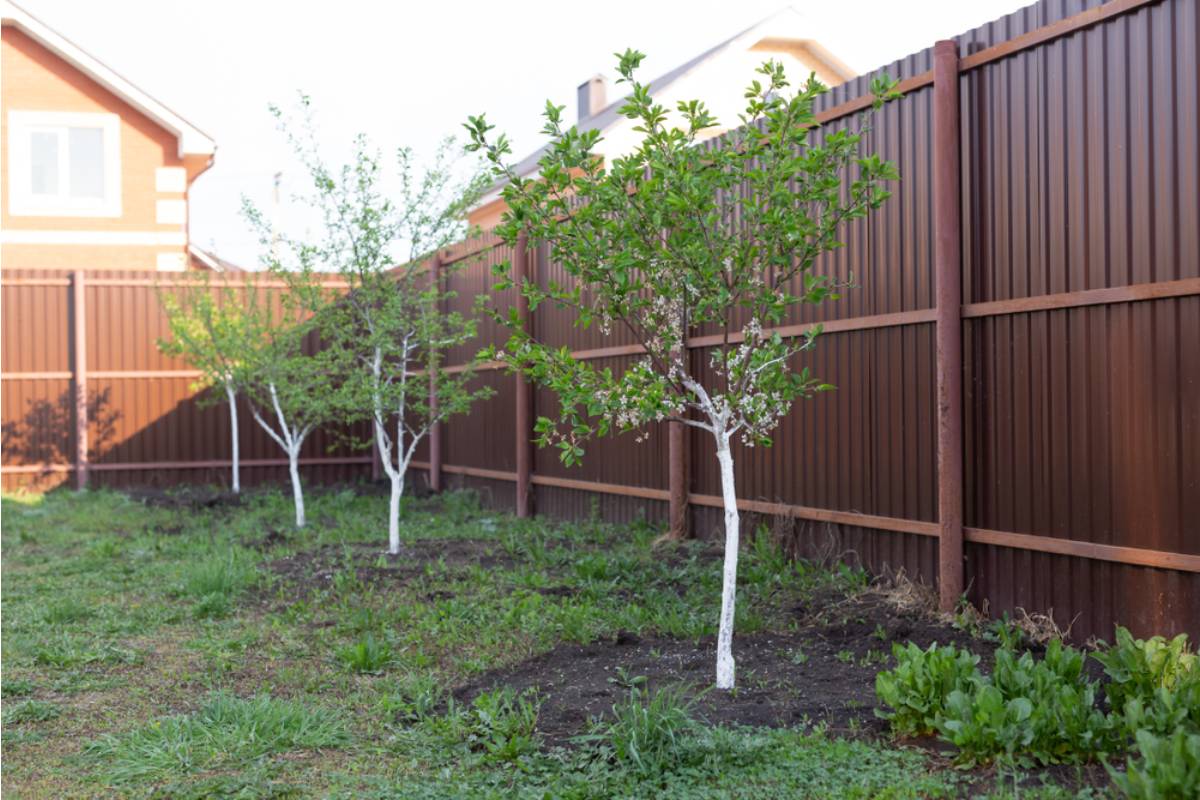
The neighbors also planted trees along the side of their property next to the homeowner’s house. According to the story, the trees began blocking windows and changing the amount of light and visibility around the home. The homeowner raised the issue with his neighbor, but he said the concern was simply ignored.
That response made the situation feel less like an accidental landscaping disagreement. The homeowner believed the neighbor knew exactly where the trees were being placed and understood how they would affect the adjacent house. With the properties already close together, even ordinary landscaping decisions could have significant consequences. The homeowner increasingly felt that his smaller lot was being treated as though it were an extension of the neighbor’s property.
The Property Line Suddenly Became a Battlefield
The next major dispute involved the boundary between the two properties. The neighbor reportedly challenged the existing property line and brought a surveyor onto the homeowner’s land. The homeowner said he had already provided a copy of a survey from the previous owners, apparently believing that the existing documentation settled the matter.
Things became even stranger when another neighbor later hired a surveyor for construction work. According to the story, the troublesome neighbor threatened to call police on that surveyor while apparently having no issue with his own surveyor examining the area. The homeowner found the double standard difficult to understand. What had started as a dispute over a few feet of property now seemed to involve nearly every boundary between the homes.
The Pump House Became Part of the Dispute
The property-line disagreement produced an especially unusual claim involving a pump house. The homeowner said the structure had been sitting on his property for around thirty years, dating back to when the house was originally built. Despite its long history, the neighbor reportedly believed that he owned the structure.
The dispute did not end there because the neighbor also reportedly claimed part of the homeowner’s seawall. That was particularly significant because the homeowner had only about 27 feet of waterfront frontage, while the neighboring property had roughly 110 feet. A dispute over even a small section of shoreline therefore had the potential to become a major issue. The homeowner was now dealing with arguments that extended from the yard all the way to the water.
A Greenhouse Appeared Beside the House
Then came another addition that pushed the homeowner’s frustration even further. The neighbors installed a greenhouse only a few feet from his house, directly outside one of the windows. The homeowner believed the structure was unpermitted and planned to report it to the city.
By this point, the pattern had become exhausting. There were decorations, trees, property surveys, boundary claims, and now a greenhouse sitting extremely close to the home. None of the individual disputes seemed enormous on its own, but together they created a constant stream of conflict. The homeowner no longer felt as though his house was a peaceful private space.
Cameras Made the Situation Feel Even More Intense
There was another detail that emerged after the homeowner described the situation. The neighbor reportedly had cameras positioned around the property, including cameras that pointed into the homeowner’s yard. That meant the homeowner was not only dealing with physical changes near the property line but also the feeling of being watched.
A response from a person suggested consulting an attorney about the surveillance and explained that privacy laws can depend heavily on the placement and purpose of cameras. The response emphasized that there can be an important difference between a camera incidentally capturing a neighboring property and one deliberately aimed toward areas where people reasonably expect privacy. The homeowner then confirmed that cameras were indeed pointing into his yard. That revelation made an already uncomfortable situation feel considerably more invasive.
The Lake House Stopped Feeling Like Home
Eventually, the constant disputes began affecting the homeowner’s ability to function normally inside the house. He described suffering from severe anxiety and said he sometimes could not exist in the home without noise-canceling headphones. That created an especially difficult problem because he worked from home and could not simply block out his surroundings all day.
There were also occasions when he stayed with his parents because being at the lake house had become too stressful. The irony was painful because the property was supposed to be a place where he could relax and enjoy the water. Instead, he became afraid of going outside because he might encounter the neighbors. The dream home had gradually turned into a place he wanted to avoid.
Professional Help Was Eventually Necessary
As the situation continued, the homeowner sought professional help for his worsening mental health. He was prescribed medication, although he explained that it did not provide an immediate solution because such treatment can take time to have an effect. Meanwhile, the environmental stressor was still sitting right next door.
The problem was no longer simply about an annoying neighbor or a property disagreement. The homeowner’s daily life had changed because of the ongoing conflict. Even routine activities around his own house had become emotionally exhausting. The situation had reached a point where leaving the property began to look less like giving up and more like protecting his ability to live normally.
The New House Finally Brought Some Peace
Eventually, the homeowner and his fiancée purchased a new house in a rural area. They closed on the property at the end of July, giving them a chance to leave the lake house behind. Almost immediately, the homeowner noticed a dramatic improvement in his mental health after getting away from the conflict.
The move appeared to confirm just how much the old environment had been affecting him. Without the neighbor next door, the constant anticipation of another confrontation disappeared. The rural setting also offered the kind of distance and quiet that the lake house had stopped providing. For the first time in a long while, the homeowner could apparently breathe without wondering what would happen next.
But They Still Had to Sell the Lake House
There was one major problem remaining: the old lake house had not yet sold. The couple was still responsible for the property while trying to find a buyer, meaning the neighbor was not completely out of their lives. Even though they had moved roughly an hour away, the property remained a loose thread connecting them to the conflict.
That alone would have been stressful enough, but another message soon arrived. The neighbor contacted the homeowner’s fiancée and reportedly announced that he was going to move their landscaping because they were no longer living at the house. After everything that had already happened, the homeowner viewed this as another escalation.
The Final Message Made the Conflict Feel Endless
The landscaping threat hit especially hard because the homeowner had already taken the biggest possible step to escape the situation. He had moved, bought another house, and physically removed himself from the neighborhood. Yet the neighbor was still creating new problems involving the old property.
The timing also made the situation particularly frustrating because the couple was trying to sell the lake house. Any unauthorized changes to landscaping could potentially complicate the sale or create another dispute with prospective buyers. Instead of finally being able to close that chapter, the homeowner felt as though the conflict was following him down the road.
Other People Recognized the Pattern
A response from a person advised the homeowner to install cameras immediately, predicting that the neighbor might eventually take matters into his own hands. The suggestion became even more relevant after the homeowner revealed that the neighbor already had cameras aimed toward his yard. Another response from a person asked what exactly the neighbor meant by moving the landscaping and questioned whether legal protections might be available.
Other people focused on the emotional toll of living beside someone who constantly watches, reports, or confronts a neighbor. One response from a person described experiencing a similar situation and said moving had eventually made an enormous difference to their mental health. Another simply called the laminated parking warning extremely petty. Taken together, the responses showed that the homeowner’s decision to leave was not viewed as an overreaction by everyone who heard the story.
The Most Important Escape Wasn’t the New House
The new rural property may have solved the immediate neighborhood problem, but the biggest change appeared to be the homeowner’s ability to feel safe and comfortable again. The lake house had become associated with anxiety, surveillance, arguments, and the possibility of another confrontation. Moving somewhere quieter gave him physical distance from the source of that stress.
Still, the unfinished sale means the story has not completely ended. The homeowner now has to protect the old property and its landscaping while trying to find a buyer, all while dealing with a neighbor who apparently believes he has the right to make changes there. What was supposed to be a forever home ultimately became a property the homeowner needed to escape.
The strangest twist is that leaving the neighborhood finally brought peace, only for the neighbor to send one more message reminding him that the conflict was not quite finished.