Homeowner Says Her Neighbors Covered the Shared Garden Fence With a Huge Black Privacy Cloth, Then She Found a Simple Way to Make Her Yard Beautiful Again
A person shared her story about living in a semi-detached house where the neighbors had always been unusually private. For five years, the arrangement had mostly worked, even though the neighbors rarely interacted with anyone and kept their roller shutters closed for much of the day. There had been a few uncomfortable incidents involving parking and her mother-in-law, but nothing serious enough to turn the situation into an outright feud.
The garden, however, was where things suddenly became complicated. The homeowners had recently removed old wooden fence pickets attached to a stone wall because the boards were rotting, and they initially planned to replace them. Once the wood was gone, they realized they actually preferred the exposed stone and decided to leave it that way.
The Neighbors Took Privacy Seriously
The next-door family had always been known for keeping to themselves. Their two children were now teenagers, but the person said she rarely saw visitors other than the children’s grandparents, and the household generally avoided interaction with the surrounding neighbors. Their roller shutters were often partly closed during the day before being completely shut around five in the afternoon.
The person admitted she sometimes wondered what went on inside the unusually private house. Still, she emphasized that she wasn’t judging them for wanting privacy and had mostly learned to leave them alone. The arrangement became a little more noticeable after the old fence boards were removed.
The Stone Wall Changed Everything
Without the rotten pickets covering it, the stone wall suddenly looked better than expected. The homeowners had originally assumed the old fence would simply be replaced, but seeing the stone exposed changed their minds. Their garden now had a more open appearance, and they were happy with the unexpected improvement.
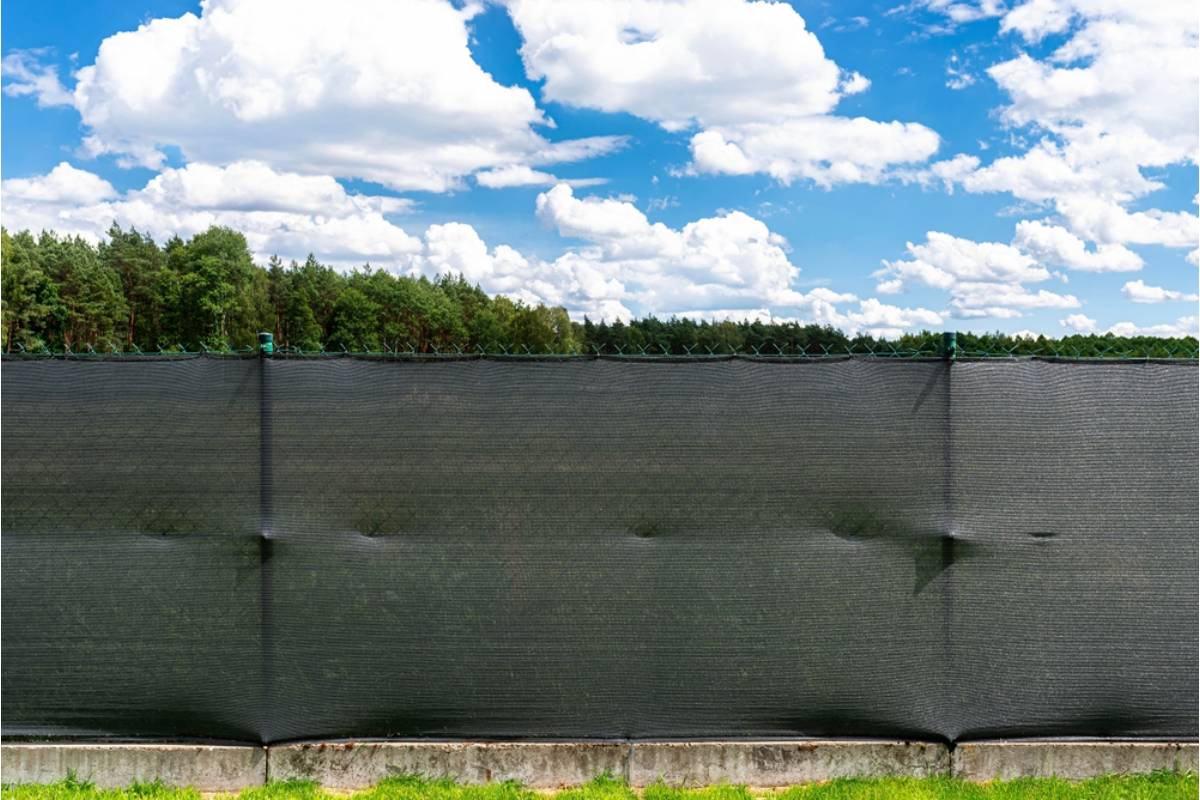
That decision apparently created a new problem for the neighbors. The following evening, the person noticed something large and black placed along the neighbors’ side of the remaining boundary. It wasn’t a carefully designed garden screen or attractive trellis, but a plain black cloth that immediately became impossible to ignore.
A Privacy Screen Appeared
The neighbors had apparently installed the cloth to restore the privacy they had lost when the old fence arrangement changed. From their perspective, the solution made perfect sense because they clearly valued being shielded from the neighboring garden. The homeowners didn’t object to the desire for privacy at all.
The problem was what the new screen looked like from their own house. The huge black surface became one of the first things visible whenever the person looked toward the garden. What had previously been an attractive stone wall now had a dark backdrop that made the entire outdoor space feel less welcoming.
The Garden Suddenly Looked Different
The person found herself thinking about how to improve the view without creating another conflict. A flower box seemed like an obvious possibility, especially because flowers could soften the harsh appearance of the black cloth. She wasn’t interested in touching, moving, or damaging the neighbors’ privacy screen.
Her concern was simply whether decorating her own side might somehow be interpreted as an act of hostility. The neighbors already made her nervous because of their previous behavior, and she didn’t want a harmless gardening project to become another awkward confrontation. That hesitation turned a simple flower box into something that felt surprisingly complicated.
The Property Line Became the Key Detail
The more the person explained the situation, the clearer it became that the important issue was where everything was located. The remaining boundary included a concrete wall, while the neighbors still had fencing on their side with the boards positioned extremely close together. The homeowners were not trying to interfere with anything belonging to the other family.
That distinction mattered because the proposed flower box would simply improve the homeowners’ own garden. They weren’t planning to attach anything to the privacy cloth or alter the fence. The entire idea was essentially to put something attractive in front of an ugly view.
Then the Responses Started Pointing Out the Obvious
A response from a person immediately argued that the homeowners were not doing anything wrong by improving their own side of the garden. Another person pointed out that if the black cloth was genuinely intended to provide privacy, the neighbors probably wouldn’t be able to see whatever flowers or decorations were placed on the opposite side anyway. That observation made the situation seem much less dangerous than the homeowner had imagined.
The person eventually admitted that she might simply be overthinking everything. She wasn’t worried about blocking the neighbors’ privacy, but she didn’t want the relationship to become even more awkward. The strange part was that she was already giving considerable thought to the feelings of neighbors who had apparently gone out of their way to remain private.
Defensive Landscaping Entered the Conversation
Another response from a person introduced an entirely different gardening strategy called “defensive landscaping.” Instead of worrying about an unpleasant view, the person suggested using small trees or tall shrubs to block the view entirely. It was less about confronting the neighbors and more about quietly designing the garden so the homeowner didn’t have to look at them.
That idea fit the situation surprisingly well. Rather than trying to hide the black cloth with an elaborate structure, the homeowner could use plants to make her own garden more attractive. The solution would also have the advantage of looking intentional instead of appearing like a reaction to the neighbors’ choice.
Flowers Offered the Simplest Solution
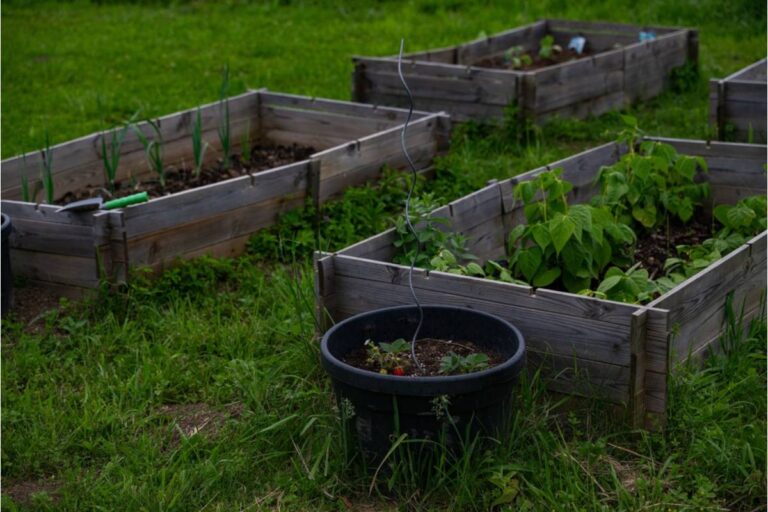
Several responses encouraged the homeowner to place a flower box on her side of the boundary. They pointed out that wanting flowers in a garden was hardly an aggressive act, particularly when the installation didn’t interfere with anything on the neighboring property. A response from a person even suggested that the neighbors would probably think nothing more than that the garden had gained some new plants.
That perspective seemed to take some of the tension out of the situation. The homeowner wasn’t trying to send a message or make fun of the neighbors’ privacy concerns. She simply wanted to make the view from her own home pleasant again.
The Neighbor Stories Became More Complicated
The responses also revealed that privacy landscaping can create its own problems. One person described a grandmother who had planted evergreen trees along a property line specifically to create a natural screen. Once the trees grew thick enough to serve their purpose, the neighbor trimmed them heavily from his side until they were almost see-through.
Another person mentioned using privet for privacy, although that suggestion quickly led to warnings about invasive varieties in some parts of the United States. English ivy received similar criticism, with another gardener describing how difficult it could be to stop the plant from creeping through a fence. Suddenly, the innocent flower-box dilemma had opened the door to an entire discussion about how gardeners defend their boundaries.
The Neighbors Were Still the Wild Card
The homeowner explained why she remained nervous despite all the reassurance. On one occasion, a friend had partially used the neighbors’ paved front area while making a turn, and the neighbor reportedly came outside shouting because he believed the ground would immediately become uneven. Experiences like that had taught her to be extremely cautious around the family.
That history explained why she was treating a basic gardening decision like a diplomatic negotiation. She wasn’t necessarily afraid that a flower box would start a major dispute, but she knew the neighbors could react unpredictably. Even something as ordinary as improving a garden view felt like a potential source of unnecessary tension.
The Black Cloth May Have Solved the Problem
There was, however, an important detail that made the whole situation easier. The black cloth was opaque, meaning the neighbors’ main goal was clearly to prevent people from seeing through the boundary. If the homeowner placed flowers on her own side, those flowers would not undermine the privacy the neighbors had deliberately created.
That meant both households could effectively get what they wanted. The neighbors could keep their secluded garden, while the homeowners could decorate their own side with plants and flowers. For once, the property boundary didn’t have to be a source of conflict because the two goals could exist side by side.
A Garden Makeover Was Hardly an Attack
The homeowner eventually received a fairly consistent message from the responses. As long as the flower box remained on her side and didn’t damage the privacy screen or boundary, there was little reason to treat it as an offensive gesture. The neighbors had chosen how their side looked, and she was equally entitled to decide how hers looked.
That distinction transformed the situation from a neighbor dispute into an ordinary gardening project. A flower box wasn’t a protest against the black cloth, and a few plants weren’t a challenge to the family’s privacy. They were simply part of the homeowner’s own vision for her garden.
The Unexpected Twist Was How Little the Neighbors Might Care
The person had spent so much time worrying about the neighbors’ reaction that she almost overlooked the simplest possibility. The family had installed the black cloth because they wanted to stop seeing into the neighboring garden, not because they wanted to control what grew there. If anything, the screen meant they were less likely to notice the changes on the other side.
That made the entire conflict feel almost comical in hindsight. One household wanted privacy, while the other wanted flowers, and neither goal actually threatened the other. The giant black cloth that initially seemed like a new source of tension could end up becoming the perfect background for a much prettier garden.
The Garden Could Finally Become Hers Again
By the end of the discussion, the solution seemed almost embarrassingly simple. The homeowner could plant flowers, add a decorative box, or even use carefully chosen shrubs without touching the neighbors’ privacy screen. She didn’t need to remove the black cloth or convince the neighbors to change their habits.
The garden could simply become beautiful on her side of the boundary again. What began as anxiety over an ugly black barrier ultimately turned into a reminder that good landscaping doesn’t always require cooperation from the people next door. Sometimes the best way to handle a difficult garden view is to stop worrying about what the neighbors might think and plant something you actually enjoy looking at.