Homeowner Says His Neighbor Claimed Half a Meter of His Backyard, Marked the Wall With Spray Paint, and Started Cutting His Plants, Until a Fence Dispute Turned Into a Police Report
A person shared his story about buying a duplex and settling into what he hoped would be a peaceful home. After spending more than a year getting comfortable with the property, he expected the usual homeowner responsibilities, from maintaining the yard to keeping the garden looking tidy. Instead, a dispute with the neighbor over the boundary fence began turning his backyard into a source of constant frustration.
The trouble was not simply about an aging wooden fence or a few inches of outdoor space. The neighbor believed that roughly half a meter of land on the homeowner’s side actually belonged to him. What started as a disagreement about the property line soon spilled into the garden, where plants and walls became part of an increasingly uncomfortable battle.
The Neighbor Had a Very Different Idea of Where the Boundary Belonged
According to the homeowner, the neighbor repeatedly brought up the claim that the existing fence encroached on his property. The conversations reportedly included passive-aggressive behavior, leaving the homeowner unsure how to handle a dispute that never seemed to go away. Even though the boundary had not been officially established through the survey the homeowner eventually arranged, the neighbor appeared convinced that his interpretation was correct.
For anyone who enjoys gardening, uncertainty about a property line can quickly become a serious headache. A fence determines where flower beds end, where shrubs can grow, and how much room a homeowner has to work with. When two neighbors disagree about that invisible line, even an ordinary afternoon spent tending plants can suddenly feel like stepping into someone else’s territory.
A Patch of Wall Became an Unexpected Message Board
The situation took a particularly strange turn when the homeowner returned to find spray paint on the back wall. The neighbor had reportedly marked the wall with his house number and drawn a line indicating the roughly 50-centimeter strip he believed belonged to him. Rather than waiting for an official survey to settle the matter, the neighbor appeared to be treating the painted markings as a declaration of ownership.
It was hardly the kind of backyard makeover anyone would request. Instead of a fresh coat of paint or a carefully planned climbing plant, the wall had become part of a property dispute. The homeowner now had a visible reminder of the disagreement every time he looked toward the fence, making it difficult to enjoy the outdoor space without thinking about the conflict.
The Garden Plants Were Pulled Into the Dispute
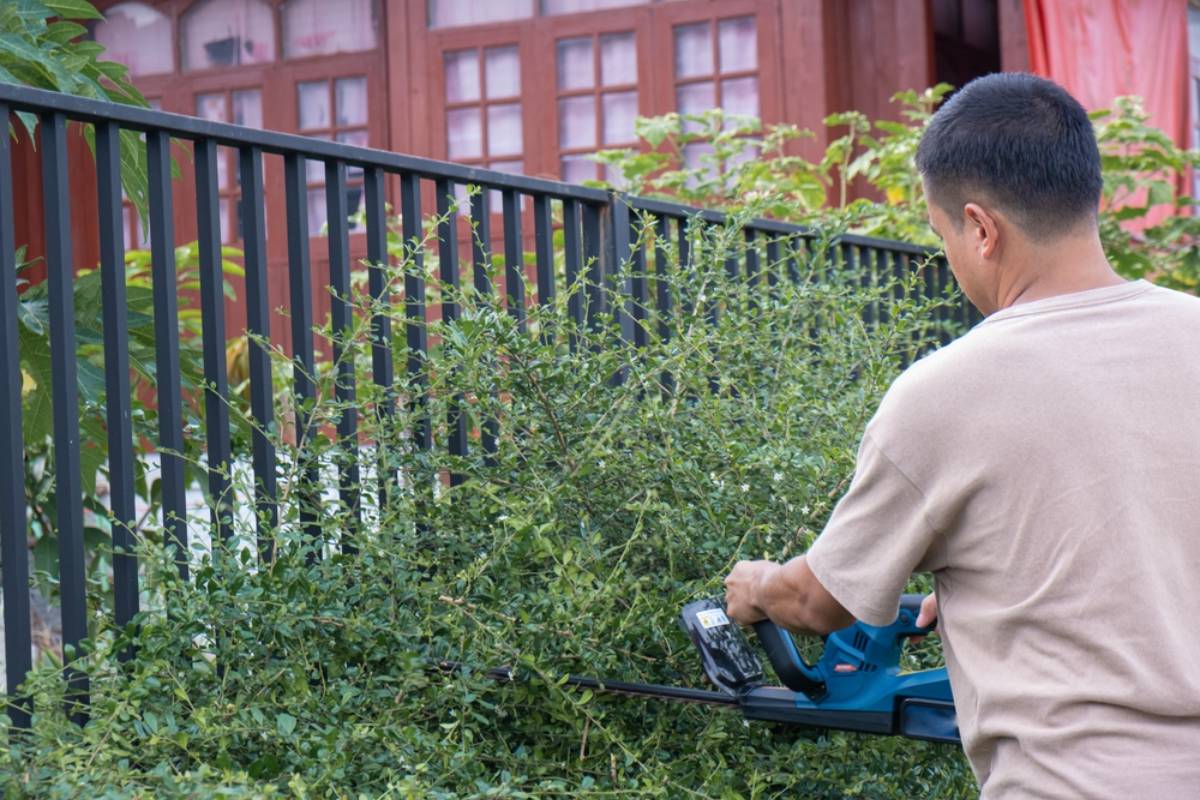
The homeowner also reported that the neighbor had reached over the fence to paint the wall and cut his plants because he believed the disputed strip was his land. For someone trying to maintain a pleasant garden, that crossed a particularly frustrating line. Plants require time, care, and patience, and even modest pruning can change the appearance of a carefully maintained outdoor space.
The disagreement had now moved beyond a theoretical boundary on a property map. It involved actual changes to the homeowner’s surroundings, including plants that he expected to manage himself. With the neighbor acting on his own interpretation of the boundary, the homeowner faced a difficult question: how could he protect his garden without allowing the dispute to consume his life?
The Earlier Conversations Had Not Solved Anything
The homeowner explained that the dispute had not been raised as a major issue during the house settlement process, when questions about existing disputes had reportedly been discussed. According to his account, the neighbor had previously brushed the matter aside as though it were not a serious problem. Yet the complaints continued, creating a frustrating contrast between the neighbor’s earlier attitude and his later behavior.
That inconsistency made the situation harder to resolve through an ordinary conversation. If both sides had simply disagreed about a measurement, a survey might have been enough to clear things up. But once the disagreement was accompanied by confrontations and interference with plants, the homeowner had reason to worry about how the neighbor might react to any decision.
A Confrontation With His Wife Changed the Mood
The homeowner said the dispute escalated again when the neighbor confronted his wife and yelled at her. At that point, the disagreement was no longer just about the fence, the wall, or the garden. It had become a personal conflict that was affecting the household and making the property feel less peaceful.
The incident appears to have been the turning point for the homeowner. Rather than continuing to tolerate repeated arguments over the same disputed strip, he decided he was willing to pay for a professional boundary survey and consider installing a new fence. He wanted an objective answer, even if getting one meant spending money that he had originally hoped to save.
The Rotten Fence Offered a Chance to Start Over
The existing fence was described as an old, rotting wooden structure, so replacing it was not an entirely unreasonable idea on its own. The homeowner wanted a Colorbond fence, a style that would match the fence behind the property and give the yard a cleaner, more consistent appearance. A new boundary barrier could also provide a practical opportunity to establish where the property actually ended.
However, the homeowner had a more complicated plan in mind than simply replacing the old structure. He wondered whether he could install a separate fence without involving the neighbor in the process. That possibility raised a fresh set of questions about property boundaries, notification requirements, and what a homeowner can do when a neighbor refuses to cooperate.
He Considered Leaving the Old Fence Behind
One option the homeowner considered was placing the new fence approximately 60 centimeters away from the existing one. If the neighbor’s claim about the boundary turned out to be correct, that distance might leave a small buffer between the new fence and the disputed area. The homeowner said he was willing to give up the space if necessary, because his main goal was to end the ongoing conflict.
The idea had an obvious appeal: a new fence could create a clear separation without requiring the neighbor to agree to every detail of the project. Yet leaving the old fence standing would not automatically settle the legal questions surrounding ownership, access, or responsibility for the existing structure. Before making any changes, the homeowner needed reliable measurements and advice about the rules that applied to his property.
The Homeowner Wanted Facts Instead of Another Argument
Rather than relying on the neighbor’s painted line, the homeowner arranged for a surveyor to assess the boundary. This was an important step because a visible marking on a wall does not establish the legal property line by itself. A professional survey could provide the measurements needed to determine where the fence should stand and whether the neighbor’s claim had any factual basis.
A response from a person supported the idea of getting the boundary surveyed before deciding what to do next. The suggestion was to establish the facts first and then make a decision based on the result, rather than allowing the disagreement to dictate the next move. For a homeowner hoping to protect both his garden and his peace of mind, an independent assessment offered a more constructive path than another heated conversation.
The Neighbor Might Not Get the Outcome He Expected
The homeowner made it clear that he was prepared to accept the survey’s findings, even if they meant the boundary lay farther into his side of the property than he wanted. His priority was not necessarily winning every centimeter of disputed ground. He wanted a reliable answer and a way to stop the recurring confrontations.
That willingness to accept an unfavorable result could also help separate the practical problem from the personal conflict. If the survey confirmed that the existing fence was in the correct location, the neighbor would have less room to argue that the boundary needed to change. If the measurements showed that the fence was misplaced, the homeowner could explore the appropriate steps to correct it rather than guessing where the new structure belonged.
Other People Encouraged Him to Keep His Cool
A response from a person advised the homeowner to remain professional when dealing with the neighbor. The advice acknowledged that repeated accusations and confrontations could make anyone angry, but suggested that calm, measured communication would serve him better than responding in kind. Keeping records and avoiding unnecessary arguments could also help preserve a clear account of what had happened.
That advice was particularly relevant because the homeowner still had to live next door to the person involved. Even a successful survey might not immediately end the tension between the households. By keeping communication factual and avoiding retaliatory behavior, the homeowner could focus on resolving the property issue rather than allowing every new disagreement to become another round of conflict.
The Homeowner Took the Dispute Beyond the Fence Line
In an update, the homeowner said that, following the responses he received, he had contacted police through a non-emergency reporting line. He also uploaded security camera footage for them to review. This marked a significant change from the earlier stage of the dispute, when he was mainly looking for a way to replace the fence without having to deal directly with the neighbor.
The involvement of police did not, by itself, establish who legally owned the disputed strip of land. That question still depended on the boundary evidence and the relevant property procedures. However, the homeowner’s decision to provide footage meant that the reported confrontations and other incidents could be considered separately from the technical question of where the fence belonged.
A Contractor Was Brought In to Measure the New Fence
The homeowner also reported that a fencing contractor had visited to measure for a replacement fence. His plan was to install the new structure wherever the actual boundary was determined to be, rather than simply following the neighbor’s painted markings or the position of the old, deteriorating fence. The survey would be important in helping him avoid creating another problem while trying to solve the first one.
For gardeners, a properly placed fence can do more than mark a boundary. It can protect flower beds, establish a secure growing area, and provide a reliable structure for future landscaping. But when a property line is disputed, it is essential to confirm the boundary and understand any applicable notice or approval requirements before beginning construction.
The Surveyor’s Visit Became the Missing Piece
The homeowner said he had booked a surveyor but was still waiting for the visit to take place. He had also contacted the solicitor who assisted with the house settlement to ask whether title insurance might help if the matter turned out to involve a genuine land dispute. Those steps suggested that he was trying to address both the physical fence problem and the possible legal or financial implications.
The survey remained especially important because neither the neighbor’s confidence nor the homeowner’s willingness to move the fence could substitute for reliable boundary information. Depending on the findings and the applicable local rules, the next steps might involve formal notice, negotiation, or professional legal advice. The homeowner was finally gathering the information needed to make those decisions instead of relying on an argument that had already dragged on for too long.
The Real Goal Was to Reclaim a Peaceful Backyard
By the end of the update, the homeowner had several practical steps underway: police had received the security footage, a fencing contractor had measured for a replacement, a surveyor had been booked, and the solicitor had been contacted about possible title insurance coverage. None of those actions guaranteed an immediate resolution, but together they created a more structured way forward. The dispute was no longer being handled solely through tense exchanges over the fence.
The biggest twist was that the homeowner was willing to surrender some disputed space if that was what the facts required. He was not trying to turn the garden into a battleground over every centimeter; he wanted to know where the property line actually belonged and to stop the conflict from spilling into his home life. For anyone who has ever watched a carefully tended garden become entangled in a neighbor dispute, the story is a reminder that sometimes the most useful first step is not planting something new, but establishing exactly where the ground begins and ends.