Homeowner Says New Neighbors Spent Weeks Quietly Renovating Their First House, Then Let the Yard Grow Into a Three-Foot-Tall Weed Jungle
For the homeowner, the arrival of a new couple next door initially felt like a major improvement. The previous neighbors had been notorious for dogs that barked for hours, and repeated citations had apparently done little to change the situation. After years of dealing with that noise, seeing the house sold seemed like the end of a long-running neighborhood headache.
The new owners appeared to be the complete opposite. They were young, quiet, and kept mostly to themselves while spending their first few weeks cleaning out the property. There were no barking dogs, no constant disturbances, and no obvious drama, which made the homeowner cautiously optimistic about the change.
The New Couple Started With the House
The couple seemed to be tackling the property one project at a time. Solar walkway lights appeared along the back of the house, running from the garage and giving the impression that improvements were slowly underway. From the outside, it looked as though the owners were simply prioritizing the interior before turning their attention to the yard.
That seemed perfectly reasonable at first. Moving into a house can come with an endless list of repairs, boxes, expenses, and unexpected problems. The homeowner even wondered whether this might be the couple’s first house and whether they simply didn’t have enough money left over to buy a mower.
Then the Grass Started Getting Taller
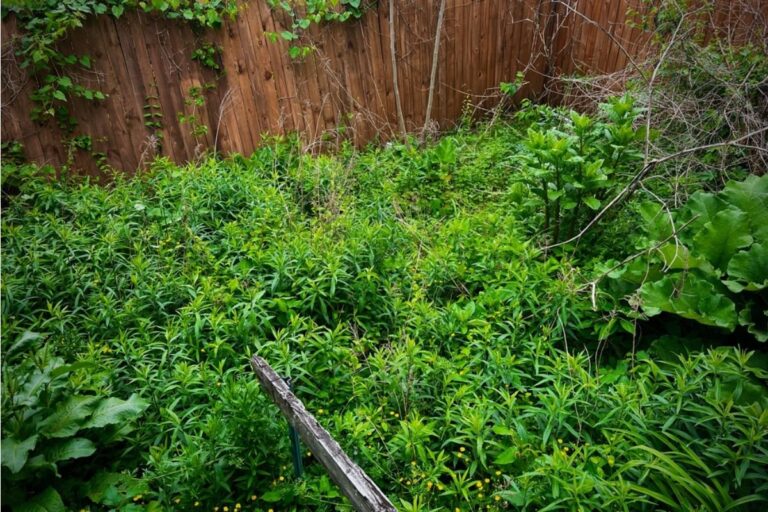
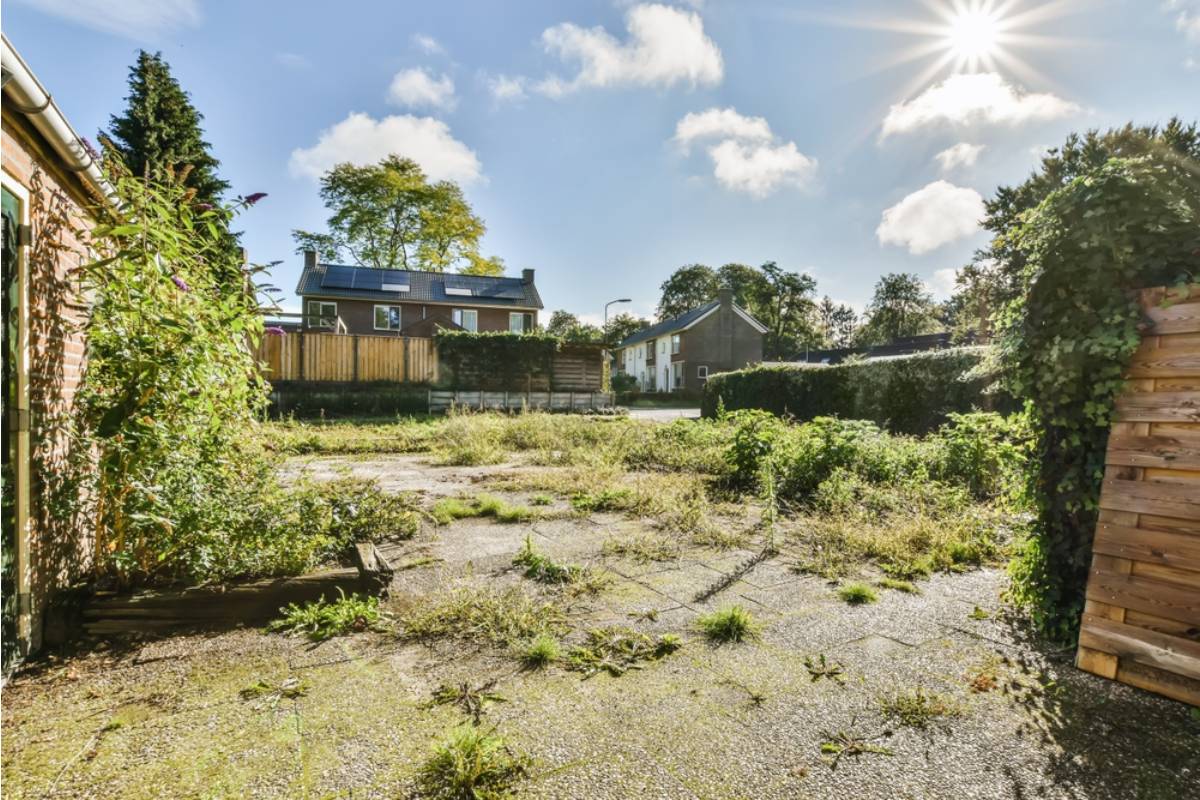
A few weeks passed, and the lawn began changing dramatically. What had initially looked like a temporary lack of maintenance turned into an increasingly wild patch of grass and weeds. The raised flowerbeds that had once existed on the property were disappearing beneath the growth as well.
Some of the weeds were eventually approaching three feet tall. This wasn’t simply a lawn that had missed a mowing appointment or two, at least according to the homeowner. The corner lot also made the situation especially visible from the street, meaning there was very little way to ignore the transformation.
The Garden Disappeared Under the Weeds
The former garden area became almost unrecognizable. Instead of cultivated plants filling the raised beds, weeds had taken over and continued spreading across the property. For someone who cared about keeping their own yard maintained, watching the neighboring garden vanish beneath the growth was becoming increasingly frustrating.
The homeowner also worried that the overgrowth could bring unwanted consequences. Taller vegetation can provide hiding places for insects and rodents, while neglected plants can eventually spread into neighboring yards. Even though none of that had directly caused a problem yet, the homeowner could already see the potential for trouble.
A Mower Quietly Crossed the Property Line
Rather than confronting the new neighbors, the homeowner took matters into their own hands in a limited way. They mowed along the property line twice, intentionally going slightly over the boundary to prevent weeds from creeping into their own lawn. At one point, they even mowed the strip of grass in front of the neighbors’ house.
It was a strangely careful compromise. The homeowner wasn’t demanding a perfectly manicured lawn and admitted that their own yard wasn’t pristine either. They simply wanted to prevent the vegetation from becoming so tall that it created problems for the surrounding properties.
Offering a Mower Suddenly Felt Complicated
There was another obvious solution, though: offer the couple a mower. The homeowner had both a lawn tractor and a push mower and considered letting the new owners use one of them to tackle the jungle.
But there was a catch. With weeds already towering over the yard, the homeowner worried about what might be hidden underneath them. A mower going into three-foot vegetation could encounter anything from debris to an unexpected obstacle, turning a friendly favor into an expensive repair.
The City Had Already Started Paying Attention
Then another detail entered the picture. The city had recently posted warnings about properties where residents weren’t keeping vegetation under control, explaining that action would eventually be taken against homeowners who allowed their yards to become excessively overgrown.
That changed the situation slightly. The homeowner wasn’t planning to report the couple, but suspected a city notice might eventually arrive anyway. The concern wasn’t necessarily about forcing the neighbors to maintain a perfect lawn, but about watching them potentially receive a substantial fine when a simple conversation might have prevented it.
One Response Suggested Taking the Friendly Route
A response from a person took a very different view of the situation. They pointed out that the new couple sounded more like quiet neighbors who needed time than neighbors from hell, especially compared with the barking-dog situation that had just ended.
The suggestion was straightforward: introduce themselves and offer help. Another response recommended a low-key approach, such as asking how the move was going and whether the couple needed anything neighbor-wise before casually offering to weed-eat the yard.
Other People Thought the Complaint Was Premature
Several responses focused on the fact that the couple had only recently moved in. A person pointed out that buying a house often means spending the first several months dealing with projects inside before the outside receives any attention.
Another person shared an experience of buying a neglected property where the yard had become almost entirely covered with weeds. Instead of being criticized by the neighbors, the new owners were given time to get organized, and eventually transformed the property into something much more intentional.
The Homeowner Wasn’t Convinced
The homeowner pushed back on the idea that this was merely ordinary tall grass. They emphasized that the weeds were approaching three feet in height and argued that the situation had gone well beyond what a normal push mower could comfortably handle.
They also stressed that they hadn’t contacted the city or filed a complaint. In their view, they were actually trying to prevent the problem from reaching that stage by mowing the edges themselves and considering whether to offer equipment.
Then Came the Unexpected Comparison
A particularly blunt response suggested that the homeowner was becoming the actual difficult neighbor. The reasoning was hard to ignore: the previous occupants had created years of noise and complaints, while the new couple were quiet, private, and apparently causing no direct disturbance.
Someone else summarized the situation even more sharply by pointing out that the homeowner had effectively traded barking dogs for tall grass. The new problem was certainly more visible, but compared with hours of barking and repeated citations, it was hardly the neighborhood disaster that had come before.
Some People Suspected There Was More Going On
Not everyone assumed the couple simply didn’t care about their property. Several people suggested there could be circumstances the homeowner couldn’t see from the outside. The owners might have run out of money after purchasing the house, discovered expensive repairs, or simply been overwhelmed by everything involved with moving.
One person offered a particularly plausible possibility: perhaps the couple had encountered a major problem inside the house that had pushed yard maintenance far down their priority list. From the street, an abandoned-looking lawn can appear careless, but the story behind it may be completely different.
The Corner Lot Made Everything More Noticeable
There was one reason the homeowner felt especially bothered by the situation: the house sat on a corner lot. That meant the tall weeds weren’t tucked away behind another property where only the immediate neighbors could see them.
The vegetation was visible from multiple directions and increasingly difficult to overlook. For the homeowner, that made the yard feel less like a private maintenance issue and more like something affecting the appearance of the entire block.
Then Someone Suggested Simply Waiting
One response offered perhaps the least dramatic solution of all: do nothing for now. The couple were still settling in, and there was no indication that they intended to leave the yard permanently abandoned.
The city already had an enforcement mechanism in place, so there was little reason for the homeowner to become the neighborhood’s unofficial lawn inspector. If the owners received a notice, they would presumably deal with it themselves, and the problem would eventually resolve one way or another.
Kindness Became the Most Popular Solution
Despite all the disagreement, one suggestion kept appearing in different forms. Introduce yourself, be friendly, and offer assistance without making the conversation sound like a complaint about their property.
A person even suggested offering to weed-eat the worst sections once, simply to help get the couple over the initial hurdle. If they declined, there would be no harm done, and if they accepted, the overgrown yard could be brought under control without involving the city.
The Quiet Neighbors Were Already an Improvement
There was an amusing irony buried beneath the entire dispute. After years of dealing with neighbors whose dogs barked for hours, the homeowner had finally gotten exactly what many people would consider ideal neighbors: people who were quiet, private, and rarely caused trouble.
Their biggest offense was that their lawn looked terrible. That made the situation frustrating, but it also raised the question of whether the homeowner was expecting too much too quickly from people who were still unpacking their lives.
The Yard Might Eventually Tell a Different Story
For now, the property remained a work in progress. The solar lights suggested that the couple were making at least some effort to improve the place, even if the grass and garden had been left behind.
The real twist was that the homeowner might have spent more time worrying about the weeds than the new owners themselves did. They could receive a city notice and finally mow everything, hire someone, borrow equipment, or completely redesign the yard. Until then, the quiet couple next door may have been far less of a problem than the three-foot weeds made them appear.