A Marietta Woman’s Backyard Died After a Weed Control Treatment About 2 Years Ago, and the Company Agreed to Fix It Free Only After a TV Station Got Involved
About two years ago, a weed control crew treated Ann Meding’s yard in Marietta, Georgia. About a week later, she says, her backyard began to die. Meding, a real estate agent, told Atlanta News First she called the company regularly for two years before a supervisor agreed, on a call the station’s ANF Investigates team recorded, to fix the yard at no cost.
Bermuda in Front, Fescue in Back
Meding bought the house in 2009 and has lived there since 2012, according to the station, and she built the yard herself. About three years ago, arthritis surgery left her unable to pull weeds, so she hired a weed control service that neighbors recommended.
The front lawn is Bermuda grass, and the treatment worked there, the station reported. The backyard is fescue. Meding does not know what product was sprayed on it.
Two Years of Calls
Meding says supervisors were scheduled to visit eight to 10 times and none came. At one point, the station reported, the company said it would aerate and overseed a few times and sod the whole backyard if that failed.
Atlanta News First did not name the company. The station said no official complaint had been filed with the Georgia Department of Agriculture and that a supervisor agreed to try to resolve the matter first. The company did not respond to the station’s requests for comment or an interview.
The Recorded Call
On the final, recorded call, a supervisor agreed to come to Meding’s home at 8 a.m. the next day. The supervisor also agreed to remove the weeds, aerate and reseed at no cost, according to the report. It was Meding’s first conversation with a supervisor in two years.
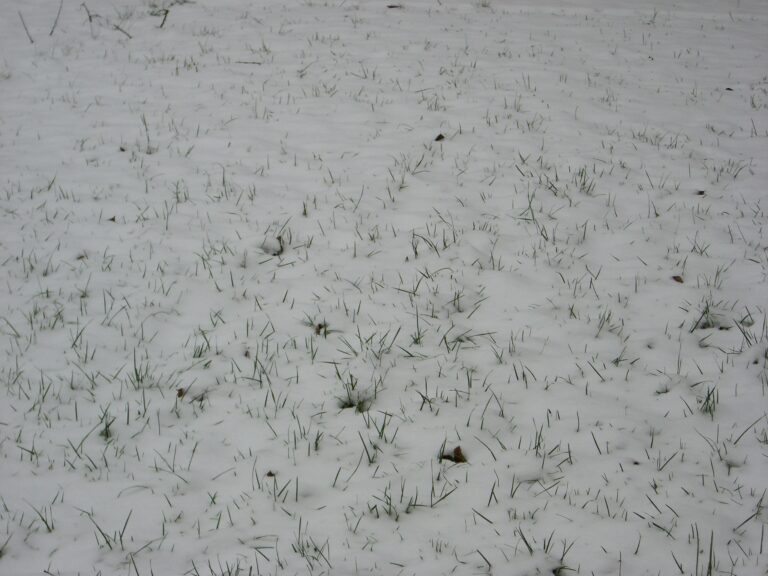
The story does not say whether the promised work was done. Meding told the station she knew of no aeration or overseeding, and that the yard had not been sodded. She estimated the yard is about 60% weeds and 20% bare dirt. Some new grass has appeared, though she does not know where it came from, and irrigation water is washing away soil and exposing tree roots.
What Herbicide Damage Looks Like
The station did not report a cause, and nothing in the story confirms what killed the grass. University extension guidance describes what herbicide injury usually looks like. The University of Georgia’s Bulletin 1258 on abiotic injuries of turfgrass says damage often appears in a pattern that matches how a product was applied, such as streaks or bands from overlapping passes, and that symptoms can develop quickly or several weeks later. The bulletin says pesticide injury can be told apart from disease and insect damage, and it advises applying products according to the label, with calibrated equipment and no overlaps.
The University of Maryland Extension’s guide to chemical injury in lawns says such injury is often tied to misapplication of products labeled for lawns. It lists causes such as applying too much product, using the wrong product, spraying in high heat and runoff after rain, and describes dead grass in patches along a fence line or around a tree ring as one sign.
Rules for Georgia Lawn Companies and Where to Complain
Georgia requires a license for lawn work that involves pesticides. According to the Department of Agriculture’s pesticide contractor page, anyone who applies pesticides to another person’s land as a business needs a pesticide contractor’s license from the state agriculture commissioner. A lawn care or maintenance company is listed as an example, and the business must employ at least one full-time certified commercial applicator. Operating without a license can bring an injunction and a fine of up to $1,000 per violation.
The department’s pesticide program enforces state and federal rules on how pesticides are used and applied. Atlanta News First listed the program’s phone number as (404) 656-4958 and its email as [email protected], and said homeowners can file a complaint through the department’s online pesticide incident form.
Meding’s yard was still struggling when the station reported on it on Nov. 10, and the follow-through on the company’s promise was not yet known.
This article was produced with AI assistance and edited for accuracy against the sources linked above.