University of Maryland Extension Says Lawns Get No Fertilizer Between Nov. 15 and March 1, Shade Trees Are Pruned After Leaf Fall, and Shrubs Get Stakes 12 to 18 Inches Out
Maryland’s lawn fertilizer cutoff is one of the few garden deadlines written into state law. University of Maryland Extension’s November gardening tips and tasks says lawns get no fertilizer between Nov. 15 and March 1 under the Maryland Lawn Fertilizer Law, shade trees are pruned after leaf drop, and winter-vulnerable shrubs get stakes 12 to 18 inches from the plant to hold a burlap or plastic wind barrier.
The page, last updated Sept. 3, 2026, is a standing seasonal checklist rather than breaking news. A few of its numbers are worth checking against other sources.
The fertilizer blackout and its exact dates
The extension checklist gives the lawn rule as Nov. 15 to March 1. The Maryland Department of Agriculture words it slightly differently. Its fertilizer page puts the blackout at Nov. 16 through March 1, which makes Nov. 15 the last day homeowners may apply.
A 2017 department announcement states the same window: products containing phosphorus and nitrogen cannot be applied between Nov. 16 and Feb. 28, with applications resuming March 1 if the ground is not frozen and heavy rain is not forecast. It covers both homeowners and lawn care professionals, though professionals may apply nitrogen until Dec. 1 with specially formulated products that reduce runoff. Potassium and lime may be applied during the blackout, and fertilizer may not be used to de-ice walkways.
The extension checklist adds that lawn seed should not be sown now, since it will not survive winter, though sod can be laid, with short days limiting how well it establishes. Fallen leaves can be moved intact to a compost bin or another area, and a mulching mower can shred them on the lawn to speed decomposition.
Pruning shade trees after the leaves drop
For trees, the Maryland list says to prune shade trees after leaf drop, removing dead and diseased branches first and then making any cosmetic cuts. Branches should be cut at their origin without leaving stubs, the branch collar should stay intact, and trees should not be topped to control size. Crown reduction is the alternative it names.
Timing differs a little by source. University of Missouri Extension says to prune live branches in the dormant season, late winter or early spring before leaves form, because wounds heal fastest then, while dead or diseased branches can come out whenever they are spotted. It makes the same points on clean cuts: leave no stubs, avoid flush cuts, protect the collar and never top a tree. It also recommends sterilizing tools in one part household bleach to ten parts water to avoid spreading disease.
Stakes and burlap for shrubs
The Maryland list names azalea, rhododendron, holly, boxwood and newly planted Southern magnolia as winter-vulnerable. For these, it says to hammer stakes about 12 to 18 inches from each plant and wrap a barrier of burlap or plastic around them to buffer wind.
University of Wisconsin-Madison Division of Extension’s Lisa A. Johnson describes the same approach for evergreens in a winter burn guide: set stakes around the plant, wrap and secure burlap around them, and keep the burlap off the top so it does not sag under heavy snow and rest on branches. She suggests watering about one inch a week if there is no rain until early or mid-November in southern and central Wisconsin, and 1 to 3 inches of mulch around the root zone, kept off trunks. Anti-desiccant sprays, she says, are not reliable.
Other November jobs on the Maryland list
The checklist covers more than lawns and shrubs. It says to cover bare vegetable beds with leaves or mulch or plant a cover crop, to cut asparagus to 2-inch stubs after the first frost with 4 to 6 inches of mulch, and to mulch perennials after the first hard freeze to reduce frost heaving. Tender bulbs and tubers such as canna, dahlia and gladiolus are dug up, cured for one to three weeks and stored at 40 to 50 degrees.
It also asks gardeners to leave some leaf litter and plant stalks for overwintering beneficial insects, and to report spotted lanternfly sightings to the Maryland Department of Agriculture.
This article was produced with AI assistance and edited for accuracy against the sources linked above.
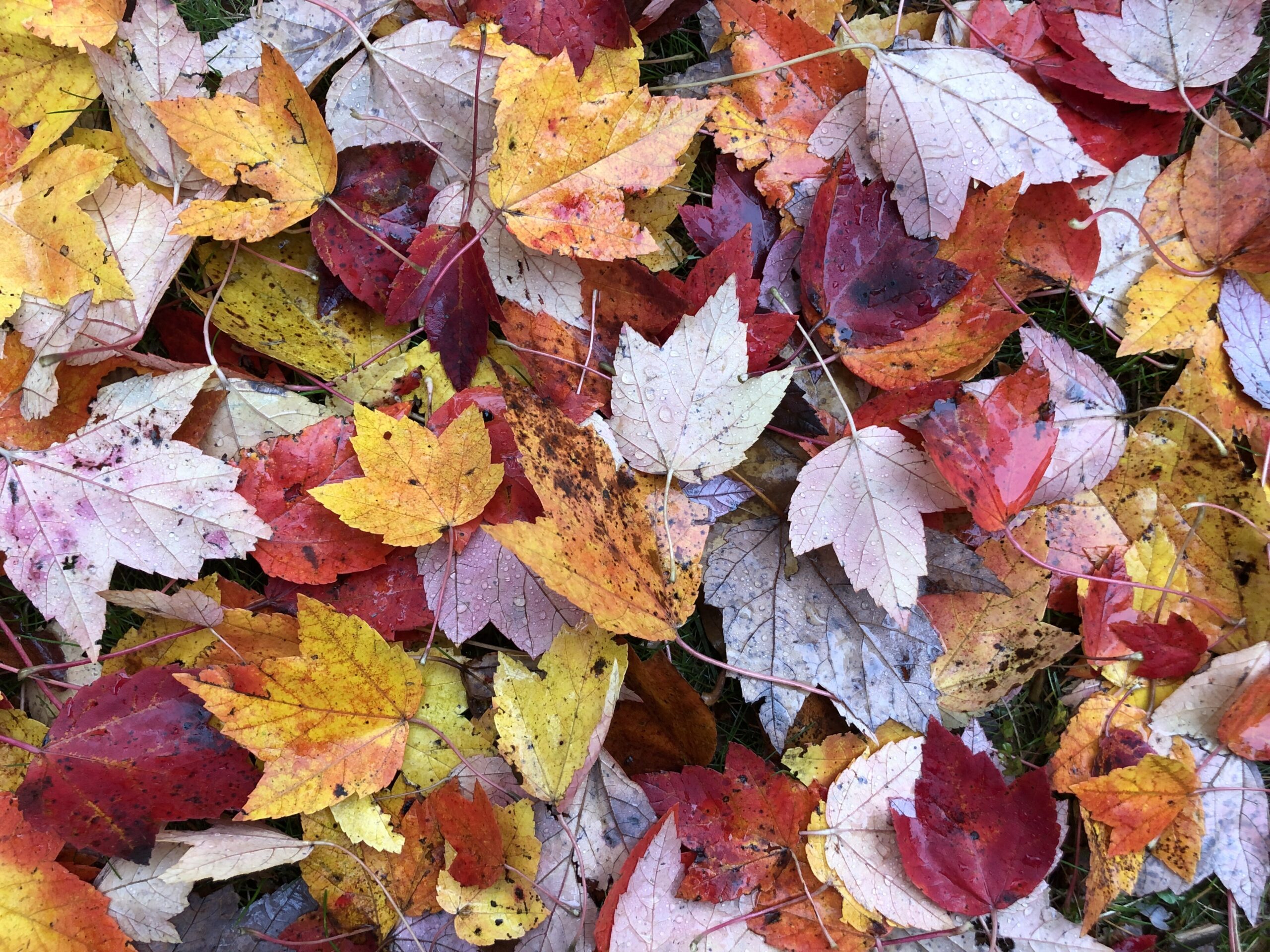
Image: Fallen red maple leaves on a lawn in autumn, by Famartin, licensed CC BY-SA 4.0, via Wikimedia Commons.