Strawberry Plants Get 4 to 6 Inches of Wheat or Rye Straw Around Thanksgiving, After Nights Near 20 Degrees, WVU Extension Agent JJ Barrett Says
Strawberry plants spend the fall getting ready to sleep, and the mulch goes on only after they have. In West Virginia, that usually means around Thanksgiving. WVU Extension Agent JJ Barrett of Wood County advises spreading 4 to 6 inches of wheat or rye straw over the plants once nights are near 20 degrees Fahrenheit, the soil is consistently below 40 degrees and the ground has frozen.
The guidance is a standing extension guide rather than a new announcement, and it matches what several other universities say, with small differences in how much straw to use.
Waiting for dormancy before the straw goes on
Barrett says plants should first harden to the cooler fall weather. Dormant plants lie flatter, and their leaves take on a light red or green tint. If unusually warm weather lingers, he suggests waiting another couple of weeks. If a drop below 20 degrees is forecast before the mulch is down, he says to mulch right away.
Rushing carries a cost. Iowa State’s Richard Jauron writes that mulching too early makes plants more prone to winter injury, with the right moment coming after several consecutive nights near 20 degrees and soil temperatures consistently below 40 degrees. HGTV contributor Julie Martens Forney, in a strawberry winterizing guide, adds that applying mulch too early can keep plants from hardening off and can rot the crowns. In mild climates, Forney recommends waiting until the soil reaches 40 degrees for three straight days.
What the straw protects
According to Barrett, temperatures below 20 degrees can kill flower buds and injure roots and crowns. Repeated freezing and thawing can also heave plants out of the soil, exposing roots to the air. The mulch helps control diseases and weeds as well, and it can delay spring blooms by a few days, which helps avoid late frost damage to open flowers.
The University of Minnesota Extension says the crown of a strawberry plant may be killed at 15 degrees, which makes winter protection essential there. Jauron notes that open flowers can be severely damaged or destroyed at 32 degrees or lower in spring, which is why many growers leave the straw on as long as possible.
How much straw, and what kind
Barrett recommends wheat or rye straw, broken up if it comes in large compressed slabs. He puts the cost of a square bale at about $5 to $8, enough to cover roughly a 10-foot row.
Depth varies by source. Jauron recommends 3 to 5 inches of clean, weed-free oat, wheat or soybean straw, which should settle to 2 to 4 inches, and 6 to 8 inches for strawberry pyramids and raised beds because they get colder than ground-level plantings. Forney’s range is 3 to 5 inches of loose mulch settling to 2 to 3 inches. Minnesota’s guide recommends 4 to 6 inches of weed-free straw in its main text, matching Barrett, though other tables on the same page give 2 to 3 inches. Purdue Extension’s strawberry winterizing page gives about 2 to 3 inches after the mulch settles.
An earlier site guide to straw depth for strawberry beds covered the Iowa State figures. The numbers differ because climates and growing methods differ, and Barrett’s 4 to 6 inches is the West Virginia recommendation.
Timing by region
The calendar shifts with climate. Jauron lists early November in northern Iowa, mid-November in central Iowa and mid- to late November in southern Iowa. Purdue says late November or early December in most of Indiana. Minnesota’s guide says to apply straw in late fall after plants have gone dormant and after two or three frosts have hardened them off.
Purdue adds that mulching too early can rot the crown, and that dormant flower buds can be damaged below 15 degrees.
Taking it off in spring
Barrett says to check plants regularly and begin removing mulch gradually as new growth starts, until leaves are visible. The mulch should come off when about 25 percent of plants are producing new growth. Removing it in March can trigger early blooms, and temperatures of 32 degrees or lower can destroy open flowers, so the straw should stay as long as possible.
Jauron, Forney and the Minnesota guide agree on the next step: rake the straw into the paths between rows rather than discarding it, and keep some nearby to re-cover plants if frost threatens during bloom. With proper care, Barrett notes, strawberry plants can produce for up to three years.
This article was produced with AI assistance and edited for accuracy against the sources linked above.
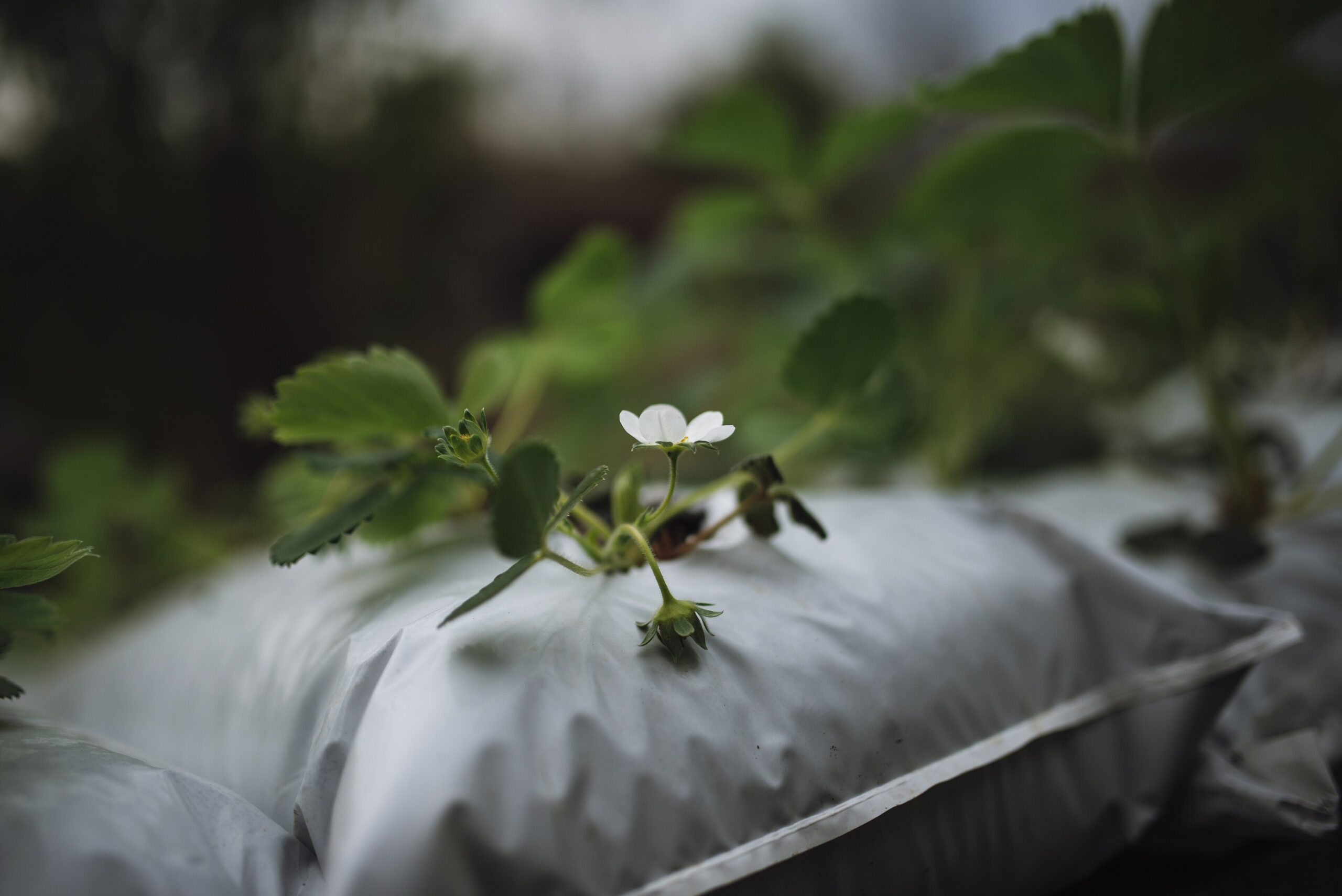
Image: “Strawberry plant with a small white flower growing in a garden in early spring” by Shixart1985, licensed CC BY 2.0, via Wikimedia Commons.