HGTV Lists Rye Grass and Crimson Clover as Fall Cover Crops That Suppress Weeds, Stop Erosion and Feed Bare Garden Soil Over Winter
A harvested vegetable bed with nothing growing on it leaves the soil exposed through winter, and a cover crop is the usual answer. HGTV’s “Late Fall Gardening Tasks” list, written by Jeff Stafford, names rye grass and crimson clover as cover crops that suppress weeds, prevent erosion and enrich the soil over winter. The HGTV page carries no publication date, so the details below come from university extension and SARE sources that do.
Those sources agree on the main idea and differ on timing, seeding amounts and how to end the crop in spring. This guide sorts out the two plants, when each goes in and what happens before planting season returns.
What a Bare Bed Faces Over Winter
On its late fall task list, HGTV says cover crops such as rye grass and crimson clover help suppress weeds and prevent erosion, and that once freezing weather kills them they become soil builders. The page adds that cover crops are also recommended for attracting beneficial insects that help control pests.
Judy Salveson, an Extension Master Gardener in Northern Virginia, describes the same payoffs from the beds of the Organic Vegetable Garden at Potomac Overlook Regional Park in a Sept. 30, 2022 post. Crimson clover suppresses weeds and adds nitrogen there, field peas and oats are the most-used mix, and winter rye adds organic matter, especially to depleted beds.
University of Illinois Extension horticulture educator Nicole Flowers-Kimmerle lists the same benefits in “Cover Crops in the Home Garden”, updated in November 2021. Cover crops add organic matter, improve soil structure, draw up nutrients from deep in the soil and provide habitat for beneficial insects, she wrote.
Rye Grass and Crimson Clover Do Different Jobs
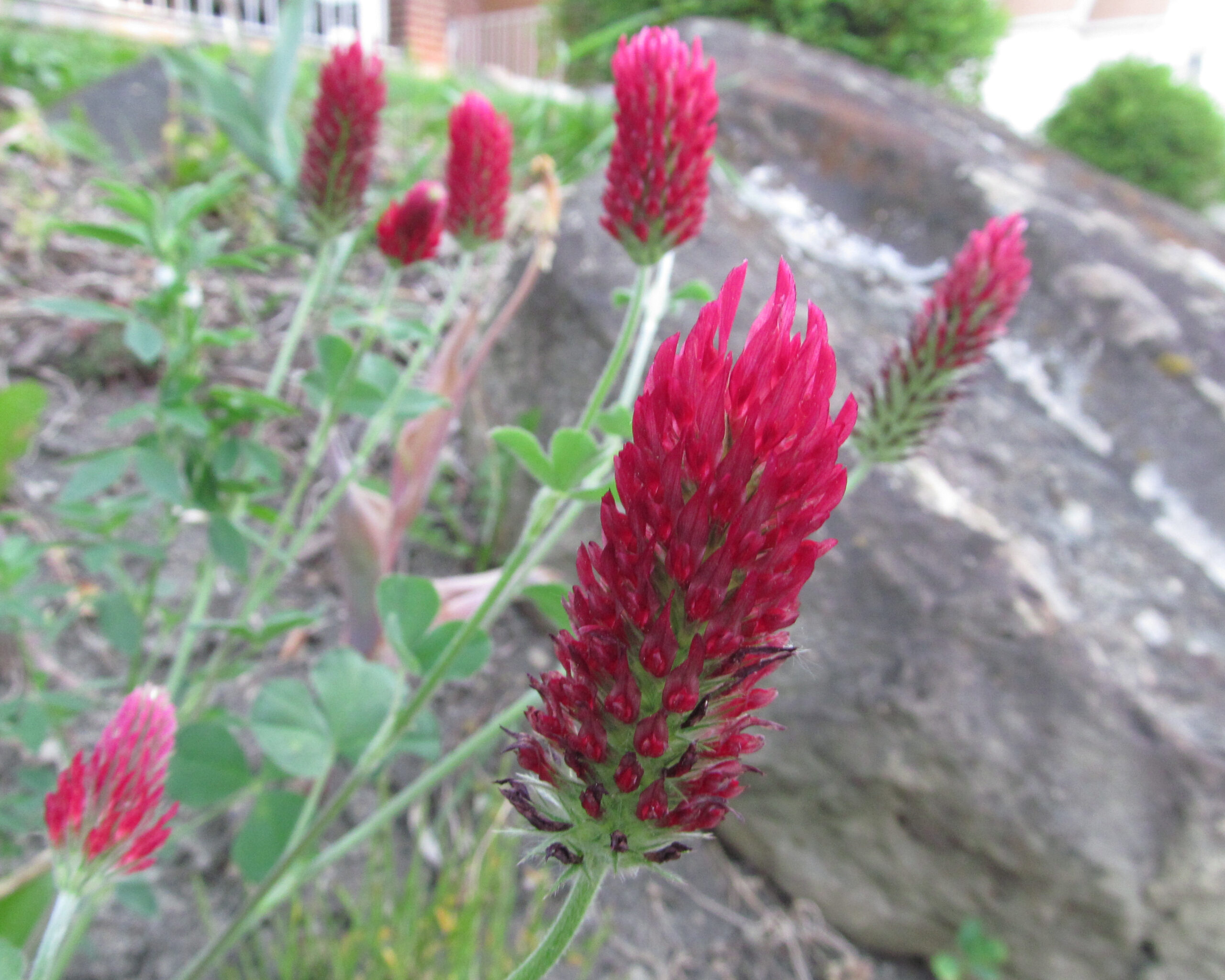
The two plants named by HGTV fill different roles. Crimson clover is a legume. Illinois’s Flowers-Kimmerle says it takes nitrogen from the air into a form plants can use, and Salveson says it adds nitrogen in the Potomac Overlook beds. Rye is a cereal grain, and the cereals do other work.
Flowers-Kimmerle’s list of cool-season options includes crimson clover, winter rye, oats and winter wheat, and she notes that crimson clover can also be used as a warm-season crop.
Julia Gaskin, sustainable agriculture coordinator at the University of Georgia’s College of Agricultural and Environmental Sciences, gave a similar split in a 2012 UGA Field Report by Merritt Melancon. Legumes such as clover, Austrian winter peas and vetch add nitrogen for the next crop, while cereals such as rye and oats suppress weeds, reduce erosion and add organic matter. Gaskin said cover crops carry as much root biomass below ground as they show above it. That article is older and written for Georgia, so it serves as background rather than a current local calendar.
Sowing Dates and Seed Amounts
Salveson starts planting in September in Virginia. Winter rye can go in as late as the end of October, she wrote, because it germinates in cooler temperatures. She now rarely uses rye alone and prefers it in grain-and-legume mixes.
The national picture is looser. In Chapter 6 of Robert Myers’s Cover Crops, published by Sustainable Agriculture Research and Education (SARE), cereal rye can be planted later than most covers. Early fall is best, SARE says, and late fall works “in a pinch,” though erosion control and root depth suffer. Crimson clover falls in the mid-fall window, ideally at least two weeks before the average frost, and it overwinters in the southern Corn Belt but generally not the northern Corn Belt. The chapter is written for field-scale farming, so its seeding rates do not translate to a garden bed.
Planting late carries a cost. Lovely Garden Roots reported on a University of Vermont study in which cereal rye sown after its four-week window gave less ground cover.
For the garden-scale amounts, Gaskin’s UGA article gives 1 to 3 pounds of seed per 1,000 square feet depending on the mix, broadcast by hand across the bed. For a legume the gardener has not grown before, she advised buying the correct inoculant so the right bacteria can fix nitrogen. Illinois’s Flowers-Kimmerle gives no calendar dates and says only to plant in late summer or early fall after vegetables are harvested, so seeds have time to germinate and grow before winter.
Cutting and Tilling Before Spring
HGTV says that if cover crops do not die back on their own, they can be cut down and tilled under starting a few weeks before planting season.
The extension sources add specifics. Flowers-Kimmerle says to let the crop grow until it flowers, then mow it close to the ground when flowering begins to prevent seed formation. Cutting too early may cause regrowth, and cutting too late may cause reseeding. The cut material can stay as mulch, which suppresses weeds, or be tilled in, which adds organic matter but disturbs soil life. Crops killed by winter cold need not be tilled. She says to wait 2 to 4 weeks after mowing before planting anything else.
Salveson lets crimson clover bloom into late May at Potomac Overlook, then cuts it down and dries it as mulch for eggplant. Winter rye, she wrote, is best cut and incorporated after it flowers, though that is labor-intensive and delays next year’s planting; turned under before flowering, it regrows and needs repeated cultivation. She allows two to three weeks for breakdown before planting tomatoes and peppers in May.
Gaskin said to mow or string-trim in March and till in about two weeks before planting, or to transplant vegetables such as tomatoes directly into the dried residue as mulch.
SARE adds a caution on timing. It says to avoid ending a large cover crop one to two weeks before planting in moist soil, because a thick residue mat can keep the ground from drying, and to terminate early or at planting instead.
Where the Advice Differs
The sources do not give one gap between cutting and planting. HGTV says a few weeks, Gaskin says about two weeks after tilling, and Flowers-Kimmerle says 2 to 4 weeks after mowing. Gardeners are best served by the local extension office’s calendar for their zone.
The word “rye” also needs care. HGTV writes “rye grass,” while SARE names cereal rye, Illinois and Salveson name winter rye. Seed labels are worth checking for the exact plant before buying.
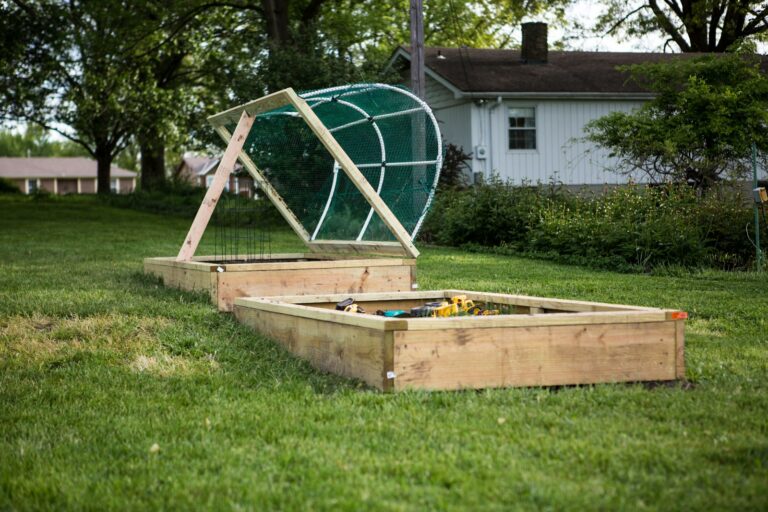
For a bed that is bare right now, the practical sequence across the sources is short: sow before the soil freezes, let winter kill what it kills, mow or cut what it does not, and till or leave the residue as mulch with a few weeks to spare before spring planting. HGTV’s raised-bed winter checklist, covered earlier on this site, lists clearing dead plants first, which fits the same sequence.
This article was produced with AI assistance and edited for accuracy against the sources linked above.
Image: Cbaile19 – CC0/Wikimedia Commons