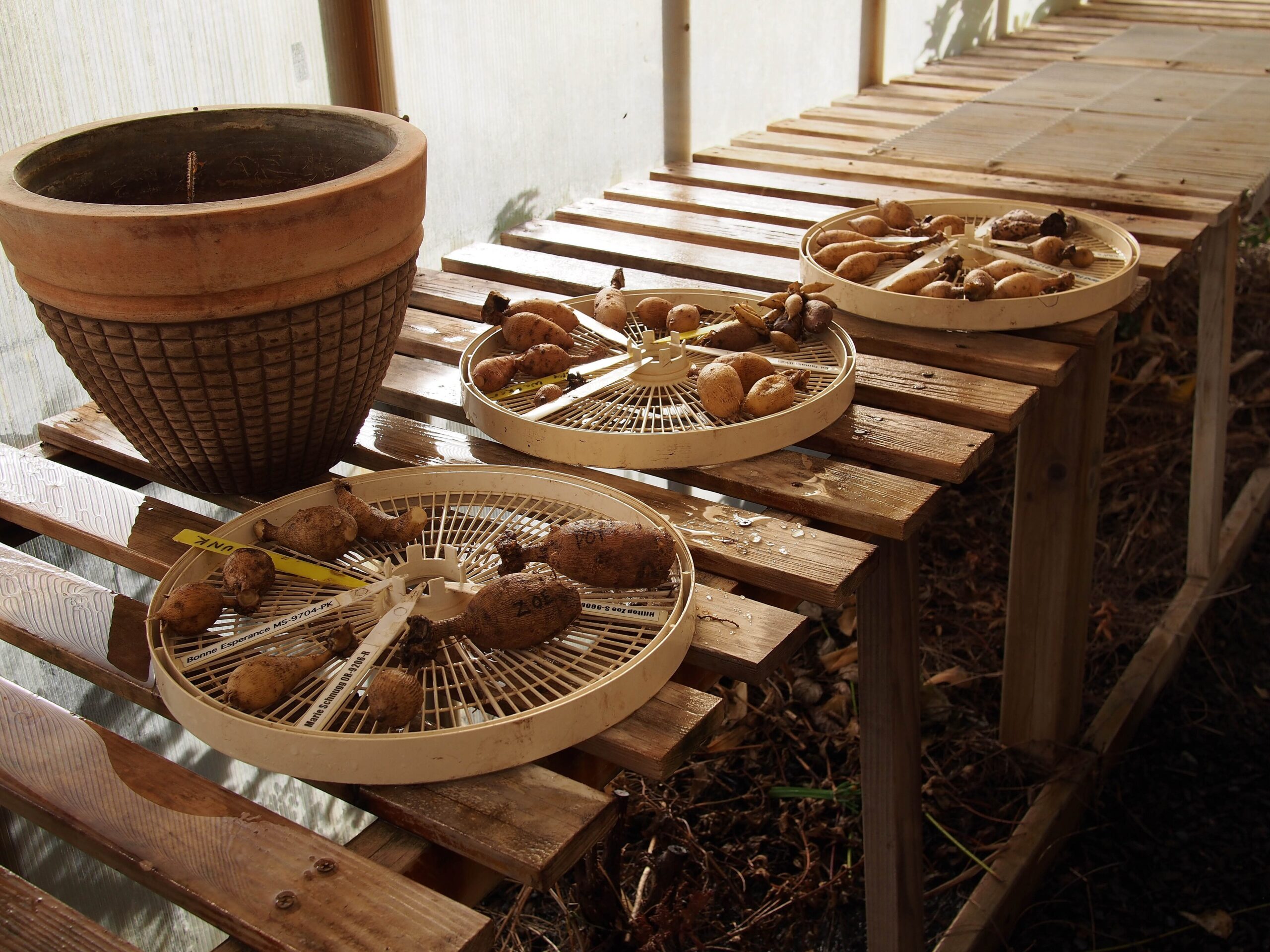
Penn State Master Gardener Mary Niezelski Dries Dahlia Tubers for 4 to 5 Days, Not the Usual 24 to 48 Hours, Before Packing Them in Cedar Shavings
The usual advice is to let freshly dug dahlia tubers dry for 24 to 48 hours, and for one Pennsylvania gardener that was not enough. Mary Niezelski, a Master Gardener in Westmoreland County, dries hers out of direct sun for four or five days before storing them, according to a Penn State Extension article she wrote on winter storage. Her method is one of several that gardeners can compare as the digging season winds down.
Why Four or Five Days Won Out Over Two
Niezelski explains the change plainly in her Penn State Extension article, last updated Aug. 24, 2025. The recommended 24 to 48 hours of drying was not enough in her experience, so she gives the tubers four or five days after spraying off the soil.
Her sequence starts well before drying. She waits for frost to enjoy the blooms, which in USDA Zone 5b usually comes in the second or third week of October. Dahlias need to be in the ground at least 120 days to produce mature tubers for storage, she writes, though frost is not required before digging. Heavy freezing and winter rain can cause rot, especially in Zone 6 and colder.
Before lifting the clump, she cuts the stalk to a manageable height and uses a pitchfork. A hose removes excess soil. She then cuts the stalk off at the tubers, turns the clump over and divides it with loppers, a sturdy knife and scissors. Each tuber needs a neck and a crown to carry a viable eye, and she warns that necks thinner than a pencil will probably dry out by spring.
Trimming matters too. In her words, not trimming the roots can lead to too much moisture being retained.
What Other Guides Say About Drying Time
Her four to five days sits well above what other published guides recommend. The American Dahlia Society’s guide to digging, dividing and storing tubers, by Alan Fisher and revised in October 2019, dries cut divisions for “about 24 hours for small roots and 24 to 36 hours for medium to large roots,” adding that the time varies with temperature and humidity. It also warns against drying divisions on cement, which draws out water and promotes shriveling.
University of Minnesota Extension, in a page on planting bulbs, tubers and rhizomes by Mary H. Meyer, cures dahlias for 1 to 3 days depending on temperature, in a dry, ventilated area out of direct sun and drying wind at 60 to 70 degrees Fahrenheit.
Oregon State University Extension’s dahlia publication by Carla Stables, Julie Moore and Evie Smith says tubers that will be replanted after overwintering dry for about 24 hours. A separate Oregon State news story by Kym Pokorny also puts drying at 24 hours, on a tarp or newspaper in a sheltered space such as a garage, and says to avoid concrete, which wicks moisture.
The spread between those figures and Niezelski’s is wide. She notes that first-season storage involves trial and error and that a few tubers may not survive.
Cedar Shavings, Vented Bins and the Materials to Skip
After drying, Niezelski layers the tubers with cedar shavings in plastic bins with lids. She drills holes in the sides for airflow and leaves the lids unclicked. Cardboard boxes, newspaper and paper bags are not recommended in her article because they wick up too much moisture.
Other sources reach different conclusions on containers and medium. Oregon State says plastic bags or cardboard boxes work well, with coarse vermiculite, coconut coir or wood shavings as the packing, and warns that wood shavings can cause shriveling, so they need monitoring and a light misting if dry. It adds that the storage bag should not be closed, since that builds moisture and can lead to tuber rot.
The American Dahlia Society’s Fisher says most growers use bagged vermiculite, and that coarse vermiculite works better than the fine horticultural grade. Wood chips, in the form of dust-free pet bedding, are an alternative. He advises against peat moss, noting that dry peat shrivels tubers while moist peat promotes rot, and calls perlite a poor choice because it does not absorb excess moisture.
Temperature, Monthly Checks and the Move Back Out in Spring
Niezelski stores tubers where they cannot freeze and not on cement floors, in a space that stays around 40 to 50 degrees Fahrenheit. When outdoor air reached about 0 degrees, she moved the containers to a temporary warmer area. The American Dahlia Society says most growers aim for about 40 to 45 degrees and a nearly constant temperature, while Oregon State recommends a dark, non-freezing place ideally at 34 to 40 degrees. Minnesota Extension gives an average of 40 degrees.
The checks differ in rhythm. Niezelski looks after a few weeks, replaces shavings that feel moist and says the first month typically has the most moisture problems. Fisher says to inspect tubers monthly through winter and throw away any that show rot before it spreads. Oregon State says to remove rotting tubers, let the bag air dry and return it to storage.
Spring comes with its own steps. Oregon State says to move tubers to a 40 to 50 degree location in March to April to encourage visible eyes before dividing or planting, and Fisher advises a warm, dark, room-temperature spot, with a teaspoon of water per quart of bag space added a week to 10 days before removal.
Earlier coverage on the site includes a look at overwintering dahlia tubers and a guide on storing elephant ear tubers.
Get stories like this by email. Sign up for The Parent Diaries Letter.
This article was produced with AI assistance and edited for accuracy against the sources linked above.
Image: F. D. Richards, CC BY-SA 2.0, via Wikimedia Commons