Neighbor Suddenly Accused of Poisoning a Homeowner’s Yard After Native Plants Mysteriously Died
A person shared her story about a neighbor who had already crossed a few boundaries, but the latest incident left her wondering whether the situation had taken a much darker turn. After years of awkward encounters, unwanted visits into her yard, and complaints about her love of birds and native plants, an entire patch of healthy greenery suddenly turned brown.
The timing was what made her suspicious. Plants that had been thriving only days earlier were suddenly dead, while nearby grass remained perfectly green, leaving her with an uncomfortable question: had someone sprayed her property with herbicide?
The Neighbor Hadn’t Always Been a Problem
The relationship had started normally enough. The neighbor owned the nearby property as a second home, while the homeowner lived there year-round, and their interactions were initially friendly and neighborly.
Over time, however, the homeowner said the neighbor began entering her yard without permission. The situation became even more uncomfortable when he allegedly started making inappropriate and sexually harassing comments, forcing her to establish much firmer boundaries.
Then Their Ideas About Yards Went in Completely Different Directions
The homeowner loved native plants and wanted to make her property as friendly to wildlife as possible. Her neighbor, on the other hand, apparently had very different ideas about what a good yard should look like.
He had even told her early on that he “hates birds.” That comment became more memorable later because the homeowner was deliberately trying to attract birds, bees, hummingbirds, and other wildlife with her garden.
She Recently Tried to Make Conversation
The neighbor hadn’t been around much that year, but he returned and was spending several days at his property. While the homeowner was outside, he started talking to her.
She decided to be more conversational than usual and mentioned that she was looking for different bee species in her yard. She explained that she was trying to maximize pollinator diversity, which was apparently not a topic that impressed him very much.
The Native Plant Patch Was Right Along His Fence
The homeowner had planted a patch of native vegetation beside the neighbor’s fence. Among the plants were Clethra alnifolia and Rosa Virginiana, both of which had been thriving throughout the season.
There had already been one problem with that area. About two months earlier, someone had apparently weed-whacked the plants, and the homeowner suspected it may have been the neighbor’s son, although she couldn’t be certain.
She Put Up a Tiny Fence of Her Own
Rather than immediately starting another confrontation, the homeowner took a quieter approach. She installed a small wire garden fence around the planting area and added a cute “no mow pollinator zone” sign.
The message wasn’t exactly subtle, but it wasn’t hostile either. She simply wanted to make it clear that the little patch was intentional and shouldn’t be treated like ordinary grass.
Just Days Earlier, Everything Looked Perfect
The homeowner remembered seeing the plants looking healthy shortly before the strange incident. The native shrubs were vibrant, growing well, and showing no obvious signs that something was wrong.
She had also been dealing with a personal medical emergency during that period, so she wasn’t inspecting every corner of the property every day. Still, whenever she sought some quiet time in her yard, those plants had appeared completely normal.
Then the Entire Patch Suddenly Turned Brown
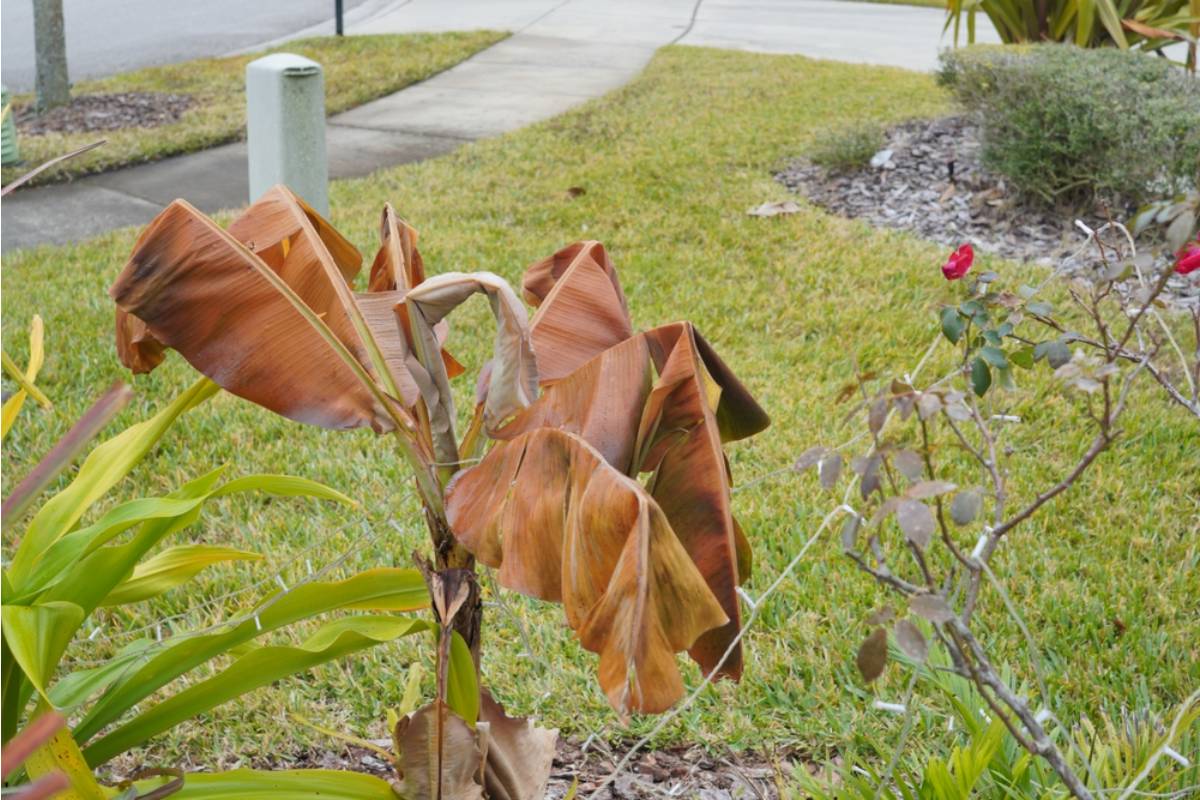
When she checked the area again, the transformation was dramatic. The native plants had gone from healthy and vibrant to completely brown and crispy.
The grass immediately beside the garden, however, remained green. That sharp boundary made the homeowner uneasy because it didn’t look like the entire area had simply suffered from ordinary weather conditions.
Another Neighbor Made an Unexpected Observation
While walking his dog, another neighbor happened to pass by. The homeowner mentioned the strange condition of the plants, without giving him the entire backstory about the troublesome neighbor.
His reaction immediately caught her attention. He independently said the patch looked as though it had been sprayed with herbicide, comparing it to the damage he had seen when herbicides were used in his own yard.
Then She Remembered the Trees
The dead garden wasn’t the only strange thing happening along that side of the property. Around the same time, the homeowner noticed that several young trees she had transplanted near the fence were suddenly wilting.
These weren’t plants that had been struggling for months. They had previously been healthy, and their sudden decline seemed to follow the same general pattern as the native planting area.
The Neighbor Had Already Asked About Those Trees
The trees had also caught the neighbor’s attention before. He had asked the homeowner what she was doing when she planted them and had made comments about them attracting birds.
That detail made the homeowner’s suspicions harder to ignore. She wasn’t saying she had proof, but she couldn’t forget that the neighbor had previously expressed his dislike of exactly the kind of wildlife her trees and plants were meant to attract.
The Damage Seemed to Keep Spreading
What really unsettled her was how far the apparent damage extended. The affected area wasn’t limited to the small native garden beside the neighbor’s fence.
The homeowner said the decline appeared to stretch toward Virginia creeper growing along another fence line. Even one of the trees that had managed to hold onto some leaves appeared to be failing, with the remaining leaves falling off when she touched them.
She Knew Suspicion Wasn’t the Same as Proof
The homeowner strongly suspected that someone had sprayed her property, but she understood that suspicion alone wouldn’t be enough. She had no video showing the neighbor entering the yard or spraying anything.
That distinction became important in the responses she received. A response from a person pointed out that pictures of dead plants could establish that something happened, but they wouldn’t necessarily prove who was responsible.
Cameras Suddenly Became a Priority
Several responses from people recommended setting up trail cameras around the property. The goal wasn’t simply to catch the neighbor doing something wrong, but to establish a record of who was entering the yard and what was happening around the property lines.
The homeowner agreed that surveillance was going to be part of her next move. She already had one camera and planned to add another, particularly around the backyard where the suspicious damage had appeared.
One Person Suggested a Camera Watching the Camera
Then someone offered a surprisingly clever twist. Instead of relying on a single visible camera, they suggested placing another less obvious camera where it could monitor the first one.
That way, if someone tried to disable or tamper with the obvious camera, there could still be another recording of what happened. The homeowner was clearly dealing with a situation where evidence mattered more than assumptions.
Someone Suggested Asking the Neighbor Directly
One response from a person proposed a much simpler approach: ask the neighbor whether he knew what happened and see how he reacted.
The homeowner admitted that she had considered exactly that. She believed he was the type of person who might become defensive if confronted and potentially reveal more than he intended, although another response wisely suggested recording the conversation if she chose to speak with him.
The Property Boundaries Became Important Too
Another response from a person told the homeowner to make the property boundaries unmistakable. A proper fence, locked gate, and clear no-trespassing signs could help establish that the neighbor didn’t have permission to wander through her yard.
The homeowner already had a fence and gate, but she acknowledged that the neighbor had previously entered without permission. She had verbally warned him about it, which made the situation even more uncomfortable.
Someone Told Her to Start Documenting Everything
A response from a person suggested creating a complete visual record of the property before anything else happened. That meant photographing the plants, trees, fence lines, and surrounding areas and continuing to document them regularly.
The idea was simple but powerful. If another section of the garden suddenly died, the homeowner would have dated photographs showing exactly what the plants looked like before the damage occurred.
The Trees Might Need an Expert
One response went a step further and suggested having an arborist inspect valuable trees. An expert could document their health and potentially establish their value before any further damage occurred.
That could become important if the situation eventually turned into a property-damage dispute. Instead of simply saying that a tree was healthy before it died, the homeowner could potentially have professional documentation to support the claim.
Testing the Plants Could Reveal a Different Story
Another response from a person suggested contacting a county extension office for advice about testing. Since the homeowner was in New Jersey, someone pointed her toward the state’s agricultural extension resources for possible testing, prevention, and information about local regulations.
Other people also suggested that samples from the dead plants or surrounding soil could potentially be useful. The homeowner was already trying to brainstorm ways to determine whether a contaminant had actually been involved.
Not Everyone Was Convinced It Was Poison
There was one important reality check in the responses. A person pointed out that summer heat and weather could potentially cause plant damage, especially in August.
The homeowner pushed back because other parts of the property were still doing well, rainfall had been plentiful, and some of the woody plants had appeared healthy shortly before suddenly declining. That didn’t prove herbicide was involved, but it made her want the plants tested rather than simply guessing.
Then Someone Mentioned the Bees
One particularly interesting response suggested looking into state conservation authorities because of the homeowner’s focus on pollinators. The person explained that pesticide and herbicide rules can sometimes involve environmental or wildlife agencies, depending on local regulations.
That opened another possible path. If testing eventually showed that chemicals had been used, the homeowner might have options beyond simply confronting the neighbor or relying on a single local complaint.
The Homeowner Was Already Thinking About the Next Move
By the end of the discussion, she wasn’t planning to confront the neighbor with an accusation she couldn’t prove. Instead, she was preparing to watch, document, photograph, and investigate.
The biggest twist was that the dead plants had transformed a vague suspicion into something that could potentially be investigated scientifically. If the plants had simply died from weather, testing might explain it. If they had been poisoned, the evidence could point toward an entirely different kind of neighborhood dispute.
The Garden Was Now Part of the Evidence
What had once been a peaceful patch of native plants had become the most closely watched part of the homeowner’s property. Every new leaf, dead branch, camera angle, and unusual movement could suddenly matter.
For now, she still didn’t know who or what had caused the damage. But after dealing with unwanted trespassing and a neighbor who clearly didn’t share her enthusiasm for birds and pollinators, she had decided that the next time something mysteriously died, she wouldn’t be left wondering what happened. She would have the evidence to find out.