Mandevilla, Hibiscus and Angel’s Trumpet Struggle Once Nights Dip Into the Low 40s, So a Penn State Master Gardener Cuts Them Back and Brings Them In
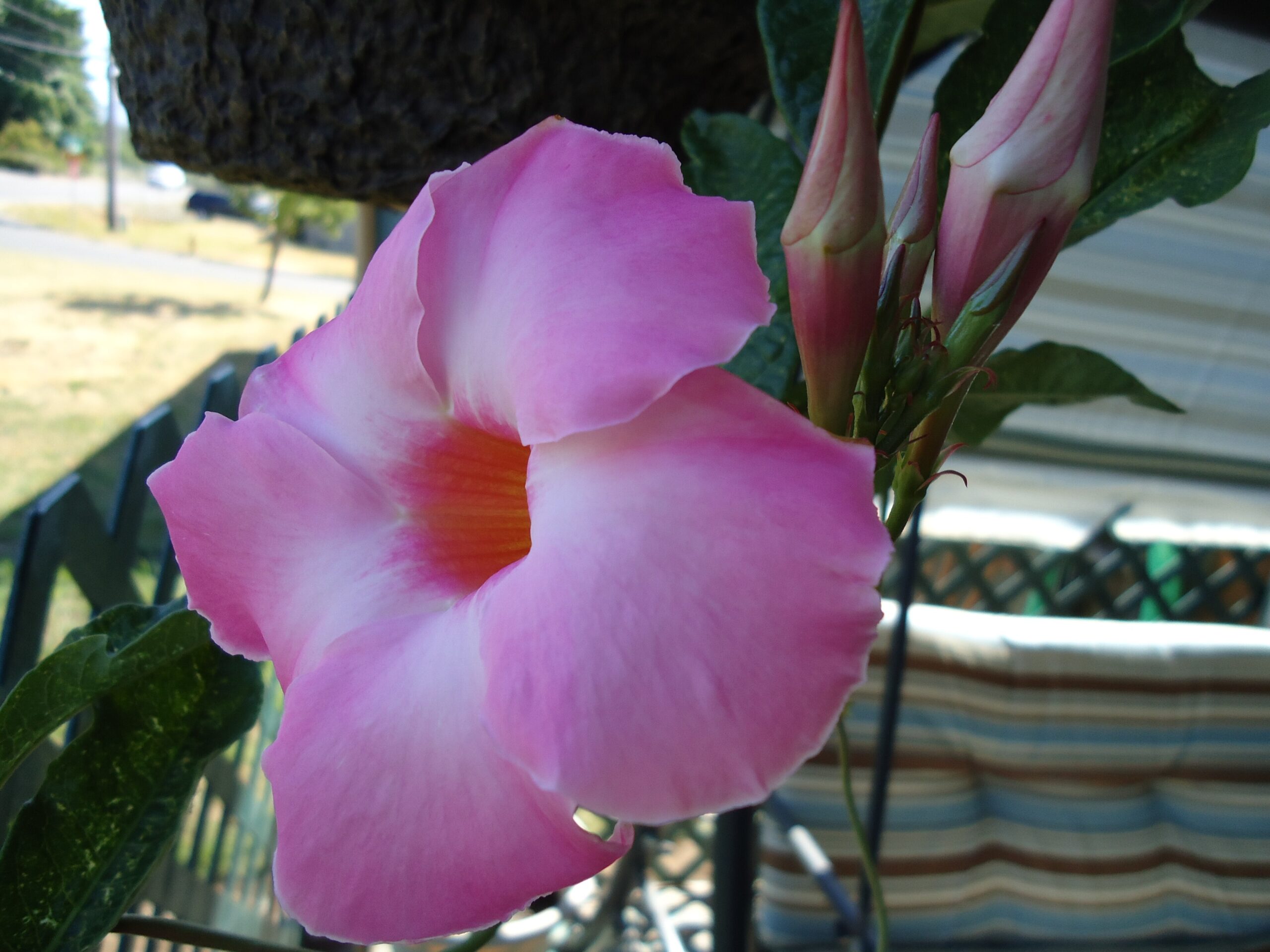
Low 40s at night is the point where many tropical patio plants start to struggle, according to Penn State Extension. For mandevilla, Chinese hibiscus and angel’s trumpet, that is the signal to cut them back and carry them indoors before the first frost. Plants moved in time can bloom again next summer instead of ending up on the compost pile.
The advice comes from Penn State Extension’s guide to overwintering tropicals, written by Allegheny County Master Gardener Susan Marquesen and updated Oct. 12. “Many tropicals will start struggling when nighttime temperatures drop into the low 40s, so plan ahead,” she wrote.
Three plants Penn State says to cut back first
Marquesen lists a group of tropicals that can spend winter as houseplants: palms, cordyline, New Zealand flax, Chinese hibiscus, bird of paradise, mandevilla vine and angel’s trumpet. Banana plants and elephant ears also qualify for gardeners with the space.
Three of those get a specific instruction. Penn State says to cut back hibiscus, mandevilla and angel’s trumpet when bringing them inside.
University of Missouri Extension horticulturist David Trinklein gives similar advice. In an MU Extension guide to overwintering tropicals, he recommends trimming large hibiscus before the move and says mandevilla needs severe pruning. It may need more pruning during the winter as well. For gardeners short on space, Trinklein says mandevilla can also be saved by harvesting its thick storage roots and keeping them cool and moist.
Trinklein also offers a practical out. When indoor space or light is too limited, MU Extension says large plants can simply be left to freeze, with younger plants bought to replace them in spring. Saving one or two favorites may make more sense than crowding every window.
Check for pests before anything comes inside
Patio plants can carry pests indoors with them. Penn State says to inspect plants for insects and mites and treat them if needed before the move.
Trinklein warns that spider mites thrive indoors and are hard to see. He suggests using a hand lens to look for pale or stippled leaves, then washing the plant with a mild detergent or using a pesticide labeled for indoor mite control. The Chicago Botanic Garden adds that tropical hibiscus commonly attracts whitefly.
University of Vermont Extension recommends hosing off pots and checking under the leaves for pests. Plants growing in garden soil should be repotted into fresh potting mix before they come in.
Ease them into indoor life
A sudden move from a sunny deck to a living room is a shock. Penn State says to transition tropicals to indoor conditions gradually. UVM Extension suggests several days on a porch or other sheltered spot first, the reverse of hardening off in spring.
Once inside, light matters most. Penn State recommends a bright, sunny window, with fluorescent lamps to fill in. MU Extension says hibiscus and mandevilla in particular need a sunny window. Palms adapt better to lower light.
Indoor air in winter is often dry. Penn State suggests raising humidity by misting, setting pots on a tray of water and pebbles, or grouping plants together.
Some leaf loss is expected. Penn State says less-than-ideal indoor conditions may cause some leaves to yellow and drop. The Chicago Botanic Garden says a hibiscus may lose all its leaves soon after the move, and that new growth should follow.
The cool, dark option for dormant plants
Not every tropical has to be kept growing. Penn State says the ideal dormant storage range for most plants is 45 to 55 degrees, in a very cool but frost-free, dark space such as an attached garage or unheated basement. Water only when the soil is completely dry, Marquesen wrote, because “too much water can lead to root rot.”
Angel’s trumpet handles that kind of rest well. The University of Arkansas Cooperative Extension says brugmansia can stay in its container and spend winter as a houseplant, in a greenhouse, or in a protected spot such as a garage. Plants protected this way can grow larger and bloom earlier the next season.
Arkansas Extension lists brugmansia as a zone 9 plant. One planted in the ground in central Arkansas may die back to the ground and regrow, depending on the variety. For plants left outdoors farther north, the extension suggests taking cuttings before a killing frost. Cuttings 3 to 4 inches long root readily.
MU Extension says hibiscus can also go dormant in a cool spot that won’t freeze. Whether growing or resting, Trinklein says roots should stay “barely moist,” never dried out and never soggy.
Smaller tender plants can be saved a different way. Penn State’s guide also explains how to root six-inch stem cuttings of coleus and geraniums, and geraniums can be dug and stored in paper bags until May.
Getting them back outside in spring
The Chicago Botanic Garden recommends pruning leggy hibiscus growth in late winter and then feeding with a balanced fertilizer every two weeks. In spring, after frost danger has passed, plants should be acclimated gradually to full sun.
Penn State says overwintered tropicals can go back outside once nighttime temperatures stay above 50 degrees, the same signal used for tomatoes and peppers. Stored tubers can be potted up about four to six weeks before the last frost and set in a warm, sunny spot indoors alongside the overwintered tropicals.
For gardeners still looking at a mandevilla on the trellis this week, the timing is simple. If the forecast shows nights in the low 40s, it is time to trim it back and bring it in.
Get stories like this by email. Sign up for The Parent Diaries Letter.
This article was produced with AI assistance and edited for accuracy against the sources linked above.
Image: Symphony999 – CC BY-SA 3.0/Wikimedia Commons