A Dry Cold Front Brings Gusty North Winds of 30 to 35 mph to San Antonio on Sunday, and KSAT Says It May Bring the Season’s First Notable Surge of Mountain Cedar Pollen.
Gusty north winds of 30 to 35 mph are forecast for San Antonio on Sunday, Nov. 29, behind a dry cold front. KSAT meteorologist Shelby Ebertowski wrote in the station’s Nov. 27 forecast that those winds “may also usher in the season’s first notable surge of mountain cedar pollen.” Saturday comes first, with highs near 70 degrees, which makes it the milder day for anyone with yard work to finish.
The Weekend by the Numbers
In its Nov. 27 forecast, KSAT said most areas started Black Friday in the 30s, with a few near-freezing spots in the Hill Country. Friday afternoon highs were forecast to reach the mid-60s.
Saturday brings morning lows in the 40s and highs in the upper 60s to lower 70s. The forecast’s highlights say many areas reach 70 degrees.
Sunday is the day that changes. A dry cold front brings gusty north winds of 30 to 35 mph and slightly cooler temperatures. KSAT gave no specific Sunday high and no specific hour for the front.
The night before, a Thanksgiving night forecast from KSAT meteorologists Justin Horne and Leah Rodriguez described the same setup. It said the front would lower temperatures somewhat, but that the bigger impact may be wind, with gusts up to 35 mph possible. It also said the front could bring the season’s first mountain cedar pollen.
After Sunday, southerly winds return early in the week, with a gradual warming trend through midweek. KSAT said rain chances stay low through the week, with the next chance arriving Thursday and low odds for showers mainly across the eastern half of the area.
The week began colder. KSAT’s Nov. 25 forecast said many neighborhoods around San Antonio would see freezing for the first time this season by Thanksgiving morning, and that the Hill Country would also drop below freezing. It called the freeze light and brief, lasting a couple of hours, with a Thanksgiving high near 60 degrees and low humidity. Pipes and sturdy outdoor plants should be fine, the station said, while sensitive potted plants should be covered or brought indoors.
Why a Front Matters for Cedar
Mountain cedar is the common name for Ashe juniper, and its pollen season has a rhythm that KSAT has described before. In a December 2025 explainer, meteorologist Sarah Spivey wrote that pollen typically peaks in mid-January and ends by Valentine’s Day. Male trees release pollen from December through mid-February.
That article described spikes coming after a cold front, when breezy north winds carry pollen from the Hill Country into San Antonio. It is the same pattern KSAT’s forecast now points to for Sunday.
Texas A&M’s AgriLife Today adds that juniper trees typically begin producing pollen in mid-December and that production tapers off by early March. Only male junipers release pollen, and because it is spread by wind, the article says “cedar fever can even affect individuals who are not near a high concentration of juniper trees.” The pollen can blow for miles.
AgriLife Today quotes Robert Edmonson, a biologist and certified arborist with the Texas A&M Forest Service. It describes cedar fever as an allergic reaction to the pollen, and lists fatigue, sore throat, runny nose, partial loss of smell and sometimes a slight fever among the symptoms. It adds that a fever above 101.5 degrees suggests something other than pollen.
The same article makes a point about why a surge matters. It says the pollen from Ashe junipers “isn’t particularly allergenic or harmful” on its own, but that the high concentration released into the air can still trigger a response in many people. The article points to concentration, rather than any single grain, as the issue.
Planning Saturday and Sunday Outdoors
Neither KSAT forecast gives a pollen count for Sunday, only the possibility of a first notable surge. What the station and AgriLife Today do offer is general advice for pollen days.
KSAT’s 2025 explainer says over-the-counter allergy medicines are the first thing to try, and that allergy pills, nasal sprays and drops help many people. AgriLife Today says to check with a health care professional before taking allergy medications.
For the house, AgriLife Today suggests keeping windows and doors closed and limiting outdoor time on heavy-pollen days. It also suggests higher MERV-rated HVAC filters, home air purifiers, and watching local news for pollen counts to anticipate heavy days.
For anyone with cedars on the property, both sources push back on one idea. AgriLife Today says removing juniper trees is not recommended, mainly because the pollen is airborne. KSAT says cutting cedars on a property may not eliminate symptoms, because many trees remain in the Hill Country.
As for the weekend itself, that same Nov. 25 forecast called Friday and Saturday pleasant for putting up holiday decorations, and said Saturday warms to near 70 degrees. Sunday, it said, brings a weak front that makes the day gusty.
What Is Still Unknown
KSAT’s language is hedged: the winds “may” bring the season’s first notable surge. The forecast does not say how high pollen counts could climb, and it gives no hour for the front’s arrival.
KSAT’s 2025 explainer also notes that allergy shots from a specialist are an option for people with high sensitivity. This article reflects KSAT’s forecast as published on the morning of Nov. 27, with Sunday still described as the day of the front and the gusts.
This article was produced with AI assistance and edited for accuracy against the sources linked above.
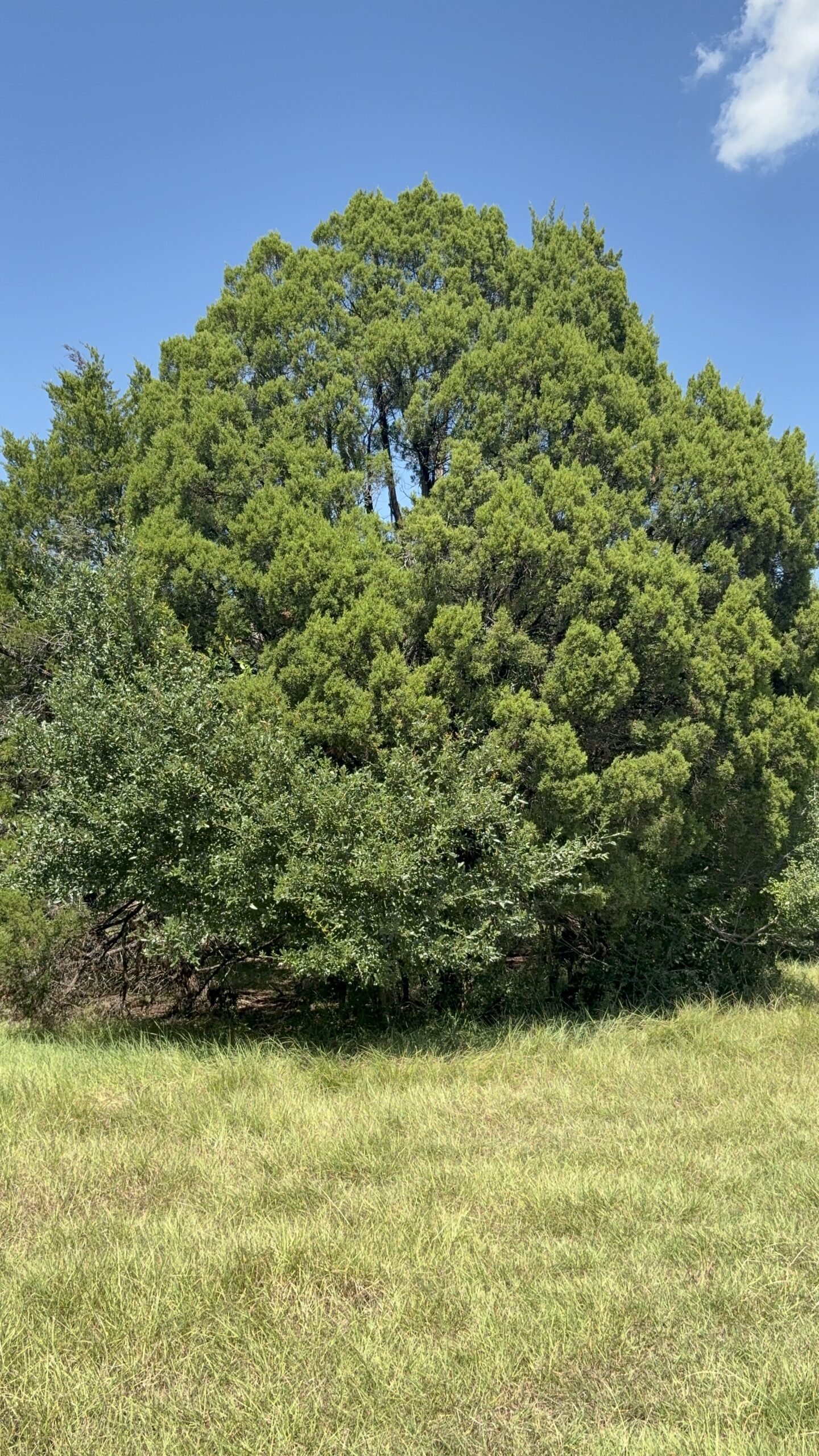
Image: “Ashe Juniper tree (Austin Texas)” by Bubblesorg is licensed under CC BY 4.0. To view a copy of this license, visit https://creativecommons.org/licenses/by/4.0/.