Scarborough Will Make Developers Replace Each 60-Inch Heritage Tree They Cut With 5 New Ones After a Clear-Cut Shocked Residents
Scarborough, Maine, has rewritten its tree rules for commercial land, and the biggest trees now carry the steepest price. Under amendments the Town Council passed earlier this month, a heritage tree at least 60 inches across must be saved or replaced with five new trees, according to the Portland Press Herald. The change follows years of complaints about bare lots, led by one clear-cut that residents still talk about.
Five Trees for Every Giant That Comes Down
The rules sort large trees into two groups. A “significant” tree is a non-invasive tree measuring at least 24 inches in diameter at breast height. If a developer removes one, it has to be replaced at a ratio of 2.5 trees to one. A “heritage” tree, at a minimum of 60 inches in diameter or meeting other criteria, has to be preserved or replaced five to one.
The orders also add a 20-foot streetscape buffer along most streets. Many of Scarborough’s main roads already required buffers of 25 to 35 feet, the Press Herald reported, but other streets had no requirement at all.
A second order changes how the town handles code enforcement cases and site plan reviews.
A Clear-Cut at Eight Corners Became the Rallying Point
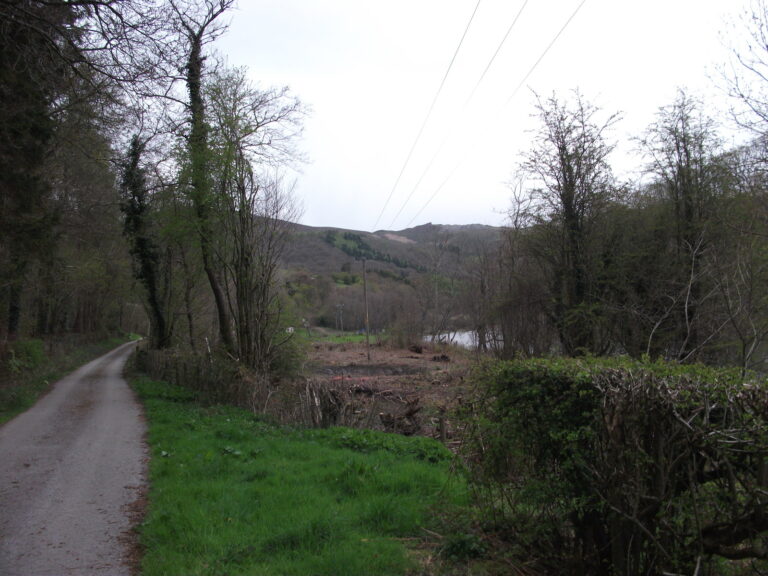
When residents and councilors argued for tighter rules, they kept coming back to the same place: Eight Corners, where trees were cut a few years ago to make room for the Nonesuch River Apartments.
Resident Averyl Hill told the council she had not met a single person who wasn’t “shocked and horrified by how it looks.” Hill pointed out that the clearing was allowed under the old ordinance, which did not require any tree buffer there.
It was not the only clearing to stir anger this year. In April, the town learned that about 10 wooded acres near Route 1 had been clear-cut without a permit, much of it within 250 feet of Stuart Brook. Town Manager Tom Hall said timber was removed right up to the brook, and the owner faced possible fines, the Press Herald reported in June. The owner later submitted a reforestation plan.
Councilor Says the Rules Were “Years in the Making”
Councilor Karin Schupe said the council has received a steady stream of complaints about tree cutting and called the new orders “years in the making.” She described Scarborough’s marsh, beaches and natural landmarks as part of what makes the town special, and said the amendments could help make sure development is “done thoughtfully and in an environmentally friendly manner.”
Limiting tree cutting for new commercial projects was one of the council’s goals for 2026.
Last-Minute Changes Gave Landowners More Room
The final version is softer than the one that went into the second reading. Outgoing Councilor Lawrence Cain proposed several changes, and all of them passed:
- The size that makes a tree “significant” rose from 20 inches to 24 inches in diameter, so fewer trees qualify.
- Trees planted in buffer strips can now be spaced 20 feet apart instead of 15.
- The planning board can shrink the required street buffer by up to 10 feet for some new developments.
Cain said the goal was to give property owners “more leeway,” adding that “too many tree-based restrictions could devalue properties.”
Schupe and several residents objected to making big changes so late. By then, the orders had already been through the conservation commission, the ordinance committee, the planning board and the Town Council several times.
Homeowners’ Yards Are Not Covered
The new rules apply only to commercial properties. A homeowner taking down a big maple in the backyard is not affected by the replacement ratios or the new street buffer.
Before these amendments, the town’s zoning ordinance leaned mostly on general screening rules. Its buffer section asks non-residential properties next to residential neighborhoods to keep natural vegetation along the shared boundary, or to plant a visual screen when that isn’t possible, with options such as “tree plantings, hedges, fencing, walling and combination thereof.” It sets no minimum width.
Trees on town land fall under a separate tree care ordinance overseen with help from the town’s Tree Care Advisory Board, which covers planting, care and removal on town property and public rights-of-way. Every seat on that board is currently listed as vacant.
Scarborough’s Town Council meets at 7 p.m. on the first and third Wednesdays of each month at the Municipal Building on U.S. Route 1, and meetings are streamed and open to public comment by Zoom, according to the town’s council meetings page. The next regular meeting is Nov. 18.
Other communities have been wrestling with the same question this fall. In York, Maine, the town chose to move a 70-year-old honey locust to Town Hall rather than cut it down, and in North Carolina, a billboard company cleared hundreds of trees behind Charlotte shops under a state law.
For residents who watched the woods at Eight Corners disappear, the new rules come too late to bring those trees back. They do mean the next developer who wants a 60-inch giant gone will owe the town five trees in its place.
This article was produced with AI assistance and edited for accuracy against the sources linked above.