Some Backyard Gardeners Are Growing Potatoes Vertically in Stacked Tires, And the Yield Per Square Foot Is Making People Rethink Their Whole Garden Layout
The idea started as a space problem in a small suburban backyard where traditional row planting was no longer practical. One gardener had more ambition than room, especially for crops like potatoes that normally demanded long stretches of soil. While cleaning out an old shed, she noticed a stack of worn tires and wondered if they could be reused instead of thrown away. That thought led to an experiment that looked strange at first but quickly started showing results. Within a season, the backyard began to look more like a vertical farm than a traditional garden.
A pile of old tires becomes a planting structure
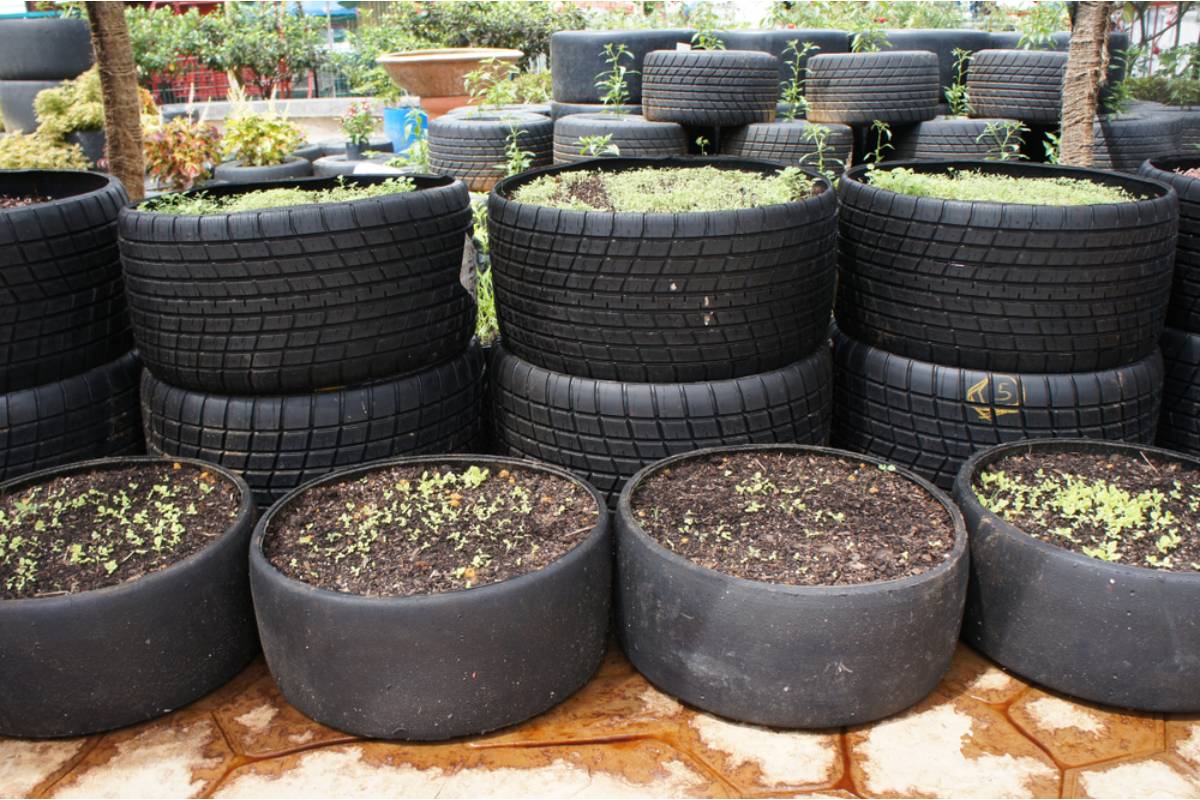
The gardener stacked three tires on top of each other and filled the bottom layer with soil and seed potatoes. As the plants grew, she added more soil and another tire layer on top. The shoots kept pushing upward through each level without issue. Neighbors initially assumed it was just a quirky decoration. But the plants inside kept growing stronger each week.
Early skepticism from nearby homes
At first, people walking by questioned the use of tires in a vegetable garden. Some worried about chemicals, while others thought it looked improvised and unprofessional. The gardener explained she was testing a space saving method for root crops. Most reactions stayed neutral but curious. No one expected it to produce anything significant.
First sprouts break through the stack
After a few weeks, green shoots began emerging from the top tire layer. The plants looked healthy and surprisingly vigorous compared to traditional ground beds nearby. The gardener started adding soil gradually as the stems grew taller. This encouraged more tuber development inside each layer. The structure began to function like a vertical growing column.
A second stack is built nearby
Encouraged by early growth, she built another tire tower beside the first one. This time she planted a different potato variety to compare yield. The backyard started filling with vertical columns instead of horizontal rows. Space that once held a single row of vegetables now held multiple stacked systems. The change in layout became visually striking.
Neighbors start asking about yield results
As harvest season approached, curiosity grew among neighbors watching the experiment. People wanted to know if the vertical method actually produced more potatoes. The gardener explained that she was tracking both volume and space efficiency. She avoided making predictions too early. Still, expectations in the neighborhood began rising.
First harvest surprises everyone
When the first tire stack was opened, the amount of potatoes inside shocked even the gardener. Each layer had produced a separate cluster of tubers. What looked like a small footprint had generated a large yield. Neighbors who came to see the harvest began taking notes. The results immediately changed how people viewed backyard planting.
Soil quality remains stable despite reuse of tires
One concern had been whether the soil inside the tires would degrade or overheat. After testing, the soil remained loose and rich enough to support multiple cycles. Moisture retention was actually better than expected. The gardener adjusted watering schedules slightly to prevent excess saturation. The system proved more stable than many traditional beds.
A local gardener tries to replicate the setup
Inspired by the results, another homeowner down the street built his own tire stack system. He modified the design by adding drainage holes and compost layers. His early growth matched the original experiment closely. This encouraged more interest in vertical gardening methods. The idea began spreading beyond one yard.
Debate over aesthetics begins in the neighborhood
Not everyone liked how the tire towers looked in residential yards. Some neighbors felt they clashed with traditional landscaping standards. Others argued that productivity mattered more than appearance. The gardener defended the system as a practical use of recycled materials. The debate remained civil but ongoing.
Extension service takes notice
A regional gardening extension office visited to evaluate the method. They examined soil conditions, plant health, and yield efficiency. Their feedback suggested the system was viable for small space gardening when managed properly. They also recommended monitoring long term soil conditions. The experiment gained a level of official curiosity.
Harvest cycles become more frequent
Because potatoes matured in different layers at slightly different times, harvesting became staggered. This allowed for continuous yield rather than a single seasonal pull. The gardener refined her stacking timing based on growth patterns. Productivity increased as she improved the system. The backyard became a steady source of food instead of a seasonal plot.
Tire stacks expand into a small garden system
Over time, more stacks were added until the backyard had multiple vertical columns. Each stack held a different planting cycle. The layout looked unusual but highly organized. Visitors began describing it as a compact farm rather than a garden. Efficiency became the defining feature of the space.
Final realization changes neighborhood thinking
By the end of the season, neighbors who once doubted the idea were reconsidering their own layouts. Some planned to reduce lawn space in favor of vertical systems. The gardener never claimed it was perfect, only practical for small yards. Still, the results spoke for themselves. The experiment quietly shifted how people thought about growing food in limited space.