A 2-Inch Tulip Bulb Belongs 5 to 6 Inches Deep, and Penn State Extension Says 2 to 3 Inches of Mulch Should Go on Top
A tulip bulb that measures 2 inches from base to tip goes into a hole 5 to 6 inches deep, according to Penn State Extension. The same guide calls for 2 to 3 inches of mulch over the finished bed, a layer meant to carry the bulbs through the freeze-and-thaw swings of winter. Tulips planted this month sit in the ground for months before a single leaf shows, so the depth chosen at planting time matters long before spring.
Measuring the Bulb Before Digging the Hole
The depth rule comes from Penn State Extension’s fall bulb guide, written by Peter Ekstam, a Master Gardener in Butler County. Bulbs are planted “two and one-half to three times deeper than the bulb height,” in the guide’s words, and the worked example is a 2-inch tulip bulb sitting 5 to 6 inches below the surface.
Orientation matters as much as depth. Penn State’s guide says to set each bulb with the pointed end up and the root base down. Quality bulbs, it adds, are larger, free of cuts or gashes and firm to the touch, and are best bought from a reputable grower.
The same guide sets a few conditions for the bed itself. Soil pH should fall between 6 and 7, and drainage has to be excellent, because bulbs rot while dormant in soil that stays wet. Compost worked into clay soil helps, and most bulbs want full sun. Planting beneath deciduous trees also works, since the bulbs bloom before the leaves emerge.
Penn State also separates bulbs by season. Spring bulbs such as tulips go in during fall, while summer bulbs are planted in late spring after the last frost, typically May 31, and have to be dug up and stored over winter. For looks, the guide suggests planting a solid wave or drift of one kind and color for more visual impact, with tall bulbs toward the back of the bed and shorter ones toward the front.
Where Minnesota, Colorado and South Carolina Draw the Line Differently
Extension services do not all give the same measurement, and the differences follow climate and soil. University of Minnesota Extension, in a page by retired horticulturist Mary H. Meyer, measures from the bulb’s diameter instead of its height and says to plant “two to three times deeper than their diameter.” The page then adjusts for soil. In light, sandy soils the bulbs go 1 or 2 inches deeper, and in heavier clay they go an inch or two shallower.
Colorado State University’s PlantTalk service uses a similar diameter rule with a larger multiplier. Its fall bulb page says to plant “at a depth of three to four times the diameter of the bulb,” with two extra inches added in sandy soil.
Clemson University’s Home and Garden Information Center gives a flat figure for tulips. Its spring-flowering bulbs fact sheet, by Karen Russ and Robert F. Polomski, says to plant tulip bulbs 6 to 8 inches deep and 4 to 6 inches apart. The same sheet cautions that tulips can usually only be counted on for a single season of color in South Carolina.
Because the guides measure from different points on the bulb, a gardener comparing them has to check whether a rule counts from the bulb’s height or its diameter.
Mid-September to Late October, With a Tulip Exception
Penn State puts the best planting window for western Pennsylvania at September to October, before the first frost of the season. Colorado State says mid-September to late October at most elevations, early enough for roots to form before the ground freezes.
Minnesota’s page gives mid-September to mid-October as the usual window in cold-climate areas, then carves out tulips as an exception that can go into the ground as late as the soil allows. Farther south the calendar moves later. Clemson says bulbs refrigerated from the time of purchase are planted in November to late December in central and coastal South Carolina, and that planting waits until the soil at planting depth stays cooler than 60 degrees Fahrenheit.
In western Oregon the message is the same. Oregon State University Extension’s November garden calendar says there is still time to plant spring-flowering bulbs such as tulips, daffodils, hyacinths and crocuses in western Oregon, and adds, “Don’t delay.”
Gardeners in milder zones can find the timing laid out in the site’s earlier piece on planting in November in Zones 7 to 10, and a related look at when to plant tulip bulbs covers the soil-temperature rule.
Mulch, Drainage and the Foliage Left Behind in Spring
Once the bulbs are in and covered with soil, Penn State recommends approximately 2 to 3 inches of mulch on top, which moderates temperature swings and holds soil moisture over winter. Clemson gives the same depth, saying mulch insulates the soil, keeps moisture even and keeps mud from spattering the flowers. Minnesota Extension names the materials: leaf, wood or seedless straw mulch, 2 to 3 inches deep. Its page says to pull the mulch aside in spring as the soil warms, and to push it back over the bulbs if a hard frost is forecast.
Poor drainage is the shared warning. Clemson says drainage is essential for spring-flowering bulbs, and for heavy beds it recommends working 2 to 3 inches of organic matter into soil 10 to 12 inches deep. Raised beds and drainage tiles are its other options.
Care after planting is light. Penn State says to water whenever the soil is dry and to use a bulb-specific fertilizer where bulbs stay in the same bed. After the flowers fade, the green foliage stays in place, because it feeds the bulb for next year. Bulbs that become crowded or stop flowering can be divided, and spring bulbs can stay in the ground year-round.
Get stories like this by email. Sign up for The Parent Diaries Letter.
This article was produced with AI assistance and edited for accuracy against the sources linked above.
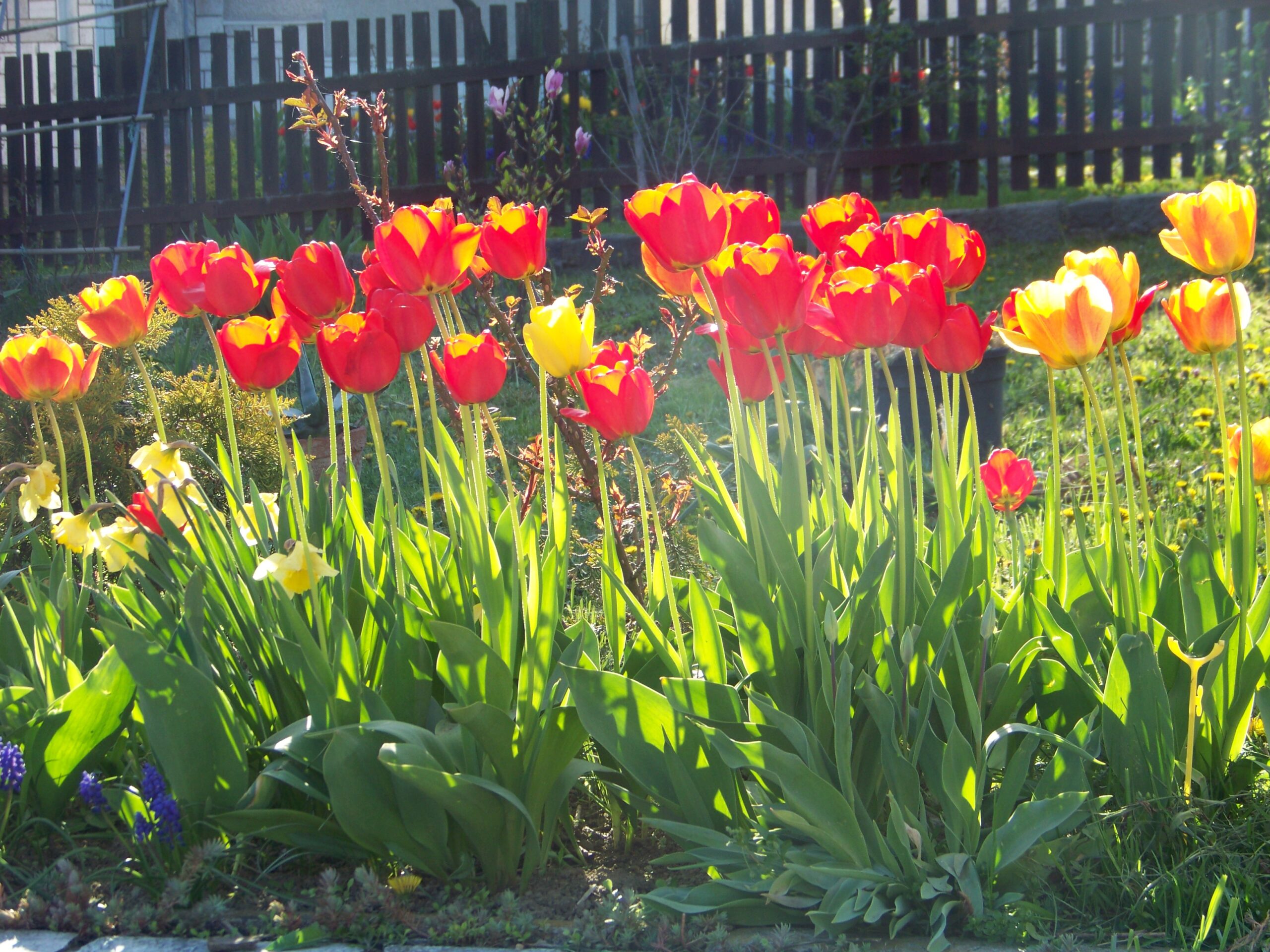
Image: Vēršana, public domain, via Wikimedia Commons