Japanese Beetle Counts Jumped 49% in Washington and Reached Spokane County for the First Time. Only About Half of Eligible Properties Signed Up for Free Treatment.
Washington’s traps caught more than 108,000 Japanese beetles this year, up about 49% from 72,591 in 2025, and the invasive pest has now turned up in Spokane County for the first time, the Washington State Department of Agriculture said Nov. 17. The state’s plan to stop it depends on treating home lawns and yards, and only about half of the property owners it asked said yes.
In 2026, WSDA sought permission to treat 15,711 properties and received 7,897 consents, a rate of 50.26%, the Yakima Herald-Republic reported. The treatments cost homeowners nothing.
Where the beetles were caught
Most of this year’s beetles came from the Lower Yakima Valley, where the pest was first found in 2020. WSDA’s 2026 trapping results put 102,994 beetles in the Sunnyside, Grandview and Mabton area of Yakima and Benton counties, 3,424 in the Tri-Cities area of Benton and Franklin counties, 1,077 around Wapato and 843 at SeaTac in King County. The SeaTac count was roughly the same as in 2025, the Herald reported.
The Spokane County find was small. The survey caught the county’s first three Japanese beetles, according to WSDA, and the Herald reported they were found in the northeast part of Spokane. For homeowners on the east side of the state, it is the first sign that the pest has reached their area.
A yard-by-yard program with half the yards missing
Japanese beetle grubs live in the soil and feed on the roots of grass and other plants, which is why the fight happens in lawns and garden beds rather than on farms alone. WSDA treats the ground in areas where the beetle is trying to establish itself, and it needs each owner’s permission to do it.
That permission has been hard to get. Taken together, fewer than half of eligible properties have consented to treatment since the project began in 2021, WSDA said. The Herald reported that consent ran at 44% in 2024 and fell to 38% in 2025 before this year’s 50.26%.
Nathan Chambers, WSDA’s Japanese beetle program coordinator, said in the release that “eradication efforts appear to be slowing the spread of Japanese beetle,” but that landowner participation has not been high enough to significantly reduce the catches. He told the Herald that “every property that signs up for these free treatments is helping protect not only their own property” but also neighbors, the wider community and local farmers. WSDA is “exploring new ways to connect with communities,” Chambers said.
The department has another tool when owners do not answer. Consent is needed every year for each property owned or rented, and if a property declines or does not respond, WSDA may seek administrative warrants through the courts to treat it, according to its 2026 treatment page.
What the free treatment involves
WSDA uses Acelepryn, a product the EPA classifies as “reduced risk,” which kills the beetle in its grub stage in the soil. Treatments take place between 8 a.m. and 5 p.m. in April, May or June. Several rounds are needed, and the full effect does not show until the following year. If any part of a property falls inside the treatment zone, the whole property is treated.
The department’s safety guidance is short. “Acelepryn has an excellent safety record when used as directed,” the 2026 treatment page says, and it advises people to “avoid the area and keep pets inside until the treatment has dried.” Anyone who touches the product should wash the skin with soap and water and wash exposed clothing separately. “Experts do not expect health concerns from eating produce grown in or Acelepryn-treated soil,” the page says, which matters for people with vegetable gardens in the zone.
The Herald reported that the active ingredient, chlorantraniliprole, is harmful to aquatic invertebrates such as crayfish and water fleas, so it is not applied near bodies of water, and that no illnesses have been reported after applications in Washington or Oregon.
Roses, grapes and grass on the menu
The beetle feeds on more than 300 plants, including roses, grapes, apples, hops and grass, according to WSDA. Adults strip leaves down to the veins and chew on buds, flowers and fruit, while the grubs work through lawn roots and pick up feeding again each spring, the Herald reported. Gardeners elsewhere have watched that happen fast; one homeowner saw thousands of Japanese beetles wipe out his roses in four days.
WSDA warned that failing to eradicate the beetle would mean more pesticide use and higher costs over the long term, along with tougher rules on moving and exporting nursery and farm products. State eradication rules have reached home gardens in other places too, as when five trapped flies put backyard fruit trees across Eastvale, Fontana and Ontario, California under a state program.
Inside the quarantine area, which covers parts of Yakima, Benton and Franklin counties, homeowners already live with limits on their yard waste. Soil and sod cannot leave the area at any time, and from May 15 to Oct. 15 neither can brush, branches, roots, leaves, grass clippings or weeds, according to WSDA’s quarantine rules. The department asks residents to use designated yard debris drop-off sites instead.
Consent forms arrive in January
WSDA plans to keep up the eradication effort in 2027. Property owners in treatment areas should watch their mail for 2027 consent forms starting in January, the department said. Public questions go to WSDA at 1-800-443-6684.
This article was produced with AI assistance and edited for accuracy against the sources linked above.
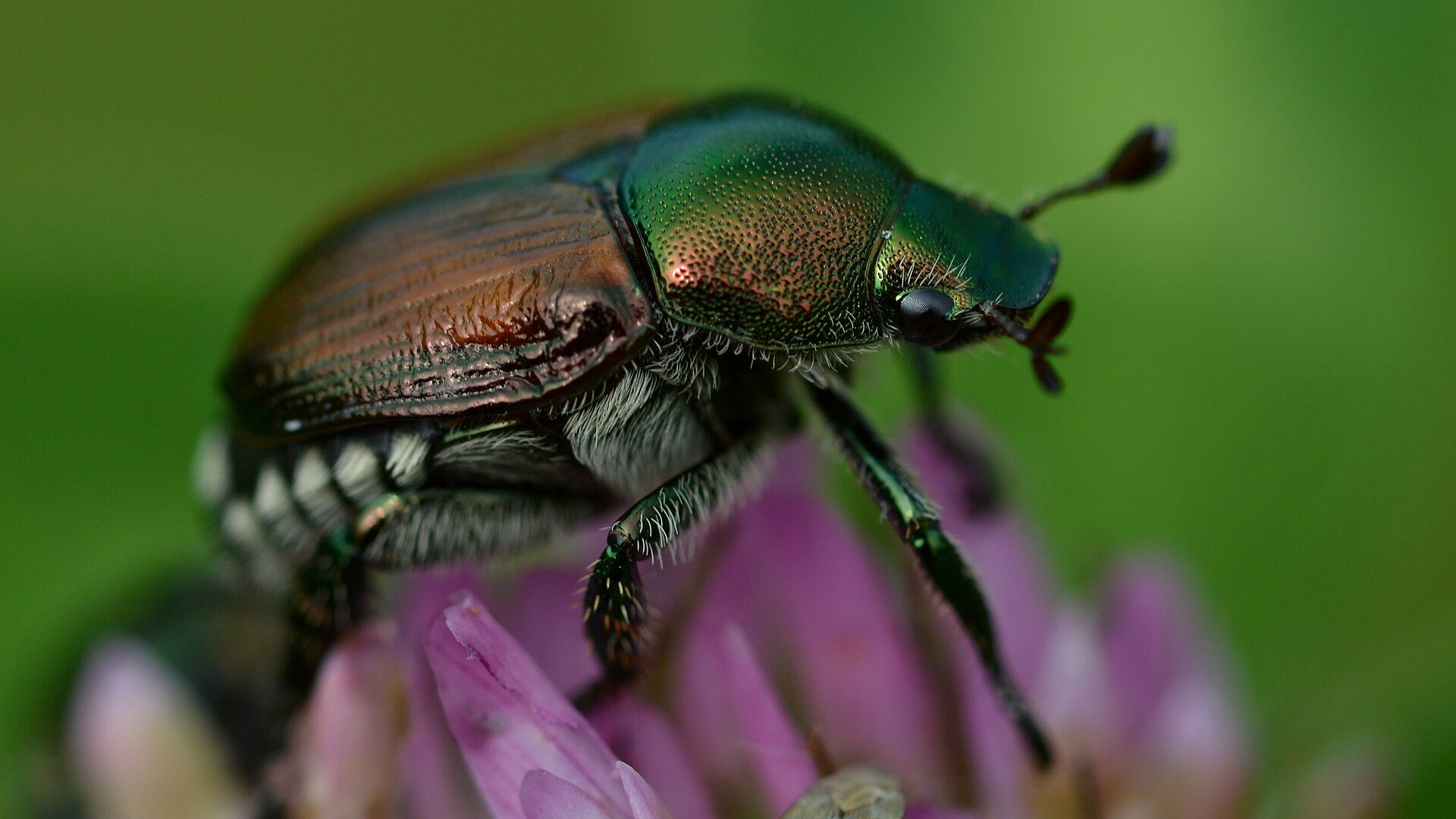
Image: Ryan Hodnett – CC BY-SA 4.0/Wikimedia Commons