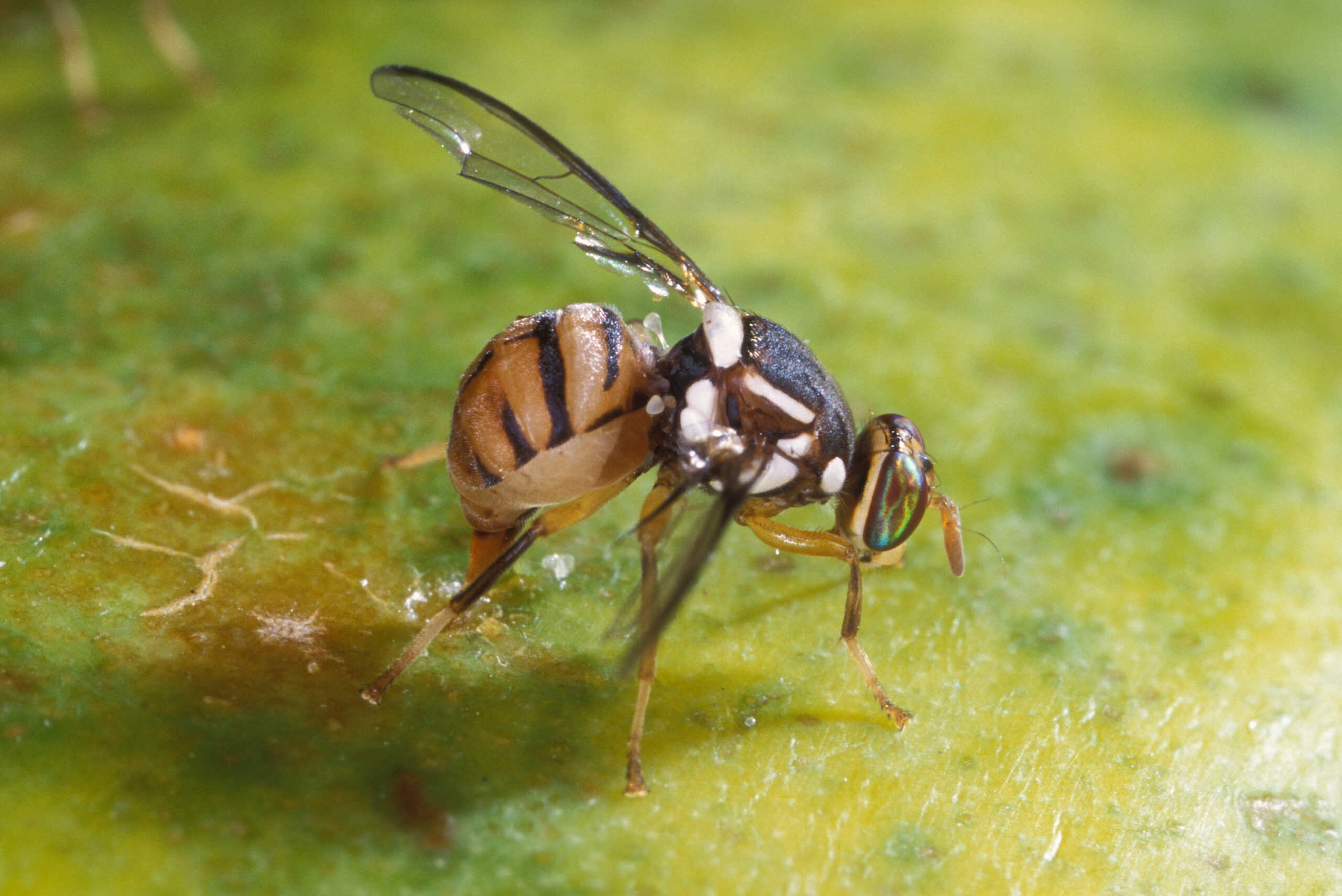
Five Oriental Fruit Flies Trapped in Jurupa Valley Put Backyard Fruit Trees Across Eastvale, Fontana and Ontario Under a State Eradication Program Until May 2027
On utility poles and street trees across parts of four Inland Empire cities, California agriculture crews are placing small bait stations aimed at a single insect. The California Department of Food and Agriculture confirmed five oriental fruit flies trapped in Jurupa Valley between Sept. 9 and Oct. 5, 2026, and the state’s emergency eradication program now covers portions of Eastvale, Fontana, Jurupa Valley and Ontario, according to the San Bernardino County Department of Agriculture/Weights and Measures. The program runs until May 11, 2027.
For homeowners with citrus, stone fruit or tomatoes in the yard, the program matters most if inspectors find signs that the flies are breeding. In that case, crews can remove host fruit from properties near a detection site.
Five flies in four weeks
The program grew in stages. The county’s first 2026 notice described three oriental fruit flies trapped in Jurupa Valley between Sept. 9 and Sept. 15, with a program set to run until April 10, 2027.
Two more finds followed. The amended proclamation of emergency, issued in the name of CDFA Secretary Karen Ross and posted Oct. 8, counts five flies through Oct. 5 and extends the program to May 11, 2027, a span CDFA says is needed to cover three life cycles of the fly.
Each eradication area reaches about 1.5 miles around a detection site, squared off into a block of roughly nine square miles. Those blocks spill across the Riverside and San Bernardino county line into Eastvale, Fontana and Ontario. Monitoring traps extend out to 4.5 miles from the detection sites.
Bait stations first, fruit removal if breeding is found
The main tool is what CDFA calls the male attractant technique. Bait stations made with methyl eugenol, a lure that draws male oriental fruit flies, mixed with the insecticide spinosad, are placed about 6 to 8 feet high on utility poles, street trees and other unpainted surfaces, at roughly 300 per square mile. Crews reapply them every two weeks.
The CDFA oriental fruit fly treatment page says the stations go at least 6 feet above ground, well above the reach of children or pets, and are not placed on school grounds. The department says the lure is specific to this group of flies, so bees and butterflies are not affected.
Backyards come into play only if there is evidence of a breeding population. Then, according to the proclamation, crews spray a spinosad protein bait on host plants within 200 meters of the detection site every 7 to 14 days, and remove host fruit from the detection site and from properties within at least 100 meters. The fruit is taken to a landfill.
Residents get written notice at least 48 hours before a spray or fruit removal on their property, unless an inspection or abatement warrant is needed. Afterward, crews leave a completion notice listing precautions and how long to wait before harvesting any remaining fruit.
More than 230 fruits and vegetables at risk
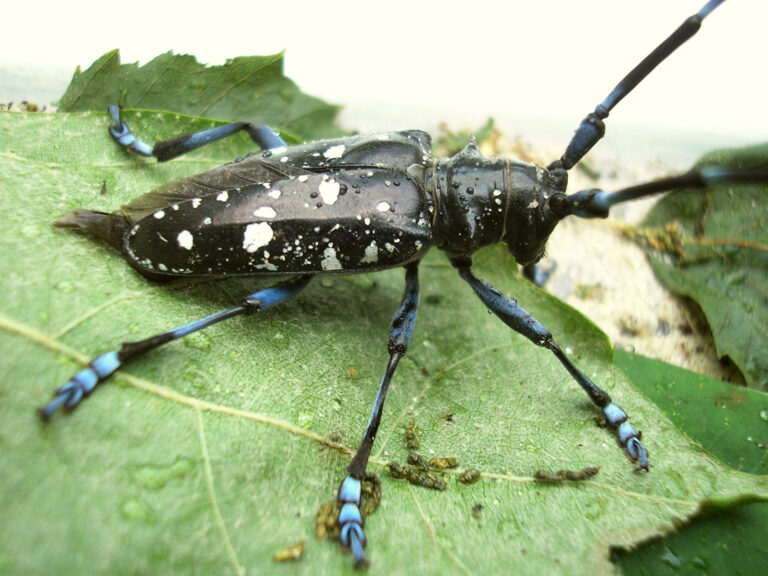
The CDFA pest profile says the oriental fruit fly has attacked more than 230 kinds of fruits and vegetables. Females lay eggs under the skin of the fruit, and the maggots tunnel through the flesh as they feed, leaving the inside of the fruit a rotten mass. One female can lay more than 1,000 eggs, and adults can fly up to 30 miles. The maggots leave the fruit through exit holes after about 10 days and drop into the soil to pupate, and new adults emerge 10 to 12 days later, so the fly breeds continuously through several generations a year.
The proclamation’s host list reads like an inventory of a Southern California backyard: lemon, lime, grapefruit, orange and mandarin; apricot, cherry, peach, nectarine and plum; tomato, bell pepper and chili; and avocado, fig, grape, apple, pear, persimmon, guava and mango.
The stakes go beyond home gardens. CDFA’s findings put the 2024 gross production value of the commercial crops at risk at more than $23.25 billion.
A second fall in a row for Jurupa Valley
This is not the area’s first round with the fly. In September 2025, the county posted a separate proclamation after six oriental fruit flies were trapped in Jurupa Valley and Ontario between Aug. 19 and Sept. 10, 2025. That program ran until April 10, 2026. At the time, the county warned of a high potential for sudden future detections in Riverside and San Bernardino counties.
The CDFA treatment page says programs that start in fall can run into spring, because cooler weather slows the fly’s development. After two life cycles of treatment, supplemental traps are watched for one more life cycle, and if no more flies turn up, the infestation is declared eradicated.
What homeowners in the four cities can do
The Oct. 8 proclamation sets up an eradication program, and it notes that the timeline would stretch if a quarantine were triggered. For homes inside fruit fly quarantine areas, CDFA’s invasive fruit fly page urges residents not to move fruits and vegetables off their properties, to eat or process produce where it was picked, and to double-bag unused fruit for the regular trash rather than green waste or compost.
CDFA also asks gardeners to inspect their plants for signs of fruit flies or maggots, to allow inspectors access to their gardens when asked, and to report anything suspicious to the CDFA Pest Hotline at 800-491-1899 or the county agricultural commissioner’s office.
Backyard fruit trees have drawn fruit fly crackdowns in other states this fall too. In Texas, one mated fruit fly caught in a backyard mango tree put part of Port Isabel under a federal quarantine.
Get stories like this by email. Sign up for The Parent Diaries Letter.
This article was produced with AI assistance and edited for accuracy against the sources linked above.
Image: Wikimedia Commons – Public domain/Wikimedia Commons