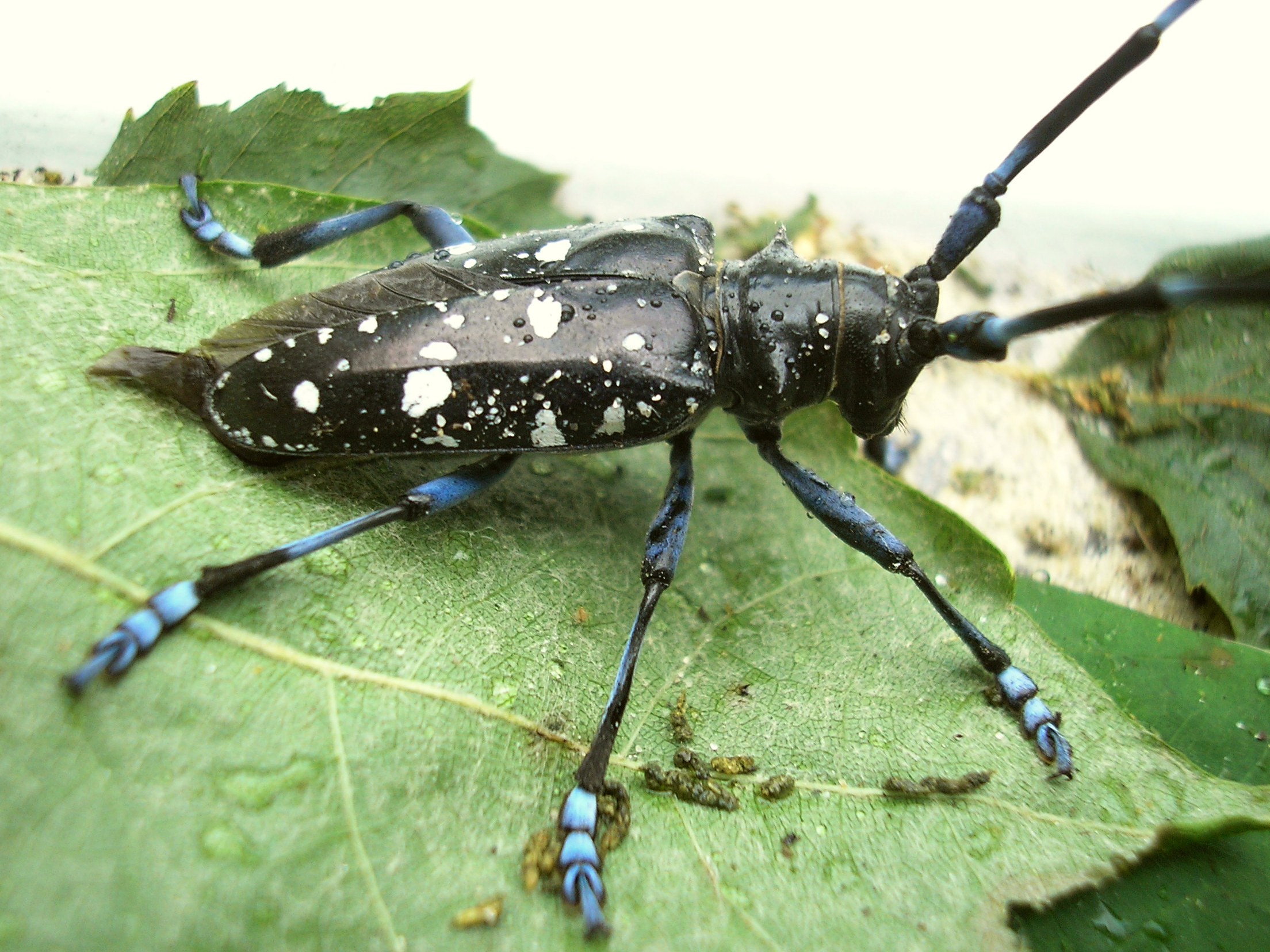
Starting Jan. 1, Michigan Will Bar Untreated Out-of-State Firewood to Keep the Maple-Killing Asian Longhorned Beetle Out
At Frank’s Firewood of Canton, a family business in Canton Township, owner Joe Lysakowski said his wood comes only from Michigan’s Lower Peninsula and never crosses the Mackinac Bridge. Starting Jan. 1, 2027, that kind of caution becomes the law at the state line. Michigan will bar untreated firewood from outside the state, a quarantine that the state’s Department of Natural Resources has tied to the Asian longhorned beetle, a pest that kills maple trees.
The rule matters to anyone who heats with wood, stacks a cord beside the garage, or carries a bundle home from a camping trip in Ohio, Indiana or Wisconsin.
What Michigan’s firewood quarantine bans on Jan. 1
The Michigan Department of Agriculture and Rural Development and the Michigan Invasive Species Program announced the quarantine on Sept. 17. From Jan. 1, 2027, it will no longer be permissible to bring untreated firewood into Michigan. The order rests on Act 189 of 1931, the state’s Insect Pest and Plant Disease Act.
Firewood that is allowed in must be heat-treated and certified by MDARD, another state’s agriculture department or the U.S. Department of Agriculture. According to the state’s firewood quarantine Q&A, the wood has to reach a core temperature of at least 140 degrees Fahrenheit for at least 60 minutes in a certified kiln. Kiln-drying alone does not qualify if the kiln is not certified.
The ban applies to everyone entering the state, including campers and travelers, and it covers uncertified firewood bought at out-of-state stores and gas stations as well as wood people cut themselves.
A few wood products are exempt. The state lists kiln-dried dimensional lumber, wood pellets, wood chips no larger than one inch in two dimensions, and certain raw wood hauled straight to sawmills, veneer mills, pulp and paper mills, pellet makers and similar plants for immediate processing.
Why maples are the worry
WXYZ 7 News Detroit reported Oct. 8 that the DNR is especially concerned about the Asian longhorned beetle, one of more than 140 invasive plant pests and diseases that can travel in firewood. Vicki Sawicki, the DNR’s invasive species prevention coordinator, told the station that many people assume moving firewood into Michigan is already banned, and that it is not, at least not yet.
Lysakowski put the stakes in yard terms. “Everybody’s got a maple,” he told the station.
The U.S. Department of Agriculture’s Animal and Plant Health Inspection Service says in its guide to the beetle that maple is the tree it infests most often, followed by elm and willow. Birch, ash, buckeye, poplar and sycamore are on the list too. The larvae feed on the living tissue under the bark and then tunnel into the wood. APHIS says infested trees do not recover. Signs usually show up three to four years after a tree is infested, and the tree typically dies within 10 to 15 years.
APHIS lists New York, Illinois, New Jersey, Massachusetts, Ohio and South Carolina as states where the beetle has been found, with eradication work still active in Massachusetts, New York, Ohio and South Carolina. The agency notes the adult beetles usually stay on the tree they came out of, so long-distance spread happens mostly when people move wood. Cutting a log into firewood does not kill the larvae inside.
Michigan already knows how that story goes. The state’s Don’t Move Firewood page names emerald ash borer, oak wilt and the Asian longhorned beetle as pests that ride in firewood. Homeowners elsewhere have watched the ash borer turn up the same way; in Colorado Springs, city officials believe the beetle arrived in imported firewood and spread for about three years before anyone confirmed it.
How to tell certified firewood at the store
The state’s Q&A says certified wood should carry a stamp or seal on the package or label from an authorized state agricultural official or the USDA, or a label showing an approved treatment. Michigan also runs a voluntary Invasive-Free Firewood Certification Program, and producers who heat-treat their wood under it can print a “Certified Invasive-Free” seal on their bundles.
The DNR is encouraging shoppers who buy bundled wood at gas stations, campgrounds and stores to look for those labels after Jan. 1, according to WXYZ.
For wood that is not certified, the state’s longstanding advice still stands. Michigan says firewood should not travel more than 10 miles from where it was cut unless it has been heat-treated. People are told to buy wood where they will burn it and to leave leftover wood behind rather than taking it home.
Firewood businesses inside Michigan that source wood from out of state are asked to contact MDARD. Lysakowski told WXYZ his business will not be directly affected because it sources only in-state, and the wood ages eight months to more than a year before it is sold.
Warnings in 2027, fines after that
MDARD says it will enforce the quarantine with the DNR and will focus heavily on education throughout 2027. The Q&A spells out what comes next. Starting Jan. 1, 2028, violators get a warning letter, and repeat violations can bring fines of $1,000 to $10,000, or up to $500 for someone who reports the violation voluntarily.
Michigan is not the first state to take this step. According to the state’s Oct. 27 MI Environment notice, Minnesota, New York and Wisconsin also allow only certified, heat-treated firewood across their borders. Travelers can check rules state by state on Firewood Scout.
“Preventing the introduction of invasive pests is far more effective than trying to manage an established infestation,” MDARD Director Tim Boring said in the September announcement.
The Michigan Invasive Species Program will hold an informational webinar and Q&A on Thursday, Nov. 12, from 9 to 10 a.m., and will post the recording on its NotMISpecies webinar page. Anyone who spots the beetle’s round, roughly three-eighths-inch exit holes in a maple can report it to APHIS at 866-702-9938 or through the agency’s online form.
Get stories like this by email. Sign up for The Parent Diaries Letter.
This article was produced with AI assistance and edited for accuracy against the sources linked above.
Image: Pudding4brains – Public domain/Wikimedia Commons