Colorado Springs Has Found Emerald Ash Borer in About 30 Trees, and Roughly 40,000 Ash Trees Across the City Are at Risk
Roughly one in every five trees in Colorado Springs is an ash, and the beetle that kills them is now confirmed inside the city. City Forestry Manager Matthew Puckett said about 30 trees have confirmed emerald ash borer infestations, out of an estimated 40,000 ash trees citywide.
The first infested trees on private property have already come down, and arborists say untreated ash trees are likely to die as the beetle spreads.
Two Rustic Hills ash trees come down
On Friday, Oct. 2, a crew from Tall Timbers Tree & Shrub Service removed two infested ash trees at two homes in the Rustic Hills neighborhood of northeast Colorado Springs, The Gazette reported. Branches were pulped on site, and the trunks were hauled to Rocky Top Resources to be turned into mulch.
Removing a single ash tree cost around $800, depending on its size and how easily crews could reach it. For homeowners with a large ash shading the house or yard, that is the kind of bill that comes once a tree is too far gone to save.
Mark Kelley, plant health care manager with Tall Timbers, called it “pretty devastating to know that it’s here now,” because untreated ash trees will likely die.
Thirty confirmed trees and three years of hidden spread
City staff confirmed the beetle within city limits in August. Officials believe it arrived in firewood brought from another part of Colorado, and Kelley estimated it had been in the city for about three years before anyone confirmed it.
That kind of lag is common. The Colorado Department of Agriculture warns that an infestation can go three to four years before a tree shows visible decline. The state first found the beetle in Boulder in September 2013 and has since confirmed it in places including Larimer County near Berthoud, Broomfield and Superior. Ash makes up about 15 percent of Colorado’s urban forest, with an estimated 98,000 ash trees in Boulder and 1.45 million in the Denver metro area.
The Colorado State Forest Service calls emerald ash borer “the most destructive tree pest ever introduced into North America.” It lists Colorado Springs among recent detections, along with Firestone, Ken Caryl and Parker, as the beetle continues to spread along the Front Range. Its only confirmed detection on the Western Slope so far is Carbondale, in 2023.
Puckett told The Gazette that a late-September meeting with Tall Timbers and other landscape companies about treating and removing ash was the first step in the city’s Emerald Ash Borer Management and Response Plan. He also warned that “one of the most dangerous things is misinformation.”
Signs to look for on ash trees
The early symptoms are easy to mistake for drought. In the first year, an infested tree can show white blotches on the bark and dying branches near the top, according to The Gazette. In the second year, the blotches spread and woodpecker activity picks up as birds dig for larvae.
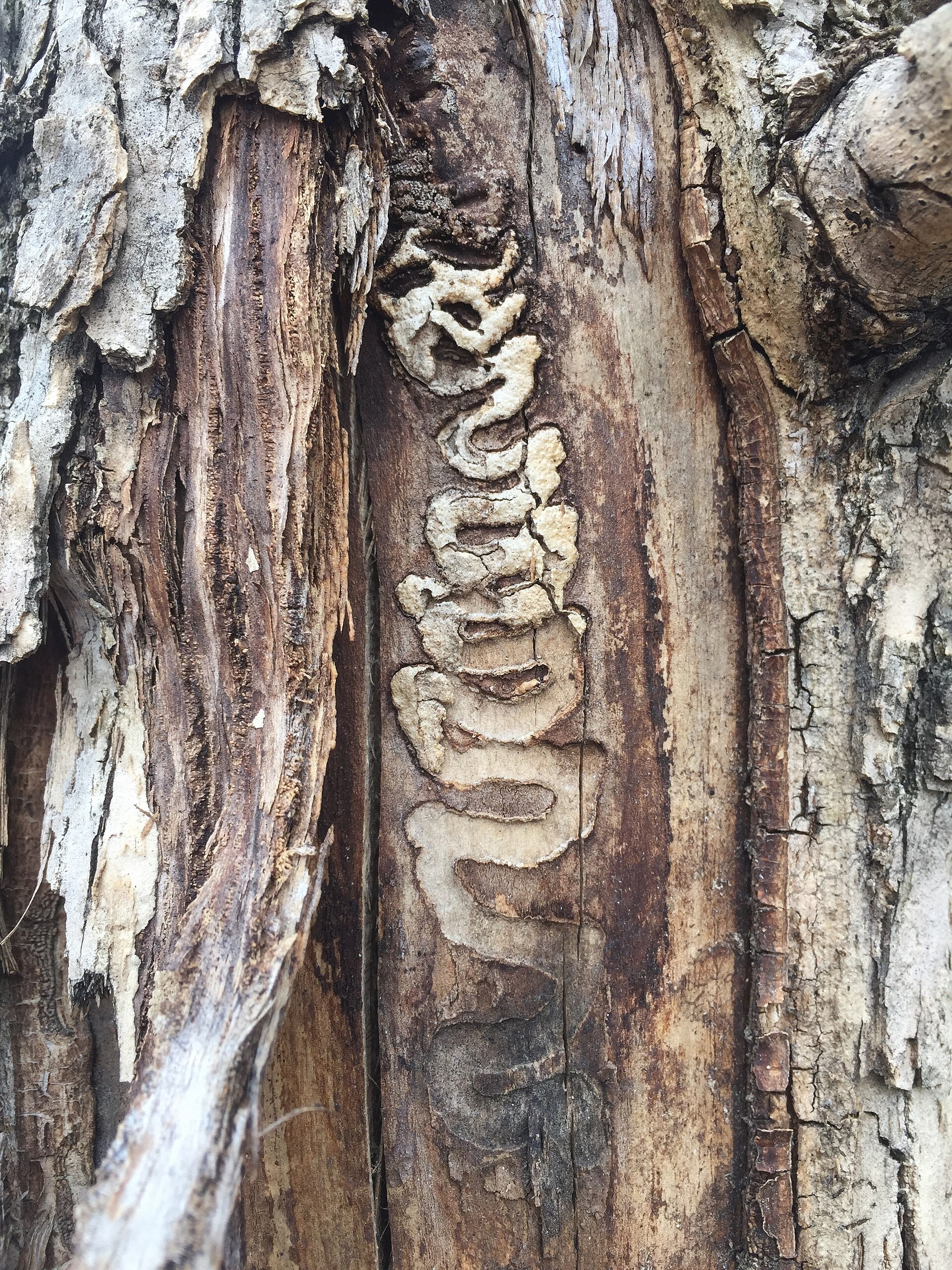
The U.S. Department of Agriculture’s Animal and Plant Health Inspection Service lists the telltale signs: S-shaped feeding tunnels under the bark, D-shaped exit holes left by adults in spring, dead branches near the top of the tree, excess sprouting on the trunk, vertical bark cracks and more woodpeckers than usual. The adult beetle is metallic green with a coppery-red abdomen and about half an inch long.
APHIS has detected the beetle in 38 states and the District of Columbia. The agency ended its federal domestic quarantine in January 2021 and now focuses on slowing spread, mainly by urging people not to move firewood and to buy local or certified heat-treated wood instead.
Treat, remove or replace
For city-owned trees, Colorado Springs plans to treat and protect a handful of ash and replace others with a mix of species, Puckett said. The beetle was confirmed too late to add money to the preliminary 2027 budget, but city leaders are looking at grants or other funding to “compensate in some fashion.”
Homeowners with private ash trees face the same three choices. The state agriculture department advises having a certified arborist inspect ash trees, building a management plan, and considering chemical treatment for high-value trees.
For trees along sidewalks, medians and parks, the city’s Forestry division takes reports of insect and disease problems through its GoCOS! request system or at 719-385-5942. Homeowners who would rather not wait for city crews can get a forestry permit and hire a licensed tree service at their own expense to work on a city tree, and a free permit is required to plant a replacement tree in the right-of-way from the city’s approved street tree list.
A beetle Colorado has fought since 2013
The arrival in Colorado Springs moves the beetle well south of where it first took hold in Boulder. Earlier this fall, the site covered the first confirmed infestation in Washington state, at a home in College Place, a sign of how far the pest continues to travel.
For Colorado Springs homeowners with an ash in the yard, the advice from state and federal agencies is the same: learn the signs, keep firewood local, and decide early whether a tree is worth treating. With about 40,000 ash trees in the city, those decisions will shape much of its shade in the years ahead.
Get stories like this by email. Sign up for The Parent Diaries Letter.
This article was produced with AI assistance and edited for accuracy against the sources linked above.
Image: judygva – CC BY 2.0/Wikimedia Commons