Wilmington Says It Will Not Waive an Estimated $122,000 Mitigation Fee for Six 100-Year-Old Live Oaks Slated to Come Down at the 550-Unit Hillcrest Redevelopment
Wilmington will not waive an estimated $122,000 in tree mitigation fees for six 100-year-old live oaks slated to come down at the Hillcrest public housing redevelopment, City Manager Becky Hawke has said, according to Port City Daily. The Wilmington Housing Authority plans to double the size of the 1940s complex to 550 units. The dispute has landed in the middle of a city review of the tree ordinance, and no vote on any change had been taken as of the Nov. 2 report.
The Fee Hawke Says Stays
The city manager has the power to waive mitigation fees for affordable housing or government-assisted projects, Port City Daily reported. Hawke has said she will not do so here. The paper put the fees at about $122,000, an estimate rather than a bill. The article did not include a direct quote from Hawke.
The fee exists because of how Wilmington’s tree rules work. Developers who remove protected trees must replace them at 200 percent or pay a fine that can reach the thousands of dollars. Fees paid in place of replanting need the city manager’s approval and go into the city’s tree improvement fund, which can be spent only on public land and rights-of-way, according to an earlier Port City Daily report on the variance hearing.
Six Oaks, 30 to 40 Inches Across
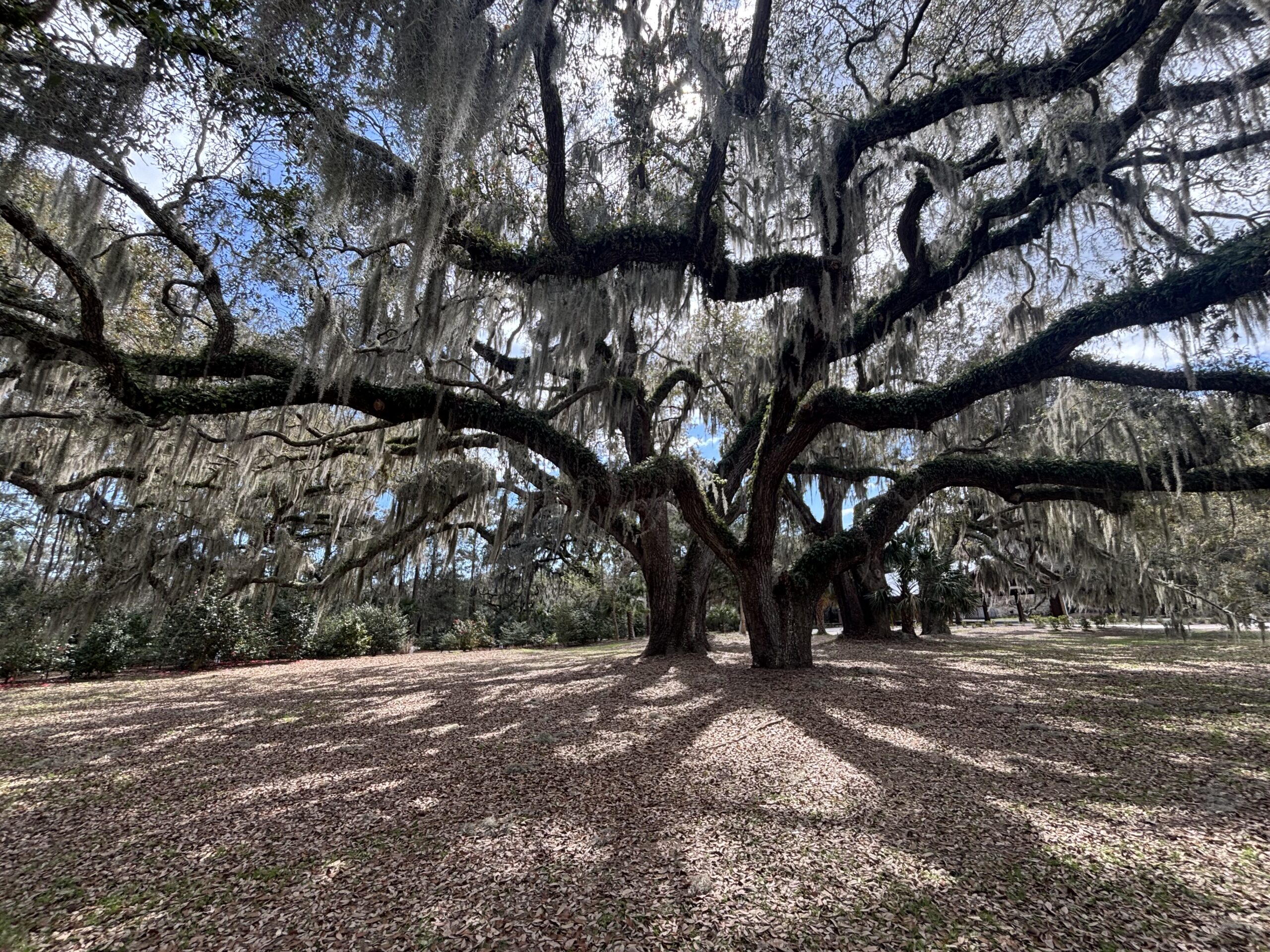
In Wilmington, a live oak with a trunk diameter of at least 24 inches counts as a specimen tree, and taking one down requires Board of Adjustment approval. The six oaks at Hillcrest measure 30 to 40 inches in diameter, according to that February report. On Feb. 19 the board unanimously granted a variance to remove them and to affect the root zones of four more trees. The board’s chair recused himself because he also chairs the housing authority, so an alternate sat in.
The city’s Board of Adjustment page describes a five-member body that hears variance requests and meets on the third Thursday of each month at 1 p.m. in Council Chambers.
Sam Franck, an attorney for the housing authority, told the board the pipes and utilities under the site are more than 80 years old and that the trees stand in the way of replacing them. He said the authority had tried to avoid the easiest route of asking to remove every tree. Board Vice Chair Patrick Moore said at the hearing that losing trees is a shame but that the applicant had made a significant effort to save the ones that could be saved.
What the Objectors Raised
The plan has drawn pushback since. WHQR reported in August that arborist Joshua Shields, who has 26 years of experience and is a former member of the city’s tree commission, argued that a 200-year-old oak slated for preservation would still lose more than 60 percent of its critical root zone, well above the ordinance’s 20 percent threshold, according to the WHQR story. Shields said he believes that tree will likely die.
Isabelle Shepherd, executive director of the Alliance for Cape Fear Trees, said she was not convinced all six oaks had to come down. Two of them, she said, appear to be affected mainly by the roadway alignment, and she wanted modest changes explored. She also said replanting does not replace what mature trees do, because that takes decades.
Councilmember Cassidy Santaguida told WHQR she supports telling the housing authority that the city may not waive mitigation fees and could reconsider the variance. WHQR noted that everyone it quoted agrees Hillcrest will provide needed housing.
Port City Daily’s November story added another wrinkle. Shields identified inaccuracies in the authority’s removal and mitigation plan, including whether one tree falls in a protected class. The city rejected that objection but agreed with other discrepancies he raised, and the authority must correct them before the technical review committee approves site plans.
Phase One and the Case for Housing
Hillcrest was built in the 1940s, and the first phase is a senior building. Per WHQR’s August story, phase one costs $25.7 million for 84 affordable units for residents 55 and older, and The Endowment awarded $5.7 million toward it. The developers’ landscape plan would save several smaller trees and plant 76 new trees in that first phase. A city spokesperson said a bond of $60,900 covers the four trees that will stay, a payment the developer owes the city if they die.
The authority’s October 2025 rollout, covered by WHQR, described phase one as 69 one-bedroom and 15 two-bedroom units, with construction then set to begin in June 2026 and finish in December 2026. WHQR’s August story said the authority still plans to remove the six oaks, with timing tied to finalizing remaining items with HUD.
Liz Carbone, a board member of the Cape Fear Collective and the Wilmington Housing Authority, said she worries about losing permanently affordable housing “over a tree, a singular tree,” Port City Daily reported. She argued that a tree might live only about 10 more years, while the housing would provide 100 years of affordability.
Dave Spetrino, a developer, argued at the same session that infill projects should be exempt from the tree rules altogether. Most committee members backed different standards for different lot types but did not go as far, the article said.
Rewriting the Ordinance, and What Wilmington’s Numbers Show
The city convened developers, architects, environmental experts and housing advocates to give the Tree Commission feedback. The commission’s ordinance review subcommittee was scheduled to meet Nov. 4 to focus on initial amendments, and proposed changes are expected at a Planning Commission public hearing in early 2027, with more amendments later in the year.
The city told Port City Daily that 22 of 80 development projects released over the past two years, about 27 percent, included a payment in place of mitigation. A city spokesperson called that option a last resort, and the city offers credits for relocating trees, planting larger trees and preserving trees the ordinance does not regulate.
The Alliance for Cape Fear Trees says canopy fell from 48.1 percent in 2016 to 41.4 percent in 2020. The city allocated $100,000 over two years to the group to maintain more than 300 trees, plant and care for 175 and distribute 1,000.
Relocating an oak is possible but costly. WHQR reported that Shields helped move the 200-year-old Ogden oak in 2017 for about $80,000, and Shepherd called such moves very expensive and rare.
Wilmington is not the only city weighing trees against building. Edmonds, Washington, extended its interim protection for landmark trees, and Sterling Heights, Michigan, scaled back a building plan to save an 88-foot chinquapin oak.
This article was produced with AI assistance and edited for accuracy against the sources linked above.
Image: “Honey Horn live oaks, Hilton Head Island, South Carolina” by FranzKafkasWiki is licensed under CC BY 4.0 (Wikimedia Commons). Illustrative photo of live oaks; not the Hillcrest trees.