After Calera Landowner Grady Church Refused to Step Back From Tree-Clearing Crews, Alabama Power Asked a Court for a Restraining Order Over Its $248 Million Line
On Nov. 3, Alabama Power crews were getting ready to clear trees and vegetation on Grady Fenn Church’s land in Calera, and the work stopped when Church would not move back from the work area. The next day, the utility filed a complaint and asked a Shelby County court for a temporary restraining order, according to ABC 33/40. The line the crews were preparing for is a 74-mile transmission project that costs $248 million.
As of the station’s latest update on Nov. 5, no judge had ruled on the request, and the report did not name a judge or give a hearing date.
What Alabama Power Is Asking the Court For
The filing, made Wednesday, Nov. 4, includes a complaint, a motion for a temporary restraining order and a motion for a preliminary injunction. ABC 33/40 reported that the company wants an order barring Church and anyone acting with him from interfering with the work, and an order keeping them at least 300 feet from the clearing operations.
The company says it needs a 300-foot safety zone to run heavy equipment safely. It alleges that a representative spoke with Church near the property boundary on Nov. 3, asked him and others to move back 300 feet, and that he refused.
In a statement the next day, Alabama Power said crews entered the property after the Alabama Supreme Court’s order and made progress until people entered the work zone. The company said it halted work when the owner said he would not move to a safe location, and that it sought the restraining order as a “last resort” so work could continue. The company also said it understands that property is personal and is committed to treating property owners fairly and respectfully.
Church’s Side of the Gate
The ABC 33/40 report did not include a direct statement from Church. He did share a video with the station on Nov. 3 that shows him talking with people he identified as Alabama Power crews trying to get onto his land. He has challenged the company’s plans in court, citing concerns about his home, his property and the use of eminent domain.
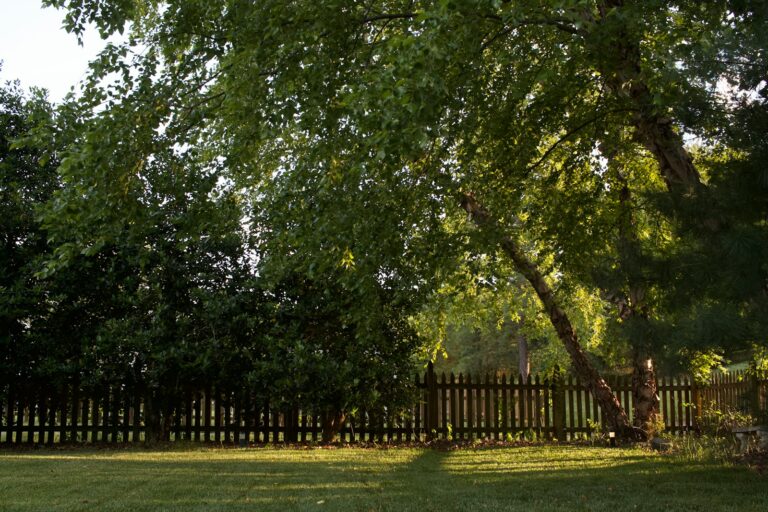
Church is 60 and owns 416 acres of wooded land near Calera, with old-growth hardwoods, a 27-acre lake and Buxahatchee Creek running through it, according to AgWeb. The company’s route would take a corridor across the land and remove oaks that AgWeb described as roughly 250 years old.
AgWeb’s timeline shows the offers that came before the lawsuit. Alabama Power offered $80,000 for an easement in January 2025, raised that to $132,000 that September, and made a final offer of $192,000 on May 26, 2026. Church declined, and the company sued for condemnation the next day.
Church argues the utility could have chosen a less disruptive route. According to AgWeb, Church says the line has 60 bends but none along the 4.5-mile straight section that includes his land, and that he asked for two bends to route around his property and was refused. The company’s appraiser testified that the property would see no significant loss in value, while Church’s appraiser disagreed and estimated a much larger loss.
How the Fight Got to This Point
On Sept. 22, Shelby County Circuit Judge Jonathan Spann issued a preliminary injunction that barred Alabama Power from entering the property, according to another ABC 33/40 report. The judge ordered Church to post a $10,000 bond. He found that Church was likely to succeed on challenges to the line’s location and access roads, and that the company’s failure to complete required steps before filing its condemnation case “would justify a conditional dismissal.”
That order did not last. On Oct. 21, the Alabama Supreme Court granted the company’s emergency request and put the injunction on hold, ABC 33/40 reported. Five justices agreed, one dissented and two recused. The stay lifted the restriction on entering the land but did not settle the underlying case over the company’s right to use the property.
The next morning, crews returned to the property. Church and several supporters stood at his front gate from around 7 a.m., and crews were seen at the south gate about 10:30 a.m. Workers later crossed onto the land on foot and marked trees. Inside Climate News reported that Church had contacted U.S. Sens. Katie Britt and Tommy Tuberville and U.S. Rep. Barry Moore, and that he said he would mobilize supporters if crews came back.
The Line Behind the Trees
The project is meant to relieve overloading on Alabama Power’s existing grid, and the company says it will finish in May 2027, according to ABC 33/40. The Oct. 21 report said about half a mile of the 74-mile line would cross Church’s land, along with concerns raised in earlier hearings about his home, his privacy, the creek and the old-growth trees.
AgWeb reported that the line runs from Autauga County to Shelby County and is intended to serve 1.6 million customers and new data centers. The same report said a 2019 Alabama law, HB 400, lets power companies lease easements to telecom firms, which Church says gives the utility income while he stays responsible for property taxes on all of his acreage.
The restraining order request is a separate matter from the condemnation case, which is still being fought. For now, the question in front of the court is narrow: whether Church and anyone with him must stay 300 feet from the crews while they clear trees.
Get stories like this by email. Sign up for The Parent Diaries Letter.
This article was produced with AI assistance and edited for accuracy against the sources linked above.
Image: U.S. Forest Service (CC0 1.0), via Rawpixel