Billboard Crews Cleared the Trees Behind Elizabeth Alls’ Charlotte Home Without Telling Her, and NCDOT Says a 2024 Law Allows It
The North Carolina Department of Transportation has confirmed that the clearing of trees behind Elizabeth Alls’ Charlotte home was legal, even though no one told her it was coming. NCDOT pointed to a 2024 state law, passed over Gov. Roy Cooper’s veto, that widened the zone around billboards where vegetation can be removed to 500 feet. The agency also confirmed that billboard companies do not have to notify neighbors before they cut, according to WSOC-TV’s Oct. 30 report.
The law is Session Law 2024-15, and its billboard rules took effect on July 1, 2024. The text on the General Assembly’s site shows what the 500-foot figure covers and what it leaves out.
Crews Behind the House Near Interstate 85
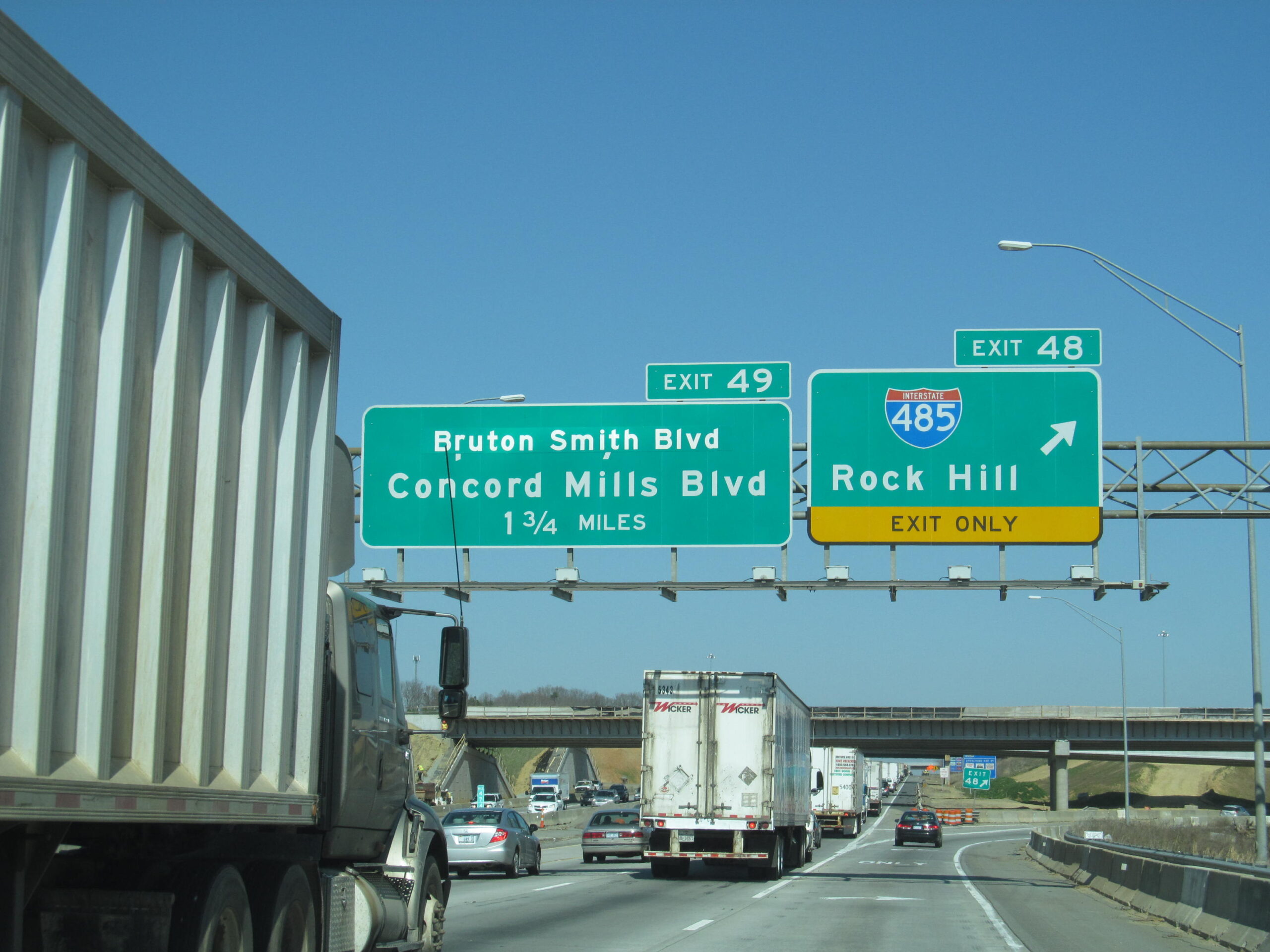
Alls lives near Interstate 85 and chose the house partly for its dense trees, garden space and wildlife, WSOC reported. Crews recently cleared the wooded area behind the home to improve highway visibility for a billboard. Only a small strip of trees remains along her property edge, and that strip is what buffers noise and pollution from the interstate.
She learned of the work only when crews appeared behind her house earlier this month. She had not been notified, so she called the state transportation department. Alls told the station it is hard that the trees are being removed with no way for residents to stop it.
WSOC did not get answers about Alls’ property from the billboard company, which it identified only as the owner of the sign. A separate tree-clearing dispute near a billboard in Charlotte is covered in this site’s story about a billboard company clearing trees near Charlotte’s Plaza Midwood.
What Session Law 2024-15 Allows Near a Billboard
The billboard provisions sit inside House Bill 198, a transportation agency bill titled “DOT Legislative Changes.” The chaptered session law sets the cut-or-removal zone from a viewing zone of 500 feet where the posted speed limit is over 35 mph, and 350 feet where it is 35 mph or less. Under the earlier rules, the maximum was 380 feet, according to a Yahoo News report on the veto.
An owner who holds a selective vegetation removal permit may cut, thin, prune or remove vegetation inside the zone. Trees at least 4 inches in diameter when the sign was put up can be removed only under the replanting or other conditions in the statute. Native dogwoods must be preserved, according to the session law text.
The permit process is fast. NCDOT must act on an application within 30 days, and if the department gives no written notice in that time, the application is deemed approved. The only notice the session law describes is the department’s written approval or denial sent to the applicant. The text that was reviewed contains no requirement to notify adjacent property owners, which matches what NCDOT told WSOC.
The statute also contains a no-permit zone. It extends 300 feet on either side of the sign, and owners may trim or remove trees under 4 inches in diameter there, working from the private side of the fence with the landowner’s consent.
The 2024 Veto and the Override That Made It Law
Cooper vetoed House Bill 198 on May 23, 2024. In the governor’s announcement, he said the legislation “allows tree cutting and destruction of native plants around billboards,” and he cited his February Executive Order 305, which sets goals for restoring natural areas and planting one million trees. He said that protecting North Carolina’s natural beauty should be a top priority.
The General Assembly’s bill history shows how the bill moved. The House passed it 108-8 on May 2, 2023. The Senate passed a committee substitute 30-14 on May 15, 2024, and the House concurred 65-38 on May 22. After the veto, the House overrode it 74-42 on June 26, 2024, and the Senate followed 30-14 on June 27, the day the bill was chaptered as S.L. 2024-15.
NCDOT did not request the billboard provisions, according to the same Yahoo News coverage. The N.C. Outdoor Advertising Association argued before the vote that the old view zone was too small, and its executive director, TJ Bugbee, described redbuds growing in front of sign faces. Sen. Steve Jarvis, a Republican, said he loves trees but does not like them in the right-of-way where he is trying to look at a billboard, as reported in an earlier Yahoo News story on the bill. Dale McKeel of Scenic North Carolina said most North Carolinians oppose more cutting of trees in front of billboards.
What a Homeowner Can Do When the Trees Come Down
The WSOC report lays out limited options. Property owners generally have no legal right to a scenic view under state law. A nuisance lawsuit may be possible if conditions such as highway noise become severe, though the station did not report any such case in Charlotte.
Alls’ route is political rather than legal. She is working with environmental groups and state lawmakers to change the policy. Bugbee, speaking to an industry publication before the override, said the answer was currently no when businesses asked whether even a few trees could be removed to improve visibility, as Billboard Insider reported on June 7, 2024.
For homeowners next to a billboard, the practical lesson from the session law is its timing. Permits are deemed approved after 30 days of silence, and the notice goes to the applicant, so the first sign of a cut can be a crew in the backyard. The law also leaves a few protections in place, including the dogwood requirement and the replanting conditions for larger trees, though the 500-foot zone applies only on roads with speed limits above 35 mph.
Get stories like this by email. Sign up for The Parent Diaries Letter.
This article was produced with AI assistance and edited for accuracy against the sources linked above.
Image: Dougtone – CC BY-SA 2.0/Wikimedia Commons