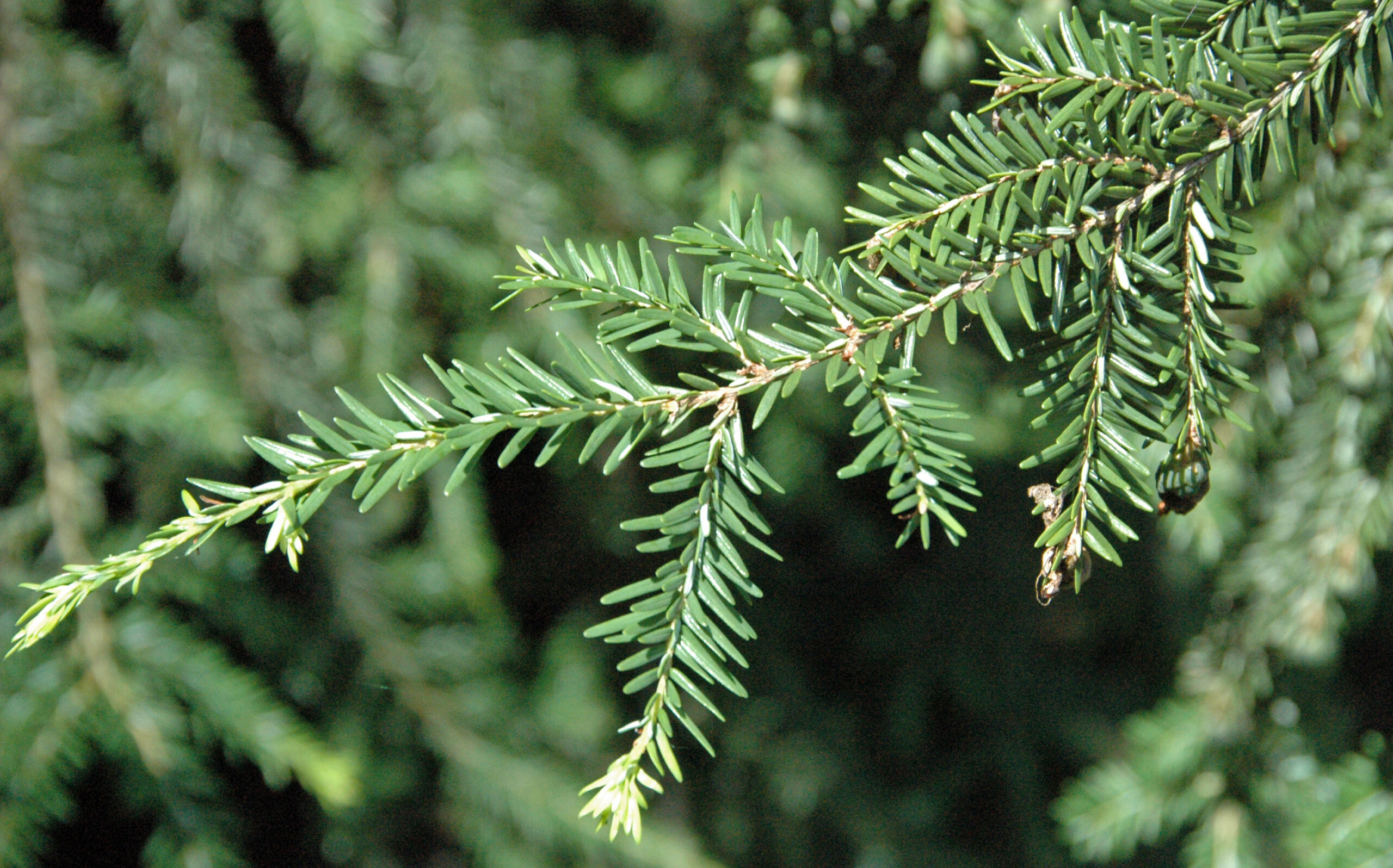
A Boundary Hemlock in Sunapee Led to Felony Charges Against a Retired Navy SEAL Commander, and the Case Ended in a $1,000 Fine Against an $11,259 Appraisal
On Oct. 23, a judge in Sullivan Superior Court in Newport, N.H., watched two felony charges against a retired Navy SEAL commander disappear and a $1,000 fine take their place. Michael Hayes, 55, of Lake Avenue in Sunapee, pleaded guilty to a trespassing violation, paid at the clerk’s office before leaving the courthouse, and closed a case that began with a single hemlock on a shared property line. The neighbors who owned the other side had an appraisal putting the tree’s replacement value at $11,259, the Valley News reported.
A $1,000 Fine Where Two Felony Counts Once Stood
A Sullivan County grand jury indicted Hayes on May 27 on two felonies, criminal mischief and timber-harvesting trespass, according to the Valley News’s June coverage of the indictments. The state alleged he “caused damages in excess of $1,500 to the trees belonging to his neighbor.” Each charge carried a possible sentence of up to seven years, the paper reported.
At the Oct. 23 plea and sentencing hearing, both felonies were dismissed with the state’s agreement. Hayes pleaded guilty instead to a substitute trespassing violation, a non-criminal offense, and paid the $1,000 fine on the spot. Judge James Kennedy presided, and Hayes was represented by attorney Jason Casey of Hinckley Allen, per the Valley News.
Hayes told the paper he accepted responsibility for a violation rather than a crime so the matter could end as quickly as possible. In June, he said, he had not been contacted before the charges were filed, and he called that “most regrettable and concerning.” The neighbors, Stacey Nath-Vinick and Michael Vinick, declined to comment on the record.
The Hemlock on the Line and a Stump Cut in 2019
The tree stood on the common boundary between Hayes’s lakefront property and the abutting lot to the south, which the Vinicks own. In the summer of 2025, Hayes feared the hemlock was dead or dying. He pointed to a 2017 incident in which a falling tree destroyed a family vehicle, documented in a letter from Mercedes-Benz that the Valley News obtained.
On June 11, 2025, the day after Michael Vinick’s father died, Hayes emailed the Vinicks to ask whether the tree could be cut down. Nath-Vinick told the court she answered that the family was dealing with a death. Days later the hemlock came down, along with a 4-foot stump left from another hemlock the Vinicks had cut in 2019. Hayes has said the Vinicks removed that earlier tree without his permission.
An arborist Hayes had hired for a drainage project told him the removed tree was dying, leaning toward the neighbor’s house and likely to fall soon, according to the court filings the Valley News described. The Town of Sunapee’s own tree-cutting request form lists “felling and replacement of decaying trees and shrubs” among the activities allowed without a permit, the paper noted.
How Two Appraisers Reached Opposite Numbers
About a month after the removal, the Vinicks hired Brian Beaty, an arboricultural consultant registered with the American Society of Consulting Arborists and the International Society of Arboriculture. Beaty rated the hemlock’s condition at 53 percent on a scale running from 10 to 100 percent and put the “appraised replacement value of the cut hemlock and its neighboring stub” at $11,259. He also noted that the stump had anchored a hammock Michael Vinick regularly used.
After the indictments, Hayes retained Jeffrey Coombs, president of Ossipee Mountain Land Company, a forest management and firewood business. Coombs reviewed photographs and described two remaining hemlocks straddling the line as being in “an advanced state of decline” with “no positive market value.”
That difference between replacement value and market value became the heart of the defense. In a July memo to County Attorney Christine Hilliard, Casey argued that the Beaty report measured what it would cost to replace the tree, not what the tree would sell for, which weakened the state’s proof of financial loss. He also argued that Hayes had not acted recklessly and described the episode as “a good-faith misunderstanding regarding authorization.”
What the New Hampshire Statutes Require for a Felony
The charges rested on two state laws with dollar thresholds. Under RSA 227-J:8-a, cutting or destroying trees on land the person does not own is criminal when done recklessly and without the owner’s permission. It becomes a class B felony when the market-value loss is greater than $1,000, and a misdemeanor for any smaller loss. A timber trespass fact sheet from the state’s Division of Forests and Lands and UNH Cooperative Extension describes the same split between the criminal law and the civil statute, which covers negligent cutting.
The criminal mischief statute, RSA 634:2, reaches a felony level when a person purposely causes or attempts to cause pecuniary loss “in excess of $1,500.” To win a felony conviction, the Valley News reported, the state would have had to prove a market value above $1,000 and recklessness on the timber count, and a purposely caused loss above $1,500 on the mischief count.
The civil route works differently. Under RSA 227-J:8, a person who negligently cuts a tree on another’s land and without permission must forfeit to the injured owner “no less than 3 and not more than 10 times the market value” of each item. The Valley News did not report whether the Vinicks have filed a civil claim.
The fact sheet also advises landowners to confirm where the lines run before acting: whether the property has been recently surveyed, whether the boundary is marked and whether a map exists. Similar boundary-tree disputes have played out elsewhere, including the case of a tree crew cutting young trees on the wrong side of a property line and a neighbor who trimmed half of a 50-year-old bay tree across the boundary.
In Sunapee, the case ended with a clerk’s receipt for $1,000. The hemlock, its neighboring stub and the hammock they once held are gone, and the question of what the Vinicks lost is now measured by an appraisal that never had to be tested at trial.
Get stories like this by email. Sign up for The Parent Diaries Letter.
This article was produced with AI assistance and edited for accuracy against the sources linked above.
Image: James St. John – CC BY 2.0/Wikimedia Commons