Mark Shelden, 72, Was Killed When a Tree He Was Cutting Down on His Own Codorus Township Property Fell on Him
On the 4000 block of Narrow Gauge Road in Codorus Township, York County, Pennsylvania, Mark Shelden was cutting down a tree on his own property Monday morning, Oct. 26. As the tree came down, it rolled toward him. The 72-year-old tried to get out of the way, fell, and was pinned underneath. He died later that day at WellSpan York Hospital.
The York County Coroner’s Office identified him by Oct. 28 and ruled his death an accident.
A 911 call just before noon
The call came in around 11:40 a.m., according to York County Emergency Dispatch, as reported by FOX43. Pennsylvania State Police responded along with firefighters and emergency medical crews.
Rescuers freed Shelden from under the tree at about 11:58 a.m. and tried to save him, the York Daily Record reported. He was taken to WellSpan York Hospital, where Deputy Coroner Molly York certified his death.
The coroner’s office said Shelden died of mechanical asphyxia in the setting of blunt force injuries, meaning the injuries impaired his breathing. FOX43 reported the manner of death as accidental. State police investigated, and a routine toxicology test was done.
When a falling tree moves the wrong way
The Occupational Safety and Health Administration’s guide to felling trees says felling causes more deaths than any other logging activity, and it lays out four steps for any tree: eliminate or reduce hazards in and around the tree, pick a felling direction, plan and clear a retreat path, and use a proper cutting technique.
OSHA’s retreat-path guidance tells cutters to clear an escape route before the first cut. The path should run at roughly 45 degrees to either side of the felling direction and back, never straight behind the trunk, where the butt of the tree can kick back. The agency says to move quickly to a spot about 20 feet away, keep watching the tree rather than turning away from it, and stand behind another standing tree if one is close by.
Penn State Extension’s review of chainsaw injuries, written by agricultural and biological engineering professor Judd Michael and the University of Florida’s Serap Gorucu, found about 128,000 people were treated in U.S. emergency rooms for chainsaw-related injuries from 2018 through 2022, roughly 70 a day. Among people hurt outside of work, more than half were injured at their own homes. The authors note that trees, limbs and logs striking the person cutting accounted for many deaths, and that sloped ground and tight spaces raise the risk of being hit.
Advice for homeowners who cut their own trees
The Penn State authors point out that many people who cut trees on their own land have no formal training, and they recommend getting some before the first use and refreshing it over time. Their checklist includes planning at least two escape routes before felling, keeping anyone watching farther away than the height of the tree, and skipping work in wind, poor light or near power lines.
They also list the protective gear that matters: a helmet with face shield and ear protection, cut-resistant gloves, chaps or cut-resistant pants, and steel-toed boots. Saws should be checked before each use for chain tension, sharpness, oil and working safety features, and the authors warn against using an older saw without a chain brake.
The New York State Department of Health’s chainsaw safety page for homeowners adds that bent or twisted wood can hold tension that is hard to see, and that releasing it mid-cut can make the wood move without warning. The department advises keeping both hands on the saw, keeping footing secure, clearing a retreat path for falling branches, and releasing the throttle or shutting off the saw before stepping back.
Falling trees at home have turned deadly elsewhere too. In St. Louis, a neighbor and the city have been at odds over who should have removed a decaying tree that fell and killed a 33-year-old man on Gimblin Street.
What Penn State’s foresters tell landowners before felling
In a Penn State Extension chainsaw safety video, extension educator Michael Powell and former forest resources teaching professor Sanford Smith advise against felling trees without training. Powell explains that felling takes specific cuts and notches, and that a mistake can leave a tree hung up in a dangerous position.
The two also tell cutters to look up into a tree before starting, since dead and waterlogged limbs can drop even on calm days, and to avoid felling in wind or heavy rain. For logs already on the ground, the extension’s advice is to wedge them up or cut partway through, roll them, and finish from the other side rather than cutting into the dirt.
Published reports did not describe the size or type of the tree on Shelden’s property. The York County Coroner’s Office ruled the death an accident.
Get stories like this by email. Sign up for The Parent Diaries Letter.
This article was produced with AI assistance and edited for accuracy against the sources linked above.
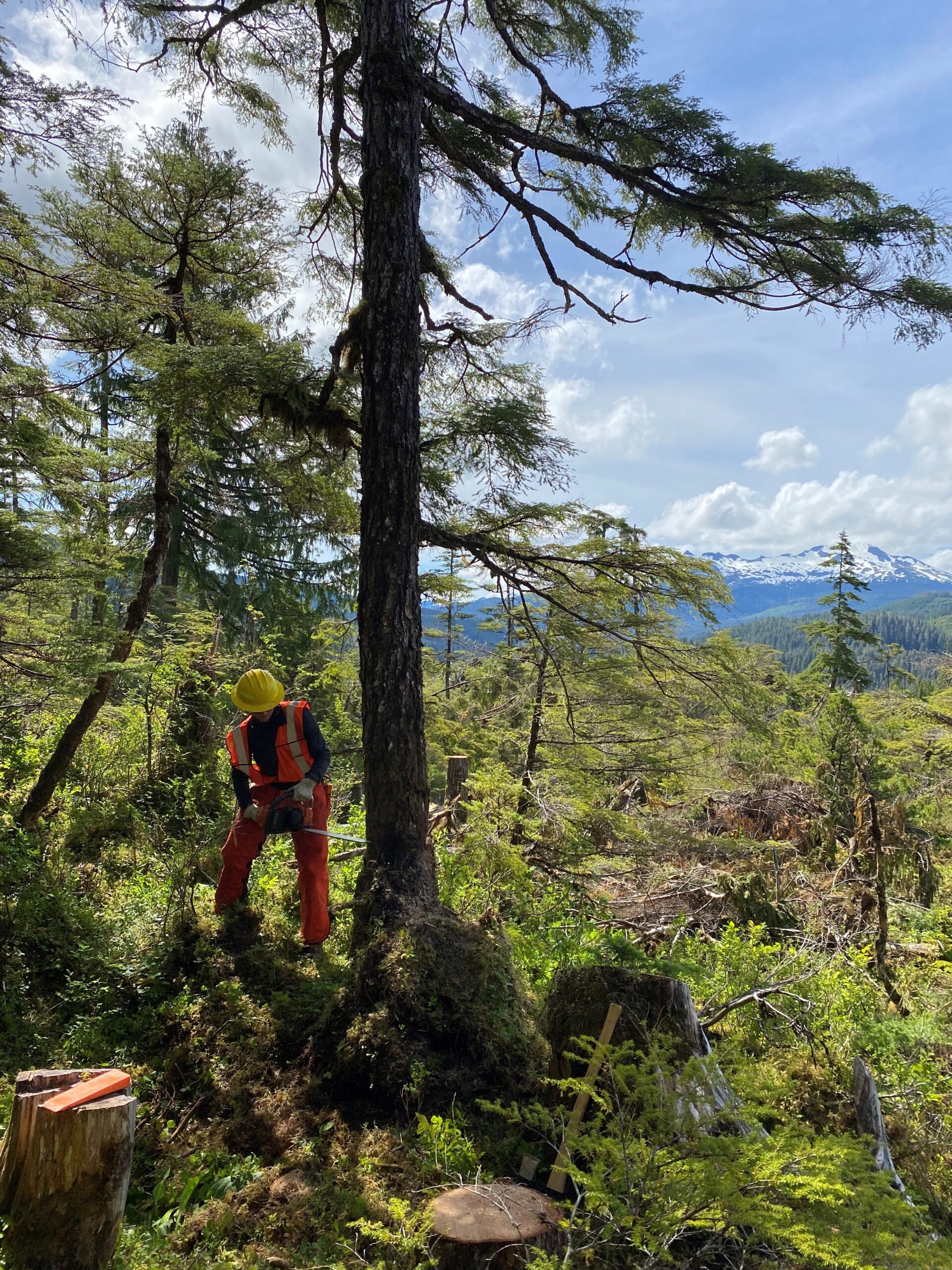
Image: Forest Service Alaska Region, USDA – Public domain/Wikimedia Commons