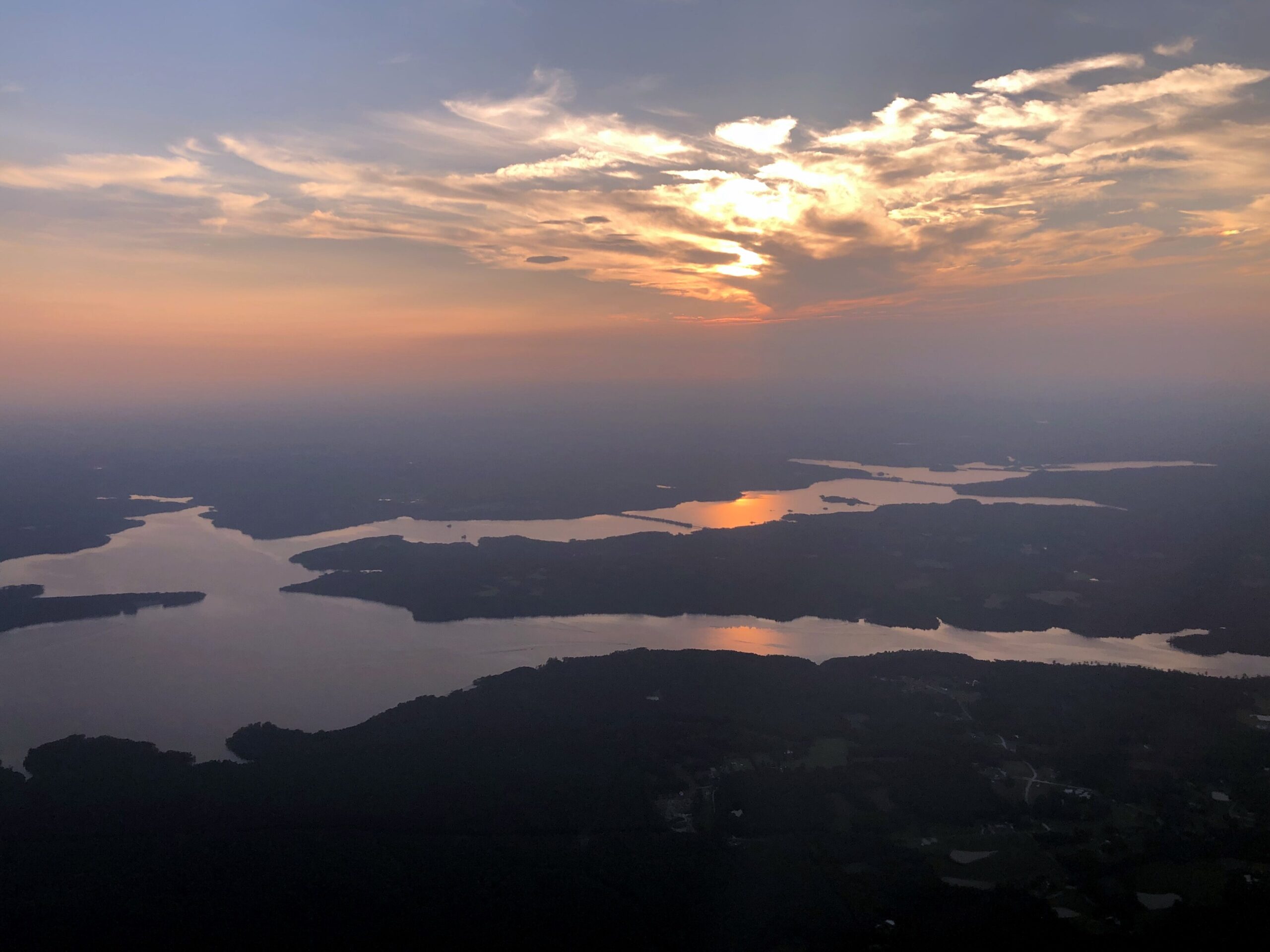
Raleigh Water Is Asking Customers to Cut Back on Lawn Irrigation as Falls Lake Drops More Than Five Feet
Stretches of lake bed are showing at Falls Lake, the reservoir that supplies Raleigh, after the water dropped more than five feet in a dry fall. Raleigh Water’s Ed Buchan told WRAL News on Oct. 29 that the utility wants customers to cut back on watering their lawns, even though no mandatory restrictions are in place.
The request reaches well beyond the city. Raleigh Water serves Raleigh, Garner, Knightdale, Rolesville, Wake Forest, Wendell and Zebulon, and the city’s Permanent Conservation Measures apply to customers in all seven.
Five feet down at Falls Lake
Buchan told WRAL that about 67 percent of the lake’s drinking water allocation remains, a figure that does not mean the lake itself is 67 percent full. Buchan described the utility as being in pretty good shape for now. WRAL reported that Stage 1 restrictions for October are triggered at around 45 percent of the allocation.
The National Weather Service’s Raleigh office sees the reservoir slipping back. In its Oct. 27 drought information statement, the office said Falls and Jordan lakes were approaching the levels they held in June, before helpful July rain, and that the John H. Kerr Reservoir is operating under drought contingency plans.
The rain gauge at Raleigh-Durham International Airport shows why. The weather service’s daily climate report for RDU, issued early Saturday, recorded 29.99 inches of rain so far this year, 9.27 inches below the normal of 39.26. The Oct. 27 statement put RDU at 46 percent of normal rainfall over the past 90 days.
Wake County is in severe drought, or D2, on the North Carolina Drought Monitor map for Oct. 27. WRAL reported that about 62 percent of the state’s land area was in drought, up from about 50 percent a week earlier.
A request, not a rule
For now, Raleigh Water customers are under the city’s Permanent Conservation Measures, which are always in effect. According to Raleigh’s water conservation stages page, updated Oct. 23, those measures recommend landscape irrigation of no more than one inch per week and ask residential customers to keep use to 65 gallons per person per day.
Hand-held watering, bucket watering, drip irrigation and other outdoor watering are all still allowed. Buchan’s request is that customers water lawns less than they otherwise would.
The state’s drought council is pushing harder. On its drought page, the North Carolina Drought Management Advisory Council says that until further notice it strongly urges water users in D2 areas such as Wake to put water shortage response plans in place if they are not already, and to eliminate nonessential uses of water.
Tuesdays and Wednesdays under Stage 1
If Falls Lake keeps falling and Raleigh moves to Stage 1, the city’s rules for sprinklers get specific. In-ground irrigation would be limited to one day a week, Tuesday for odd-numbered addresses and Wednesday for even-numbered ones, and only from midnight to 10 a.m.
Under Stage 1, Raleigh recommends no more than half an inch of landscape irrigation per week. Hose-end sprinklers are restricted, and permits for establishing new landscapes are prohibited, though hand-held watering, bucket watering and drip irrigation are still allowed.
Stage 2 would ban in-ground irrigation and hose-end sprinklers entirely, leaving only hand-held watering, buckets and drip lines. Under Stage 3, the city’s page says, all irrigation is eliminated, including hand watering and drip.
Trees before turf, NC State says
For yards trying to get through the drought on less water, NC State Extension’s drought guidance sets clear priorities. Trees and shrubs planted in the last two years come first, along with established trees and shrubs. Drought-sensitive plants such as hydrangeas, Japanese maples, azaleas and dogwoods come next. Annuals and plants slated for replacement come last.
The extension advises watering deeply and infrequently, early in the morning, using soaker hoses, slow-release bags or buckets with small holes, and wetting the full root zone, which it says extends two to three times the distance from the trunk to the dripline. It recommends about 2 inches of mulch in beds, kept 6 inches away from tree trunks.
Lawns can largely wait. NC State says tall fescue, bermudagrass and zoysiagrass tolerate dormancy well, and that yellow or brown leaves during dormancy are normal. Homeowners can raise the mowing height to 3 inches, stay off the grass, and give a dormant lawn about a quarter inch of water every three weeks to keep its growing points alive. The extension also says not to fertilize during drought.
Evergreens are the exception to letting watering slide into winter. NC State says they need about an inch of water per week through fall and winter, because frozen ground keeps them from taking up water later.
Rain on the horizon, maybe
The weather service’s Oct. 27 statement said a system expected late the following week could bring at least an inch of rain, but that the forecast trend had been weakening. If it fails, the office said, drought conditions are likely to worsen given continued warm temperatures, and the drought will likely continue until multiple widespread rain events arrive.
Longer term, a strengthening El Niño favors wetter-than-normal conditions into winter, the weather service said, with the stronger effects likely later in the season. Klaus Albertin, a water resources engineer with the N.C. Department of Environmental Quality who chairs the drought council, told WRAL he expects El Niño to have a significant impact on the drought.
Buchan told WRAL the utility hopes for a lot more rain in the coming weeks. Neighboring Durham is already further along: its reservoirs sit at 37 percent and lawn watering stays banned.
Get stories like this by email. Sign up for The Parent Diaries Letter.
This article was produced with AI assistance and edited for accuracy against the sources linked above.
Image: MadeYourReadThis – CC BY-SA 4.0/Wikimedia Commons