Crystal Lake Ordered a Neighbor to Pull 15 Arborvitae That Ronald and Doreen Orist Say Block Their Lake View, Then Reversed Itself a Month Later
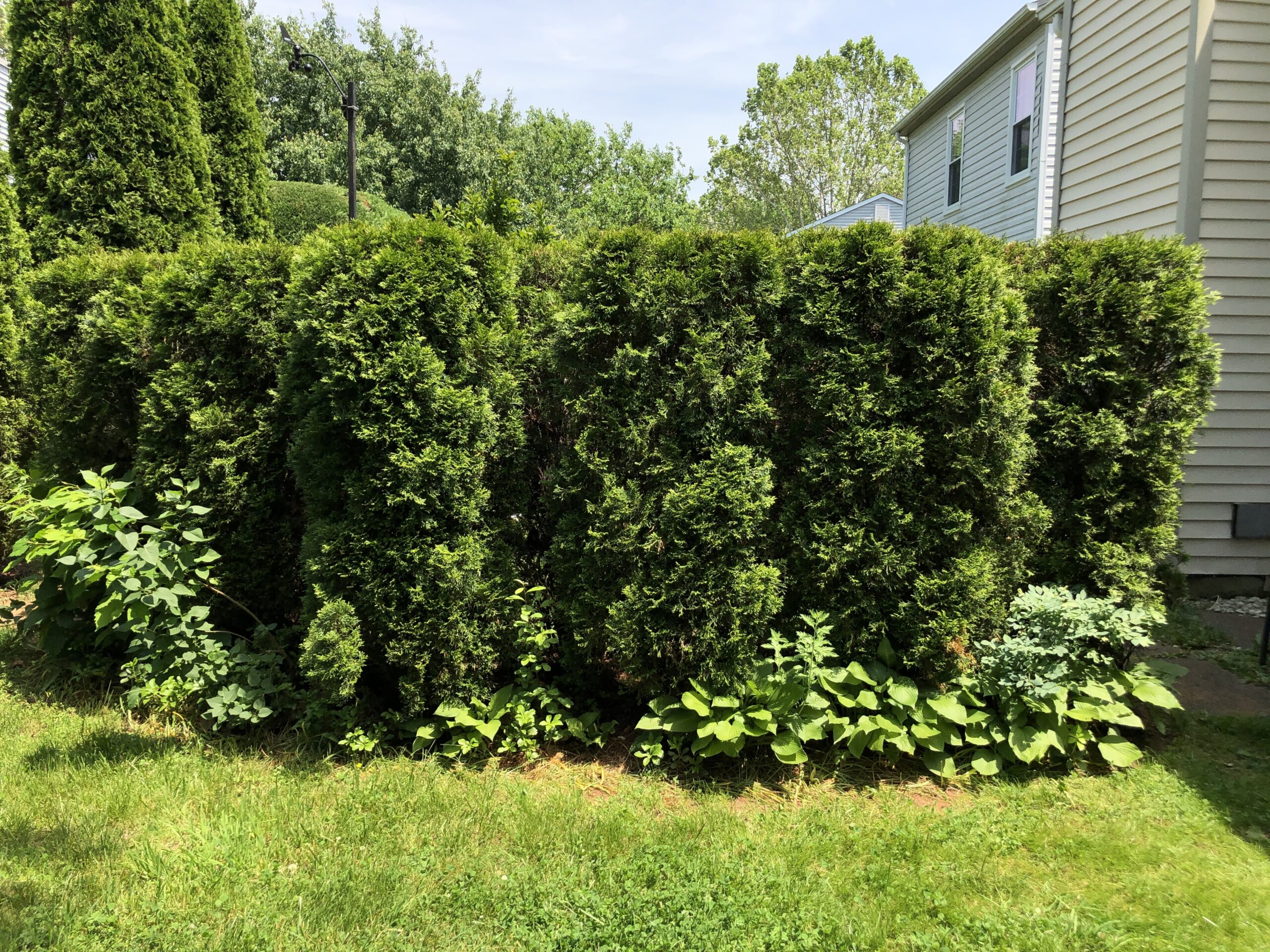
From inside his lakefront home in Crystal Lake, Illinois, Ronald Orist says he can no longer see Main Beach. The view he and his wife, Doreen, had of the water now runs into a row of 15 emerald green arborvitae their neighbors planted beside the couple’s 3-foot fence. In May the city ordered the trees out. About a month later it reversed itself, and the hedge row is still standing.
The fight has since turned into a question for the whole city: whether a line of shrubs counts as a fence.
Fifteen arborvitae along a 3-foot fence
The Northwest Herald reported on Oct. 20 that the neighbors planted the arborvitae about 2 feet apart along the Orists’ property line. On lakefront lots in Crystal Lake, the side facing the lake counts as the front yard, and the city code limits fences, walls and screening in front yards to 3 feet.
That rule is why the city first sided with the Orists. In May, it issued the neighbors an ordinance violation asking them to remove the trees for exceeding the height limit. Roughly a month later, the city took the violation back after deciding the hedges do not fit the code’s definition of a fence. The current definition says a fence “may include” hedges, wording city staff have described as ambiguous.
Ronald Orist told the Herald that from inside the house, Main Beach is no longer visible. In a letter, the couple wrote that the matter “should not become a dispute between two neighboring property owners.” They call the row of trees a spite fence.
How tall emerald green arborvitae can get
Ronald Orist told the paper he expects the trees to reach about 30 feet and form a solid wall that blocks the morning sun. Guy Meilleur, a North Carolina arborist the Herald cited, wrote that the shrubs are marketed for “privacy screening” and can reach 40 feet.
Published plant references give a range. The American Conifer Society’s entry for ‘Smaragd’, the cultivar sold in the U.S. as emerald green, describes a narrow, upright plant that grows roughly 6 to 12 inches a year and calls it “an extremely popular plant for use in hedgerows and borders.” The University of Illinois woody plant database lists the parent species, eastern arborvitae, at 40 to 60 feet and notes that “the narrow forms are frequently used in screens and tall hedges.” The Chicago Botanic Garden’s plant finder also lists the species at 40 to 60 feet and recommends it as a screen. North Dakota State University Extension’s profile of American arborvitae puts mature height at 25 to 45 feet, describes the growth rate as slow, and notes that more than 120 cultivars are sold, from dwarf forms to compact upright ones.
Planted 2 feet apart, a row of 15 runs close to 30 feet along the property line.
The neighbor’s side of the hedge
David Hollander, the neighbor who planted the trees and a landscape architect, told the Herald the arborvitae give his family privacy and separation. He said they do not block the Orists’ view of the lake and that blocking it was never the goal. He also said the Orists and others have trees of their own that obstruct views.
Both households have landscaping expertise, the paper noted.
A city rewrite that would take hedges out of the fence rule
The case set off a broader look at Crystal Lake’s code. City staff proposed removing landscaping from the definition of a fence, which has included hedges since 2009. The Planning and Zoning Commission unanimously recommended the change in September, according to the Herald. Ronald Orist spoke at the commission’s Aug. 19 meeting.
City staff argued that leaving the definition alone would invite complaints about landscaping that has stood for years, since the city enforces the rule only when someone complains. “Enforcing landscape that may be considered a fence would be reactionary,” staff wrote. The Herald reported that 10 other communities with waterfront lots, including Wonder Lake, Algonquin, McHenry and Lake Zurich, leave vegetation out of their fence codes, with Lakewood the exception.
Not everyone was comfortable with a clean break. City Planner Elizabeth Maxwell said dropping hedges from the definition could allow dense plantings in places where fences are not allowed. Commissioner Kathy Repholz suggested a separate landscaping section, saying that planting “to create a barrier” is “completely different” from having a few trees. Carolyn Schofield, a former council member who sits on the commission, warned that tall hedge lines along streets can create “tunnel vision” much like walls do. Under the proposal, yards facing streets would still carry limits to keep sight lines clear for drivers.
The Herald reported that the City Council was expected to vote on the change Oct. 20 and could also send it back to the commission to write separate height rules for landscaping. The council meets on the first and third Tuesday of each month at 7 p.m. at City Hall, and since the city withdrew its violation, the neighbors’ arborvitae can stay where they are under the current code.
Get stories like this by email. Sign up for The Parent Diaries Letter.
This article was produced with AI assistance and edited for accuracy against the sources linked above.
Image: Famartin – CC BY-SA 4.0/Wikimedia Commons