A Christmas Tree Stand Should Hold a Quart of Water for Every Inch of Trunk, Penn State Extension Says, After a Quarter-Inch Disk Is Cut From the Base
Most of this season’s commercial Christmas trees have already been cut. Penn State Extension says they are usually harvested in the first two weeks of November, which means a pre-cut tree bought weeks later has been out of the ground for some time. How it is handled once it gets home decides whether it lasts to the holidays.
Penn State’s guidance, written by horticulture professor Rick Bates, urban forestry educator Vincent Cotrone and former educator Sandy Feather, comes down to two numbers. Before the tree goes into its stand, a disk of wood about a quarter-inch thick comes off the base. The stand itself should hold 1 quart of water for every inch of trunk diameter. Several other extension services back the same approach.
Checking a Tree Before Buying
The freshness test is simple. Penn State’s tips for selecting and caring for cut trees say the needles should be flexible and stay firmly attached when tugged. Needles that pull out easily or look dull and lifeless suggest the tree is past its prime. Penn State adds that the freshest trees are locally grown and cut closer to Thanksgiving.
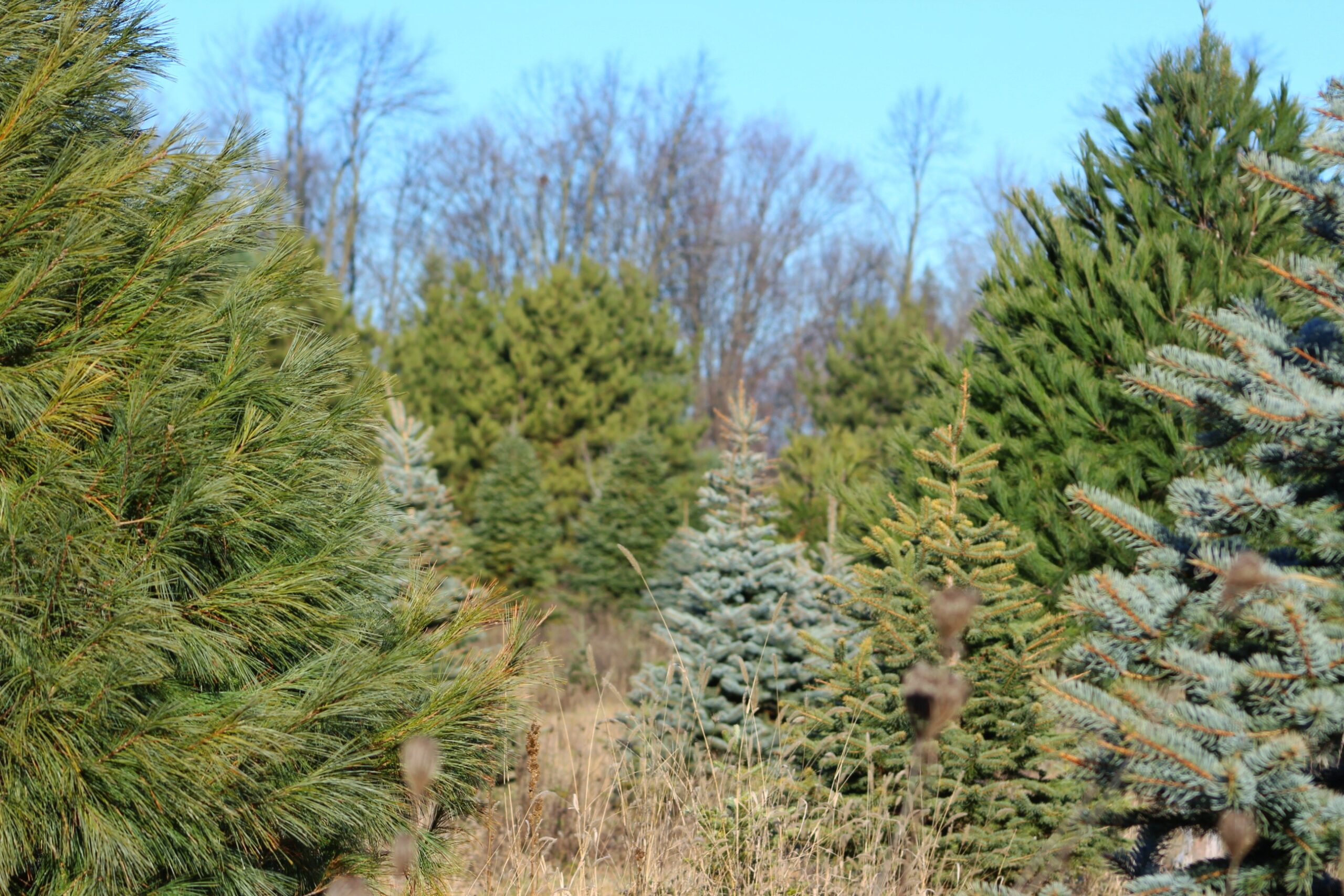
Species matters too. Penn State says Douglas-fir, Fraser fir and balsam fir are known for holding their needles well, and Scotch and white pines also have good reputations. Colorado blue spruce holds its needles only if it never runs out of water. Marie Woodward of the UConn Home and Garden Education Center similarly notes that spruce generally has poor needle retention, with blue spruce the best among the spruces. She also warns that precut trees on city lots may have been cut weeks earlier and exposed to drying winds.
The Fresh Cut at the Base
A cut tree seals over when its base dries. Ken Johnson of Illinois Extension explains that resin forms over the cut end once it dries, and the tree can no longer absorb water. A fresh cut opens it up again.
Penn State says a tree cut within the past 12 hours does not need a recut. Anything older should lose a quarter-inch disk, cut straight across the trunk rather than at an angle or in a V. Other extension services suggest a thicker slice. Daniel Cassens of Purdue University’s Department of Forestry and Natural Resources, in the publication “Tips for First-Time Buyers of Real Christmas Trees,” says a tree left exposed to air for more than six to eight hours needs about half an inch removed. Johnson also recommends a half-inch cut, made once when the tree is first brought home and again just before it comes indoors, and UConn’s Woodward suggests one inch. Cassens adds that a tree stored for a while before setup should get a fresh half-inch cut and go into cool water.
Whatever the thickness, the sources agree on the point: the cut has to be fresh, and the tree has to go into water soon after.
How Much Water the Stand Needs
All four extension sources use the same rule for the stand: 1 quart of water per inch of stem diameter. Penn State and Illinois Extension both note that this works out to at least 1 gallon for most trees. Woodward says the stand should hold at least one gallon as well.
The first week is the thirstiest. Cassens writes that a seven-foot tree may use about two quarts a day during the first week, and that trees usually take up the most water in the first week or two before slowing down. Woodward puts the minimum at about one quart a day. Penn State and Purdue both say to check and refill the stand daily, and Cassens warns that a tree that runs out of water has to be recut.
Plain water is enough. Penn State says additives, gels and anti-transpirants do not help. Johnson writes that “plain water will keep a tree fresh” and adds that water-holding gels can reduce the water available to the tree. Cassens agrees that additives probably do not extend a cut tree’s life.
Heat, Lights and Fire Risk
Where the tree stands affects how fast it dries. Penn State says to keep it away from fireplaces, heaters, heat vents and direct sunlight, and notes that cooler rooms slow drying. Cassens adds wood stoves and hot lights to the list and says lowering the room temperature extends the tree’s life.
On fire safety, Penn State says keeping the stand filled reduces fire risk more effectively than spraying flame retardants, some of which can damage needles and speed moisture loss. LED lights run cooler than older bulbs, and Penn State recommends turning lights off when no one is home. Its dryness check is simple: if the needles break easily or fall off when touched, the tree should come down.
Cassens says a fresh-cut tree is generally serviceable from just after Thanksgiving to somewhat after Christmas, which gives a sense of how long a well-watered tree should hold up.
After the Holidays
Penn State discourages sending the tree straight to a landfill. Evergreen boughs make a good mulch for perennials that do not tolerate moisture-retaining mulch, and a tree set near a feeder can shelter ground-feeding birds. Many communities also run tree pickup, drop-off, bonfire or mulching programs.
Families who would rather plant their tree afterward have a different set of steps, starting with digging the hole for a living Christmas tree before the ground freezes. Boughs cut from the old tree can go on beds as winter mulch once the soil starts to freeze, and other ideas for reusing holiday greens in the garden follow the same idea.
This article was produced with AI assistance and edited for accuracy against the sources linked above.
Image: David Whelan – CC0/Wikimedia Commons