Families Planning a Living Christmas Tree Should Dig the Hole Before the Ground Freezes, Penn State Says, and Keep the Tree Inside No More Than a Week
A living Christmas tree starts with a shovel in November, not a stand in December. Penn State Extension says families planning to buy a balled-and-burlapped or potted tree and plant it after the holidays should dig the planting hole early, while the ground hasn’t frozen. Once the tree comes inside, four to five days is ideal, and it shouldn’t stay longer than a week.
The hole is the part most people forget. By late December, in much of the country, the ground can be too hard to dig.
Why the Hole Comes First
Denise D’Aurora, a Penn State Master Gardener in Crawford County, writes in the extension’s guide to living Christmas trees that “it is best to dig the hole early while the ground has not frozen.” If freezing weather is forecast, she says to store the removed soil in a shed or garage so it can be used for backfill later. If the ground has already frozen by planting time, the tree should wait in an unheated spot and go in the ground in spring.
The Chicago Botanic Garden puts the dig in November, before the ground freezes, in a well-drained, full-sun spot sized for the tree’s mature height. Its tip for keeping the hole open is to move the soil somewhere warm, like a garage, and cover the hole with a tarp over the holidays.
The Ohio Chapter of the International Society of Arboriculture, in a press release on live tree handling, gives the size: a hole “three times wider than the root ball,” no deeper than the root flare, filled with leaves or straw so it won’t freeze, with the removed soil stored where it stays thawed.
Picking a Spot That Fits the Tree
The tree has to suit its future site. Garden columnist Mike McGrath, writing for WTOP’s Garden Plot, says to “dig the hole now before the soil freezes hard,” but first call 811 to check for underground utilities and stay away from water and sewer pipes. He recommends planting at least a foot beyond the tree’s mature width, measured from the house, and asking the seller what that width will be.
Weight is a practical issue too. Chicago Botanic notes that a 5-foot balled tree may weigh about 200 pounds and suggests a furniture dolly for moving it. McGrath warns that root balls can weigh a couple hundred pounds, and the Ohio arborists add that the tree should be lifted by the root ball, not the trunk.
Easing the Tree In and Out
Evergreens bought for planting are dormant, and sudden warmth can break that dormancy. Penn State recommends moving a balled-and-burlapped tree to a garage, shed or sheltered outdoor spot for one to two weeks before it comes inside. The Ohio arborists suggest selecting the tree about two weeks before Christmas and keeping it somewhere cool for seven days first.
Indoors, the clock matters. Penn State’s ideal is four to five days, and “no longer than one week.” McGrath’s target is shorter still, “two to three days is ideal.” Kathy Ruiz, a University of California Cooperative Extension Master Gardener in El Dorado County, writes in a UC guide that long stays in warm conditions can reduce the tree’s cold hardiness. The Ohio arborists recommend keeping the room at 65 degrees or cooler and the tree away from heat sources, with a plastic bag around the root ball.
Water needs daily attention. Penn State says root balls should be checked every day once inside, in a watertight container with stones in the bottom so roots don’t sit in water.
Planting After the Holidays
The trip back out mirrors the trip in. The Ohio arborists say to return the tree to a cool garage or porch for about a week after the holidays, and Penn State says winter-planted trees need a few days somewhere cooler first.
Then the leaves or straw come out of the hole and the tree goes in straight and level. For balled-and-burlapped trees, the Ohio arborists say to cut the rope and fold back the burlap, backfill with the stored soil and tamp it as the hole fills, then water thoroughly. Ruiz recommends setting the top of the root ball at or slightly above ground level and watering deeply with three to five gallons.
Mulch finishes the job. Penn State suggests straw so the roots can adjust to cold soil, Chicago Botanic recommends a 2- to 3-inch layer, and the Ohio arborists use wood chips. Chicago Botanic cautions that bringing living evergreens indoors is somewhat risky in northern climates, which is why the November dig and the short indoor stay matter so much. The site has also covered how to protect young trees from deer through winter, which applies to a newly planted holiday tree too.
Get stories like this by email. Sign up for The Parent Diaries Letter.
This article was produced with AI assistance and edited for accuracy against the sources linked above.
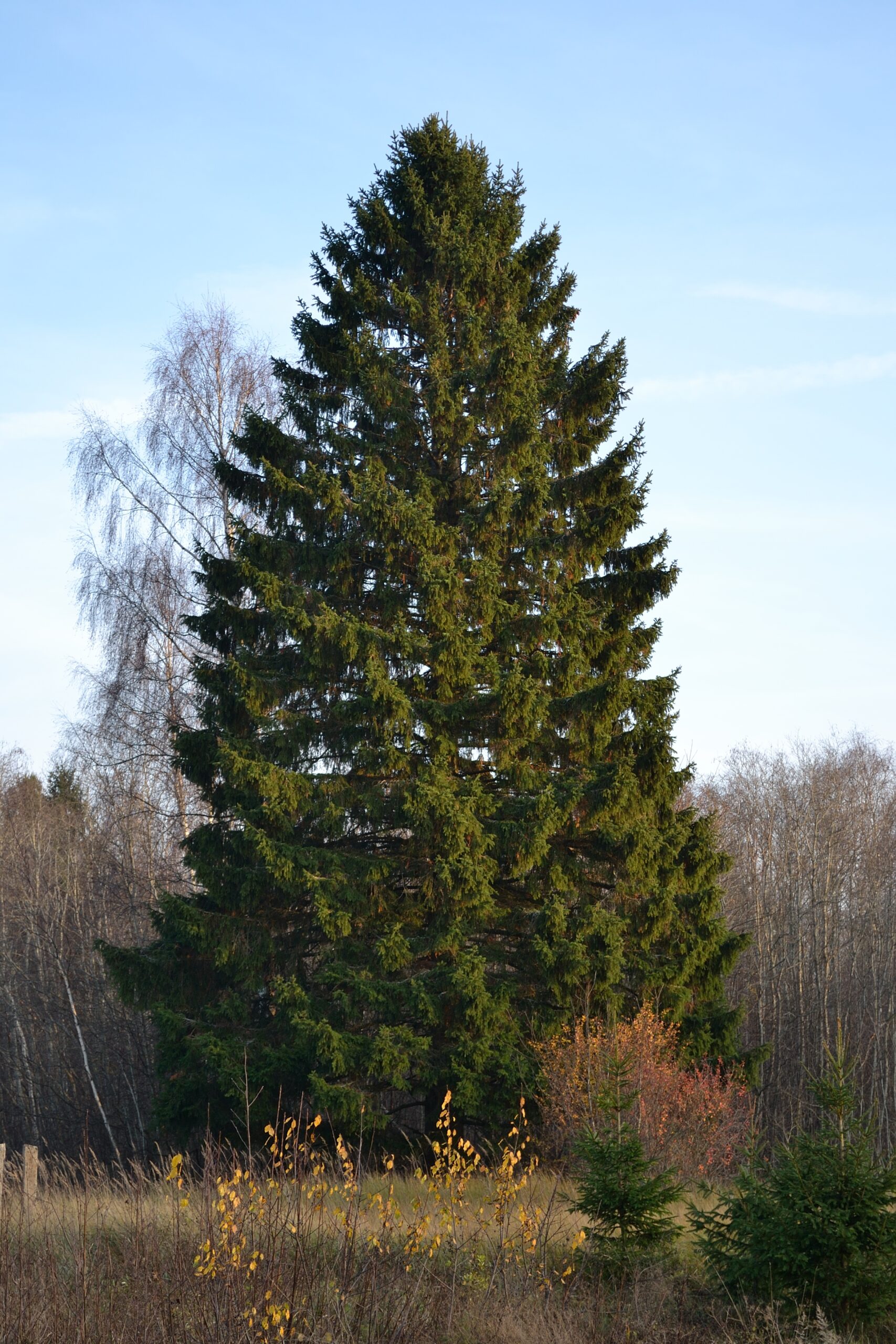
Image: Ivar Leidus – CC BY-SA 3.0 ee/Wikimedia Commons