Homeowner Says Her Neighbor’s Cat Turned Her Vegetable Beds Into a Private Litter Box, Then She Started Covering the Garden With Chicken Wire
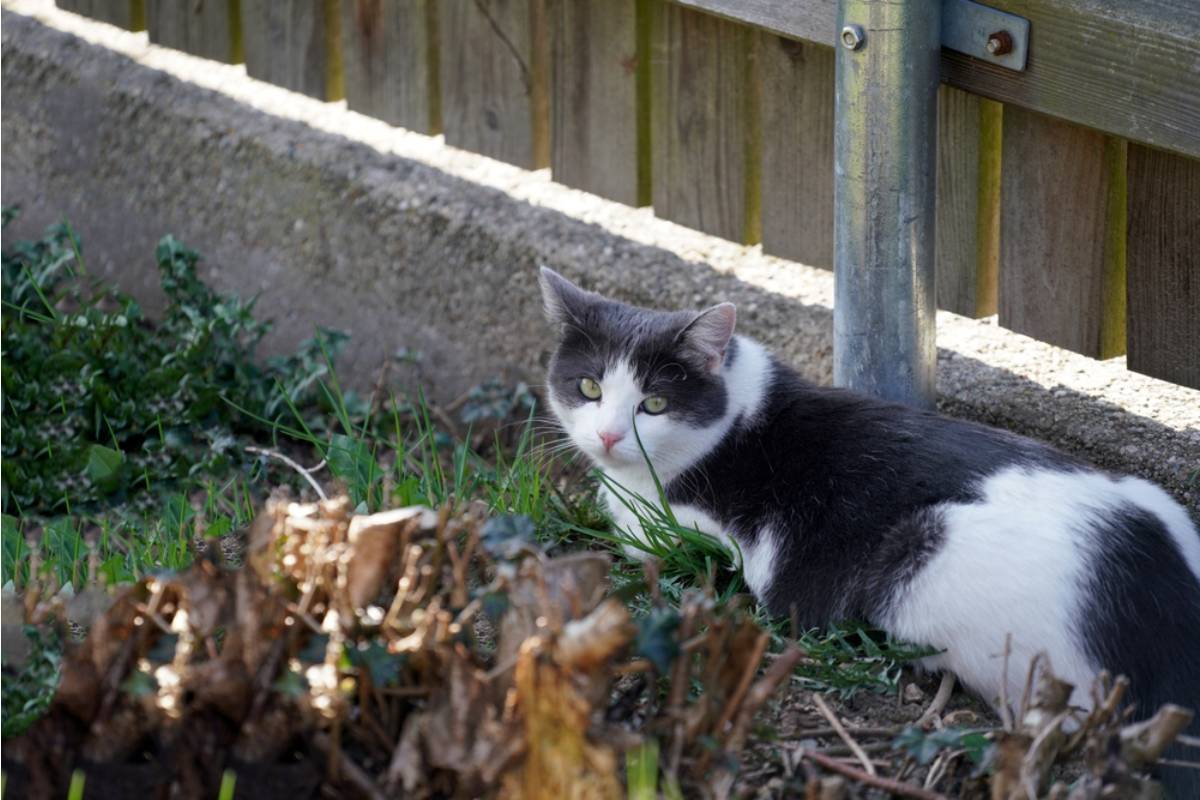
A person shared his story about a gardening problem that began with something many backyard gardeners would normally welcome: seeing a friendly neighborhood cat wandering through the yard. He had no objection to the animal passing by, lounging in the sunshine, or investigating the flower beds. The trouble started when the cat apparently decided his raised vegetable beds were the perfect place to do its business.
It Started With a Trip to the Vegetable Beds
The homeowner has a small back garden with two raised beds where he grows herbs and vegetables. For months, the beds had been a peaceful little corner of the garden, but about four months ago, he started noticing signs that something was digging through the soil. During one routine weeding session, he discovered evidence that a cat had been using the freshly cultivated bed as a litter tray.
At first, he did not assume there would be an ongoing problem. Cats wander through gardens all the time, and he said he actually likes them. What bothered him was finding waste buried directly in soil being used to grow food, turning an ordinary gardening chore into an unpleasant investigation.
The Cat Was Apparently Picking Favorites
The homeowner tried to solve the problem without involving his neighbor immediately. He placed deterrent mesh over the first raised bed, hoping the barrier would make the soil less attractive. Instead, the cat simply changed strategy and moved over to the second bed.
That second bed soon became the new target, which made the whole situation feel less like a one-time visit and more like a determined campaign. The homeowner added physical barriers, hoping to block the animal from getting into the soil. Somehow, the cat kept discovering gaps and squeezing through, apparently treating the garden like a puzzle designed specifically for it.
The Garden Had Become a Cat Playground
By this point, the homeowner had started seeing the cat in his garden often enough to connect the dots. He eventually caught sight of his neighbor’s cat wandering through the yard and decided it was time for a friendly conversation. He did not approach the situation by demanding that the cat disappear forever or accusing his neighbor of deliberately causing a mess.
Instead, he explained what was happening in the raised beds and why it was becoming a problem. His main complaint was not about having a cat nearby, but about repeatedly digging through soil where food was being grown. To him, there was a major difference between a cat crossing the garden and a cat repeatedly turning a vegetable bed into a toilet.
The Neighbor Had a Simple Explanation
According to the homeowner, his neighbor did not seem especially concerned by the discovery. She explained that cats roam and suggested there was not much she could do about where her pet decided to wander. In her view, the behavior was simply natural and part of having an outdoor cat.
That response left the homeowner frustrated because he had already tried several deterrents. He explained that those attempts had failed and reminded her that this was happening in beds containing edible plants. From his perspective, telling him to keep adding barriers meant putting the entire burden of solving the problem onto the person whose garden was being used.
More Deterrents Did Not Fix the Problem
The homeowner went back over everything he had already tried. Mesh had failed, physical barriers had failed, and the cat had repeatedly found ways around them. Each new attempt seemed to turn the raised beds into a more complicated obstacle course rather than restoring them to a normal working garden.
He also pointed out that gardening is already enough work without having to engineer a miniature fortress around every patch of soil. Raised beds are supposed to make planting, weeding, and harvesting easier, not require constant defensive upgrades. The more the problem continued, the more ridiculous the garden started to look.
Then Came the Request to Stay Indoors at Night
After noticing that most of the incidents seemed to happen overnight, the homeowner suggested a relatively simple compromise. He asked whether his neighbor would consider keeping the cat indoors at night, when the garden appeared to be getting most of its unwanted visits. He explained that he understood she wanted the animal to roam, but hoped there might be a practical way to protect both the cat and the garden.
His neighbor reportedly disagreed and said she did not think restricting the cat at night was fair. She argued that outdoor cats need the freedom to roam, while the homeowner felt his right to grow food without contamination deserved consideration too. Neither side appeared willing to surrender its position.
A Garden Disagreement Turned Personal
The conversation might have ended as a simple disagreement between neighbors, but the homeowner says his neighbor became offended by the request. She reportedly told him that he was being unreasonable and suggested that dealing with roaming cats was simply part of living near them. That did not exactly make the vegetable beds any cleaner.
For the homeowner, the comment missed the central issue. He was not asking her to redesign her entire life around his garden, nor was he complaining that a cat occasionally crossed his property. He wanted a way to stop repeated waste from ending up in the same soil where he was trying to grow herbs and vegetables.
The Chicken Wire Finally Came Out
With conversations going nowhere, the homeowner reached for a solution that would be much harder for the cat to defeat. He put chicken wire across both raised beds, creating a physical barrier between the animal and the soil. The setup apparently works better than the earlier deterrents, although it has introduced an entirely new problem.
The garden is now more difficult to work in, and the homeowner admits the wire is genuinely unsightly. Anyone who has ever tried to tend vegetables through a barrier knows how quickly a simple gardening job can become an awkward exercise in maneuvering tools around metal mesh. Instead of enjoying an open, tidy growing space, he now has to work around the very defenses that were supposed to protect it.
The Camera Arrived Next
The homeowner did not stop with chicken wire. He also installed a camera pointing toward the garden so he could actually see what was happening rather than relying on guesses. This was less about catching the cat in the act for entertainment and more about figuring out exactly how often the animal was entering the beds.
That decision changed the situation from a dispute based on competing claims into something that could potentially be documented. Instead of saying, “Your cat did this,” or hearing, “Are you sure it was my cat?” he could eventually have footage showing what happened. For a disagreement that had already become surprisingly heated, evidence could prove more useful than another round of arguments.
He Decided to Keep a Record
The homeowner said he is now building a documented record of the problem. He wants to establish how frequently the cat visits, when the incidents occur, and whether the same behavior continues despite the barriers. The goal is not simply to complain more loudly, but to have something concrete to discuss the next time he speaks with his neighbor.
That approach also gives him a clearer picture of the problem itself. There is a big difference between discovering one mysterious mess every few weeks and watching the same animal repeatedly enter the garden several times a week. A gardening problem that feels impossible to prove suddenly becomes much easier to understand when there is a record behind it.
The Raised Beds Became the Real Casualty
The strangest part of the dispute is that the homeowner never wanted a battle over the cat in the first place. He was perfectly comfortable with the animal existing nearby and even said he likes cats. What he wanted was to keep his raised beds available for growing food without having to worry about what had been left behind in the soil.
Instead, the garden has become a compromise neither side seems particularly happy with. The cat still has its roaming lifestyle, while the homeowner now has chicken wire, cameras, and a growing file of evidence. The vegetables are still there, but the peaceful little garden he started with is beginning to look more like a protected agricultural zone.
One Response Put the Problem in Perspective
A response from a person focused on the part of the story that makes this dispute so difficult to resolve: both sides believe they are being reasonable. The neighbor sees outdoor roaming as normal cat behavior and does not believe she can control every place her pet decides to explore. The homeowner sees repeated contamination of food-growing soil as a legitimate reason to expect some cooperation.
Those two views can easily coexist until they affect the same small patch of ground. Once the cat’s freedom directly interferes with the homeowner’s gardening, the issue stops being theoretical and becomes something that has to be dealt with repeatedly. That is when ordinary neighborly tolerance can start feeling like a full-time job.
What Looks Like a Cat Problem Is Really a Boundary Problem
At first glance, this sounds like a disagreement about an animal doing something animals naturally do. But underneath that is a more complicated question about where one person’s freedom ends and another person’s use of their property begins. The homeowner is not trying to control every cat in the neighborhood, and the neighbor apparently does not see herself as responsible for every place her cat visits.
The raised beds simply happen to be where those two positions collide. A garden requires time, effort, and trust in the soil, so discovering repeated waste in it can feel far more intrusive than finding a paw print on the lawn. What started as a small nuisance has now become a question of whether the neighbors can find a solution that does not leave one person feeling ignored.
The Next Conversation Could Change Everything
For now, the homeowner is relying on barriers and a camera while he gathers more information. He hopes that having clear evidence will make a future discussion more productive and prevent the conversation from turning into another argument about whether cats should be allowed outdoors. Instead of debating possibilities, he wants to be able to point to what is actually happening in his garden.
The twist is that the cat itself may no longer be the hardest problem to solve. The bigger challenge is getting two neighbors with completely different ideas about responsibility to agree that the situation deserves a solution. Until that happens, the little raised beds may remain caught in the middle, guarded by chicken wire and watched by a camera like the most closely monitored vegetables on the block.