A Seventh-Generation Maine Tree Farmer Lost a Quarter of His Young Christmas Trees to This Year’s Drought
Shoppers who walk the rows at a Maine Christmas tree farm this season will probably not notice the drought. The damage is in the smallest trees, the ones nowhere near cutting size. John Weston, the seventh-generation owner of Weston’s Farm in Fryeburg, says he usually loses about 15 percent of his young saplings in a normal year, and this year the number is closer to 25 percent, about a quarter of the young trees. The figures come from a WMTW News 8 report by Jacob Murphy, published November 12, 2026.
The loss will not show up on the lot for years. It will show up when the missing trees would have been tall enough to sell.
A Farm Planted Since 1799
Weston’s Farm and Market says on its own website that it is a seven-generation family farm listed on the National Register of Historic Places, and that the Westons have farmed the Saco River Valley since 1799. Its more than 1,000 acres grow vegetables, maple syrup, Christmas trees, hay and timber. The choose-and-cut fields open Saturday, November 21.
Weston told WMTW that the growing season is ending in an extreme drought. For this year’s customers, the station reported, the effect should be minimal: some trees may be slightly duller in color, but with proper care they should last as long as trees from other years.
Why Young Trees Take the Hit
Young trees need moist soil to build a strong root system, Weston said. “When the ground is saturated and wet all around the tree, it’s going to be much better,” he told the station. Drought weakens them, affecting needle color and the amount of new growth, and weakened trees are less able to resist insects and disease.
Irrigation can help, but Weston said drip systems and overhead watering do not soak the whole root zone, and both cost money and labor. The same pattern shows up elsewhere. An Oregon State University Extension item quoting Christmas tree specialist Chal Landgren said growers there have seen up to 90 percent mortality in newly planted noble fir in some years and fields, because very few growers irrigate. That is a different species in a different region, so the number is not Maine’s. Mature trees with deeper roots survive until the fall rains come back, the item says, and mulching with coarse wood chips improved survival by 20 percent in dry years.
The Drought Behind the Losses
The state’s own numbers show how dry the year has been. Maine’s Drought Task Force report from September 3, 2026 put 60 percent of the state in moderate drought and 14 percent in severe drought, with another 22 percent abnormally dry. Rainfall over the previous 12 months ran 9 to 14 inches below normal across most of southern, coastal and eastern Maine, and about 85 percent of Maine cropland is not irrigated.
A Department of Agriculture, Conservation and Forestry statement in the report said that a single two- or three-inch storm does not substitute for the roughly one inch of rain per week that crops need. On September 24, the National Weather Service’s drought statement for New Hampshire and western Maine said longer-term rainfall deficits of 9 to 17 inches persist across southern, coastal and eastern Maine, and listed reduced crop yields and browned pastures among the impacts. It noted that trees were dropping leaves and acorns early because of water stress.
Moving Uphill and Watering What Can Be Watered
Drought is not the only problem Weston has faced. In 2024, he said, the Saco River flooded over its banks onto the farm and damaged trees that had grown for years. The survivors now have taller trunks, because their lower branches were removed. “The bigger comment is climate change,” Weston told WMTW, adding that farms are hit by both extreme drought and flooding.
His response has been to move some tree farming to higher elevations, where irrigation is also possible. Running the farm has become harder, he said, but it has to be done, and he expects each tree to face either a drought or a flood during its life.
What Shoppers Will Find This Season
The 2025 season gives a point of comparison. The industry group the Real Christmas Tree Board said last fall, in a Sun Journal report republished by RESTORE: The North Woods, that growers were prepared, supply was strong and most were holding wholesale prices steady. That report also said many Maine farms needed extra irrigation or hand-watering for trees planted in the previous two springs. It did not report sapling losses.
Weston’s report is about the next supply, not this one. The WMTW piece did not give statewide inventory, prices or the number of farms affected, so how far the pattern reaches beyond Fryeburg is not yet known. For now, the trees that reach the lot should look close to normal, and the gaps are in the rows planted a few years behind them.
This article was produced with AI assistance and edited for accuracy against the sources linked above.
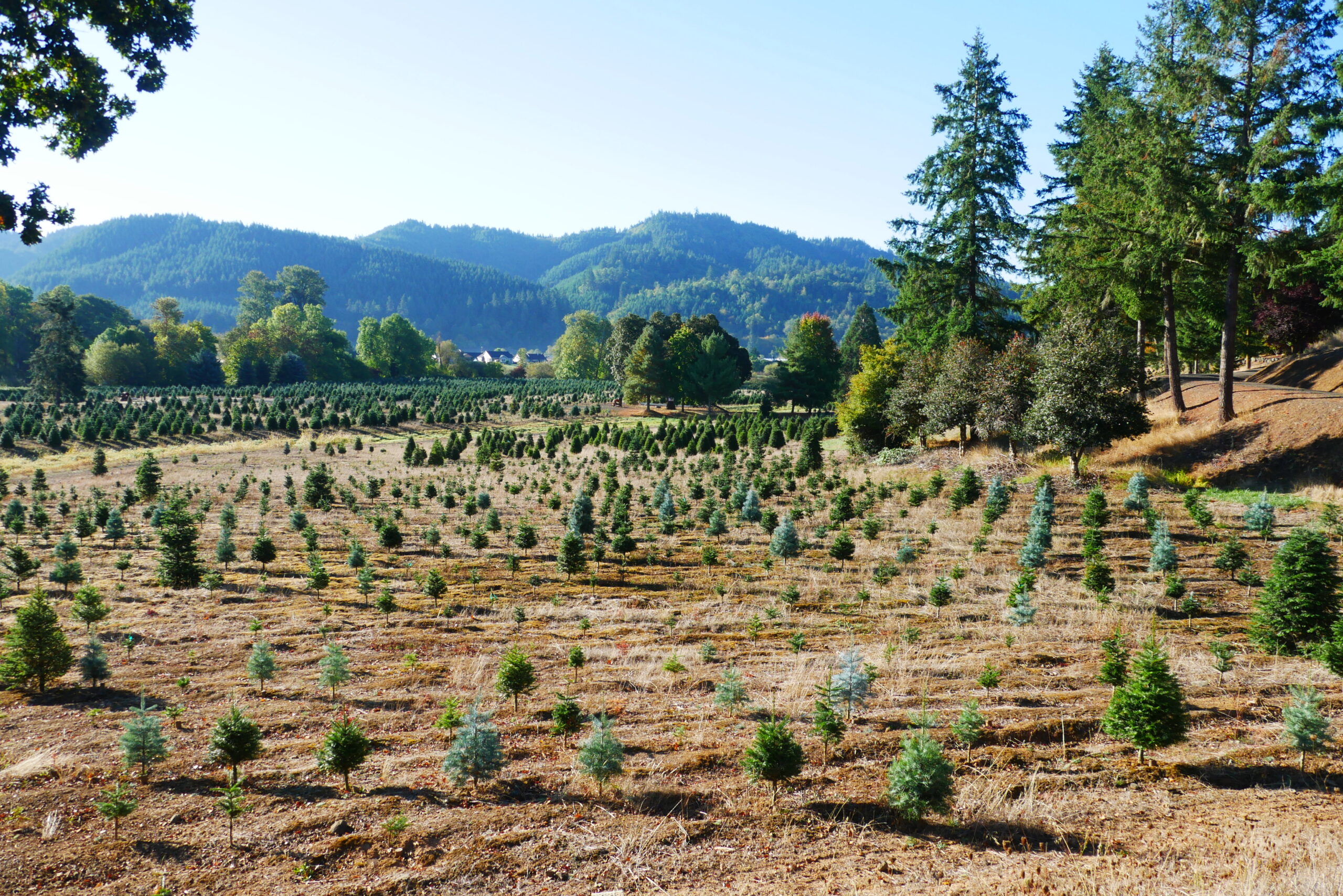
Image: Rick Obst – CC BY 4.0/Wikimedia Commons