New Hampshire Approved $24,620 in Federal Money to Fight Spotted Lanternflies After the State’s First Detection in Salem
New Hampshire has $24,620 in federal money set aside to fight an insect it hoped would never reach its trees. The state’s Executive Council approved the funds this month for spotted lanternfly education, data gathering, control measures, stakeholder coordination and better reporting, New Hampshire Public Radio reported on Oct. 22. The money follows the state’s first field detection of the pest, in the town of Salem, in August.
For homeowners with maples, grapevines and backyard trees, the timing matters. Fall is when adult lanternflies lay the egg masses that hatch next spring.
Where the $24,620 Goes
The request came from Shawn Jasper, commissioner of the New Hampshire Department of Agriculture, Markets and Food. In a letter to Gov. Kelly Ayotte and the Executive Council, Jasper wrote that the August detection “warrants immediate response,” according to NHPR. He also warned that the insects may be becoming established in New Hampshire and could spread to other northern New England states and Canada.
NHPR described the funding as federal money for emergency work. It covers five jobs: public education about the insect, gathering data on it and the risks it poses in the state, control measures, coordination among the groups affected, and improvements to how sightings are reported.
Spotted lanternflies are native to Asia. They were first documented in the United States in Pennsylvania in 2014 and have since spread to 15 Eastern states, including neighboring Massachusetts, NHPR reported.
What State Inspectors Found in Salem
The state agriculture department confirmed a “small number” of spotted lanternflies in Salem in late August, the first time the pest had been found in the field in New Hampshire, NHPR reported at the time. Before that, the insect had only been intercepted on incoming shipments, always as single individuals.
The insects turned up in a mixed-use area of Salem with homes and businesses, and the U.S. Department of Agriculture confirmed the identification, the Derry News reported. State Entomologist Piera Siegert told the paper that experts did not yet know whether the find was a breeding population. The state planned a visual survey of the area, a search for tree of heaven and possibly traps. It is also looking for natural predators that could be used for biological control, a process Siegert said would be rigorous and take years.
The state’s official position is cautious. The New Hampshire Department of Agriculture’s spotted lanternfly page says no established or breeding populations have been found in the state. NHPR’s August report, however, called eventual establishment in New Hampshire “almost certain.”
Why Backyard Trees and Grapevines Are at Risk
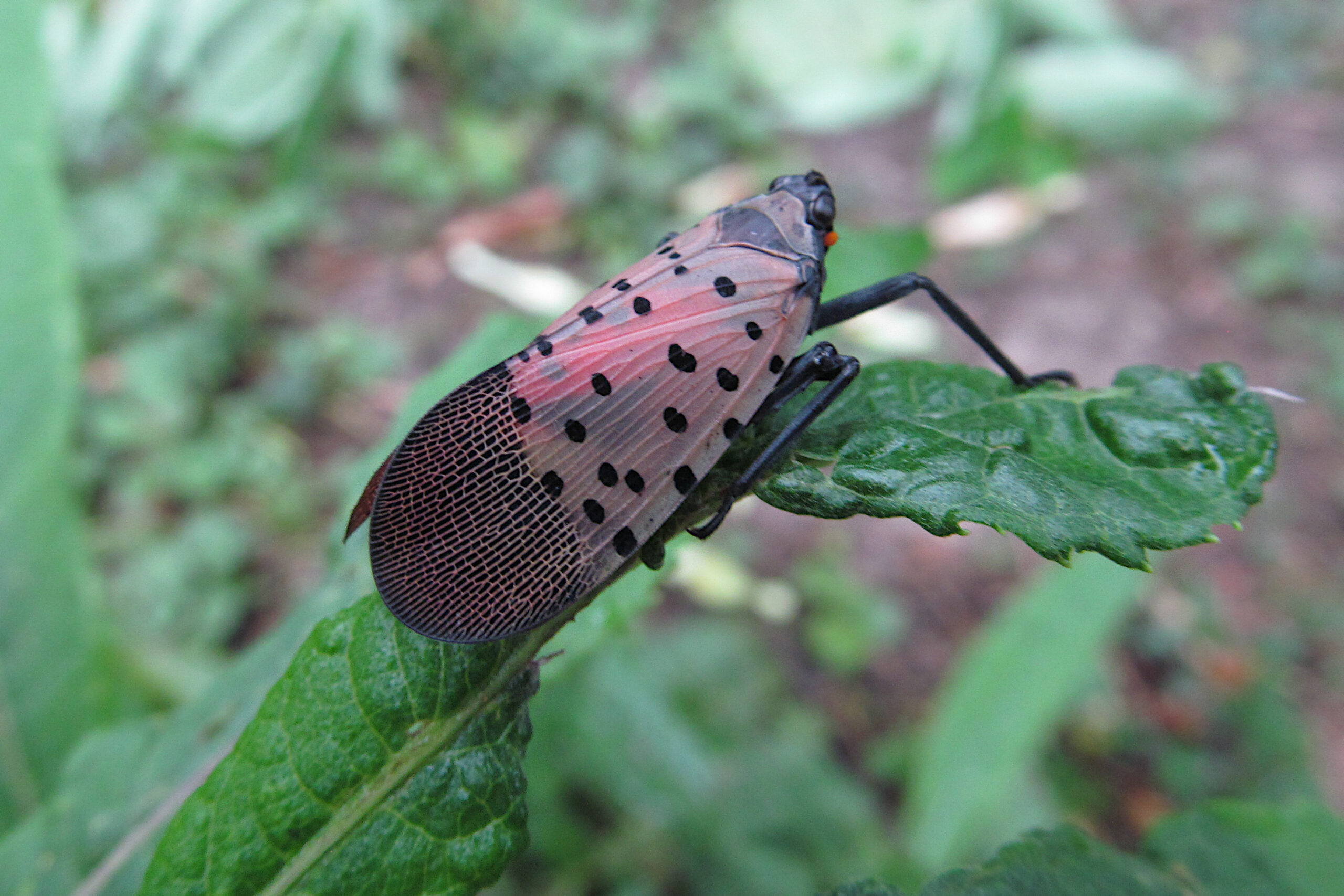
The insect’s favorite host is tree of heaven, an invasive tree that already grows in pockets of New Hampshire. But lanternflies also feed on many crops and hardwood trees, and they have been documented killing grapevines and sapling trees, according to the state agriculture department.
The UMass Amherst landscape fact sheet lists maple and black walnut among the reported hosts. Research has documented feeding on more than 103 plant species. Adults and nymphs suck sap from stems, leaves and trunks. Their sugary waste coats plants below, feeds black sooty mold and draws wasps, hornets, bees and ants.
In home landscapes, UMass says the insect is mainly a nuisance and that no ornamental tree deaths have been reported. Grapes are another story. In Pennsylvania vineyards, heavy feeding has killed vines or left them producing mostly non-fruiting shoots. Massachusetts found its first breeding population in Fitchburg in 2021, and populations have since turned up in many more locations there.
Egg Masses on Bark, Patio Furniture and Fences
Late fall is when lanternfly egg masses become the main thing to look for. Eggs are laid from September into late November or early December and hatch in May, according to UMass. Each mass holds about 30 to 50 eggs. Fresh masses look coated in white; as they age, the coating turns gray, dries and cracks until it looks like a smear of mud.
The masses are not limited to tree trunks. UMass lists bricks, stone, lawn furniture, RVs, play structures, gazebos and fencing. The USDA’s Animal and Plant Health Inspection Service adds vehicles and outdoor gear. APHIS says to smash and scrape egg masses into a plastic bag, seal it and put it in the trash. Pressure washing also works on hard outdoor surfaces.
In a state where the insect isn’t established, APHIS asks residents to report sightings to the state department of agriculture.
How New Hampshire Residents Can Report a Sighting
New Hampshire asks residents to report sightings at NHBugs.org, according to NHPR, and the Derry News reported that sightings can go through the site’s reporting form. The state agriculture department asks people to capture an insect first, then report it. Photos help, but the department says specimens are better.
The department also suggests learning to recognize tree of heaven and considering removing it from private property. The tree is hard to kill and may need professional help to keep it from resprouting. Participating agencies have already treated more than 3,000 tree of heaven with herbicide along rights-of-way and on city property, the department says.
Anyone visiting an area with lanternflies should avoid parking under trees and check the vehicle before heading home, the department says. Other invasive threats have reached home yards this fall, including the fruit fly in a Port Isabel backyard mango tree that triggered a federal quarantine and beech leaf disease in more than 200 trees in New Jersey’s Saddler’s Woods.
Get stories like this by email. Sign up for The Parent Diaries Letter.
This article was produced with AI assistance and edited for accuracy against the sources linked above.
Image: Cbaile19 – CC0/Wikimedia Commons