Overland Park Adds Tree Surveys to Street Rebuilds After Quail Ridge Plans Showed at Least a Dozen Mature Oaks and Maples Could Come Down for Sidewalks
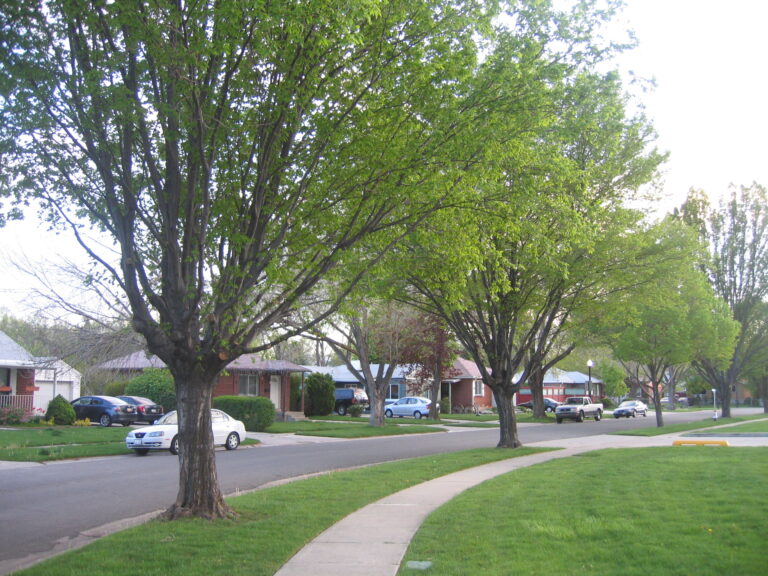
“An environmental catastrophe” is how Myrtle Stiaszny, who has lived on the same Overland Park cul-de-sac for more than 40 years, described what replacing the sidewalks in her Quail Ridge neighborhood would mean. She told the city that at least a dozen mature oak and maple trees would have to come out, the Johnson County Post reported. The City Council has since adopted updated street reconstruction rules that now require a tree survey before a neighborhood is rebuilt.
Quail Ridge’s Cul-de-Sac and the Sidewalk Rule
Quail Ridge is scheduled for a street reconstruction project in 2027. Under the old rules, Stiaszny objected, sidewalks were required as part of the work. She said residents on her cul-de-sac agree they neither need nor want one.
She spoke during public comment at a council meeting earlier in 2026 and urged the city at an August council meeting to reconsider the rules, the Post reported. Her point about the trees was specific: replacing the existing sidewalks, she said, would take out at least a dozen mature oaks and maples.
What the New Tree Survey Requires
Before a project starts, crews must now inventory each tree that could be affected, recording its location, species, size and general condition. The Post reported that the city had already been trialing the practice before making it a rule.
New standards also aim to limit tree removal where possible and require replacing lost trees to maintain or improve a neighborhood’s tree canopy.
Public Works Director Lorraine Basalo described the changes as “the new guide” for the program, presented at the October Public Works Committee meeting, according to the Post. Councilmember Logan Heley, who chairs that committee, called the result “a really good product.” The council adopted the updated ordinance on its consent agenda, the Post said, without reporting a vote count.
Street Width, Speed Studies and Which Neighborhoods Go First
The changes go beyond trees. A street will be widened only if it is narrower than 26 feet from the back of each curb, and streets wider than the 28-foot maximum standard may be narrowed. Reconstructed streets will undergo a speed study to determine whether traffic calming is needed.
Stormwater infrastructure condition and traffic safety, currently secondary factors, may be added to the criteria for choosing which neighborhoods are rebuilt and when. Streets are chosen partly by a pavement condition index, with underlying infrastructure, the effectiveness of chip-seal treatments and street age also counted.
Basalo said the selection criteria gave the city a good way to balance neighborhoods in similar circumstances. She called neighborhood street projects the most impactful work the city does.
Moody Hills Showed What a Rebuild Does to a Tree Canopy
Tree removal under the program was already an issue in 2025. KCUR, republishing a May 2025 Johnson County Post report, described dozens of mature trees coming out in the Moody Hills neighborhood. Longtime resident Rob Steinmetz asked why his mature oak had been removed. Another resident, Andy Doty, said he was sad to see trees go but felt safer in storms without older trees.
Ward 2 Councilmember Drew Mitrisin said rigid project standards often mean “the road ends up winning out.” Heley called street trees “essential infrastructure.” Basalo said at the time that crews protect every tree they can and assess each tree individually.
The 2025 report also laid out how the city handled removals then. Public works identifies trees in the way of reconstruction during planning, and foresters and staff evaluate them individually. Removals are driven by construction impacts such as excavation and widening, and by trees that may damage new infrastructure as they grow.
Since a 2023 pilot, the city has planted extra trees beyond one-for-one replacement in some reconstruction neighborhoods. At the time, council members said the reconstruction policy needed updating, though formal action had been limited, and Ward 2 Councilmember Melissa Cheatham said she wanted changes that would save more trees even if not every tree could be saved.
KSHB reported residents’ mixed reactions in Moody Hills and Southdale that month. Patrick Watkins, a resident of more than 20 years, called it “odd and devastating” to look down streets already finished. Scott Kesterson, who has lived in the neighborhood about 41 years, said sidewalks were buckling from tree roots and that “in the big picture, it’s well worth it.” The city said it plans to replace removed trees with trees and shrubs chosen by a forester.
The Money and the Miles Behind the Rebuilds
The Post reported that Overland Park has spent about 15 years working through a backlog of aging neighborhood streets, some 60 or more years old. The program began in 2011, and the city has replaced about 45 lane miles since, with another 24 expected in the next couple of years. About 130 more lane miles will need replacement.
Starting in 2026, the city added about $10 million a year following Infrastructure Advisory Group recommendations. The annual allocation is now about $16.5 million, enough for up to 10 lane miles a year, up from roughly four.
The city’s program page says the work replaces existing pavement, driveways, sidewalks and storm drains with concrete, which it says helps streets last more than 50 years longer. Trees fall under a separate city effort: Overland Park has launched an Urban Forest Plan, which it describes as a roadmap for responsible tree management and environmental stewardship.
Streets in front of homes can be closed for weeks during a rebuild, the Post reported, and a project can take a year or longer depending on utility work. Deputy City Engineer Kyle Dieckmann told a Public Works Committee meeting earlier this year that it “really is an intense project.”
Overland Park is not the only city dealing with the cost of mature trees coming down. In Wilmington, the city has said it will not waive an estimated $122,000 mitigation fee for six live oaks at a redevelopment site.
This article was produced with AI assistance and edited for accuracy against the sources linked above.
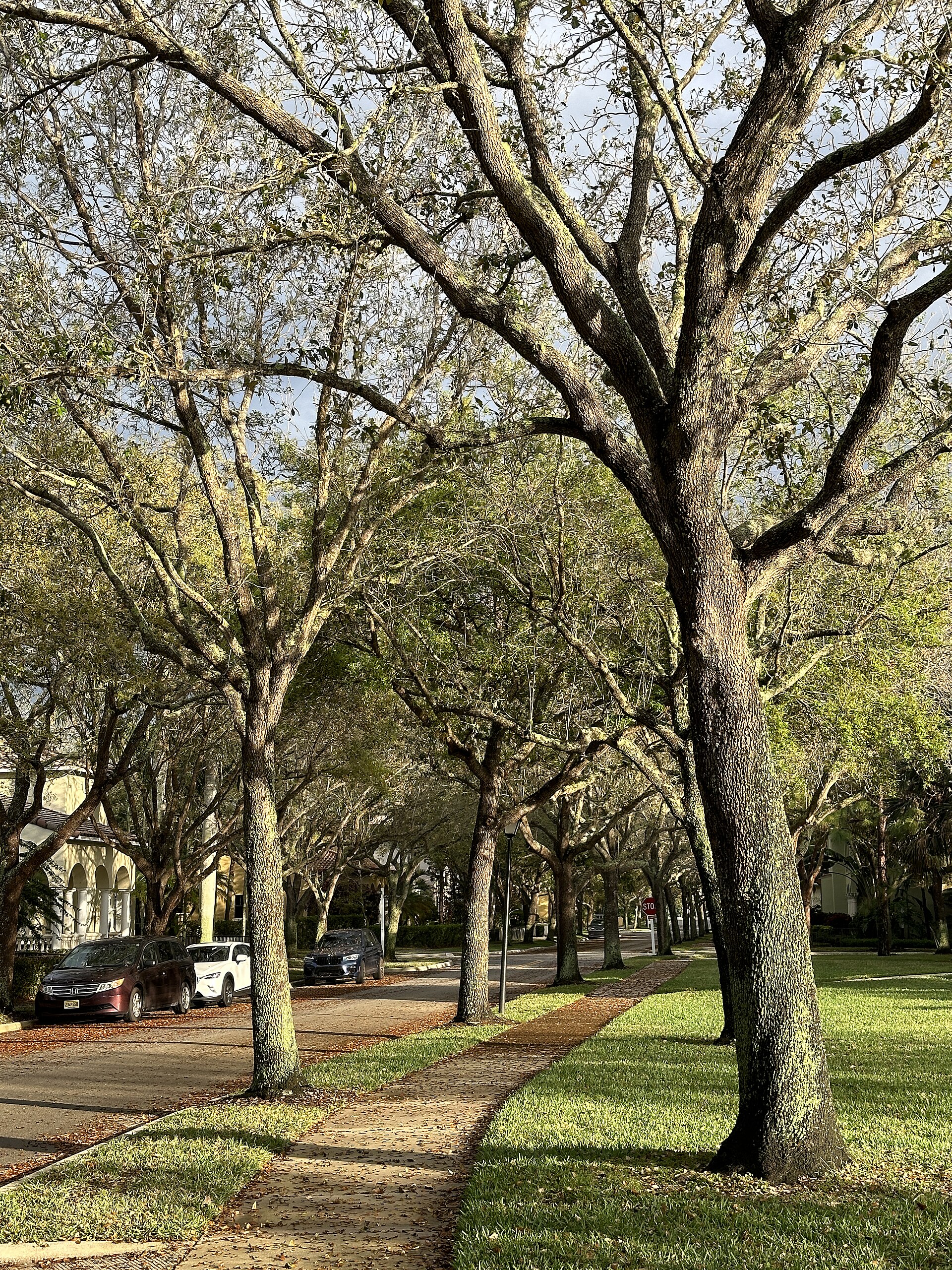
Image: GrammarObsessed – CC BY-SA 4.0/Wikimedia Commons