An April Freeze Thinned Out Douglas Firs at Pennsylvania Christmas Tree Farms, and One Grower Has No Trees Over 8 Feet This Year
Doug Banker, who manages Kuhn’s Tree Farm in Boalsburg, says the farm has no trees over 8 feet this year and advises customers who want something taller to shop early, according to the Altoona Mirror. He is one of several central Pennsylvania growers who described the season this month, and the April freeze came up at more than one farm. Douglas and Concolor firs took the worst of it, while the overall supply picture across the industry looks sound.
What the April freeze did to the firs
Penn State Extension’s weekly scouting reports tracked the cold as it arrived. A report covering April 16 to 23 described a strong cold front that followed a warm spell reaching the 80s and low 90s in southeastern Pennsylvania. Temperatures dropped 40 to 50 degrees in some places, with overnight lows in the mid-20s to 30s in colder pockets.
The timing mattered because Douglas fir and Fraser fir had pushed out tender new growth early. The report said low-lying and sheltered spots, where cold air settles, carried the highest risk of needle distortion and uneven development.
A week later, the April 30 report called the injury “limited and inconsistent.” Douglas fir showed the most noticeable damage, with Concolor fir also hurt. In a York County sample of 120 branch tips on 12 trees, damage averaged about 20 percent, with wide differences from tree to tree. Elsewhere it usually touched 10 to 20 percent or fewer of the growing tips. Northern Pennsylvania saw little damage because most buds had not broken yet.
The same freeze was far harsher on fruit. Penn State’s agricultural sciences news office reported extension estimates of 70 to 90 percent losses for apples and 90 to 100 percent for peaches, and noted that nurseries and Christmas tree farms were also damaged.
Which farms reported damage
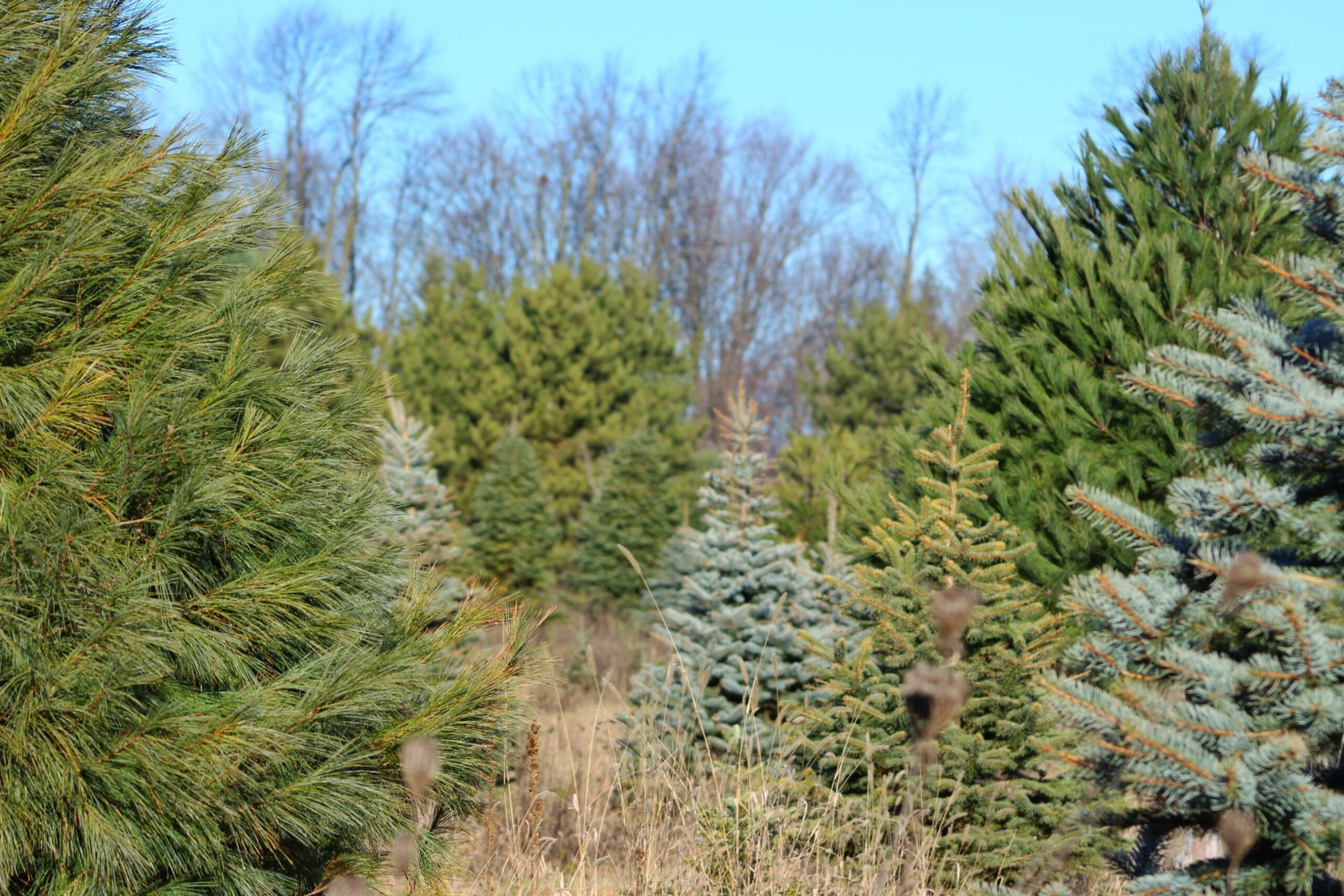
The Mirror’s rounds of local growers put names to the pattern. Mark Kline of Kline’s Tree Farm in Carrolltown reported frost damage to Douglas and Concolor firs, though not across the whole crop. His farm also grows Fraser fir, blue spruce, Scotch pine and white pine, and sales begin Black Friday, Nov. 27.
Rick Koontz, who owns Sellers Tree Farm near Bedford, said he has plenty of trees but fewer Douglas firs because of frost. His Fraser firs were not affected, and sales begin Nov. 14.
At Tuckaway Tree Farm in Petersburg, co-owner Ashley Latta said most of the affected trees have recovered, and that the farm has its largest selection ever. Canaan fir is the farm’s most popular choice, alongside Concolor and Douglas firs and some Fraser-balsam and Korean-balsam crosses. Opening day is Saturday, Nov. 21, running 9 a.m. to 4 p.m. daily through Dec. 6, except Thanksgiving Day.
Evelyn Bookhammer, co-owner of JB Tree Farm in Alexandria, said more tree blocks have reached cutting size this year. That farm grows Douglas, Fraser, Intermediate and Concolor firs, blue and Engelmann spruce and a few balsams, and opens Nov. 27.
Eight feet and the long wait for a tall tree
Banker said Fraser is the top seller at Kuhn’s, which plants 4,000 trees each year, and that sales start the weekend before Thanksgiving. The farm’s lack of trees over 8 feet this year is the detail that shoppers with high ceilings will notice first. The Mirror does not tie it to the freeze, and the farm did not give a reason in the article.
Height is a matter of years, not one season. Penn State Extension’s Christmas tree page says trees mature over an average of eight years, with most varieties reaching a harvestable 5 to 7 feet in about that time. Pennsylvania has roughly 1,400 tree farms producing about 1 million cut trees a year, according to the same page. A tree that is short of 8 feet this November was planted well before this spring’s cold snap.
That timeline also explains why a frost that burns new shoots does not necessarily end a tree’s sale prospects. Penn State’s May 7 report told growers to revisit damaged blocks several days later and check whether new growth resumes normally or stays stalled, since symptoms take time to show. It also warned that frost-damaged tips can be mistaken for midge injury or fungal blight.
Supply and prices heading into the season
Nationally, the picture the growers described matches the industry’s own numbers. The Real Christmas Tree Board’s 2026 media briefing guide says 85 percent of surveyed wholesale growers rated this year’s supply as strong or very strong. It also says 91 percent do not plan to raise wholesale prices, up from 84 percent last year, with growers absorbing higher input costs. The grower figures come from an August 2026 survey of 47 wholesale growers, and the board notes that retailers, not growers, set the price on the lot.
The guide adds that real trees take about 8 to 10 years to grow, and that regional trouble such as localized heat or drought typically does not move the overall market. A freeze that thinned Douglas firs on a handful of Pennsylvania farms fits that description.
Picking and keeping a tree from a freeze year
Latta’s advice in the Mirror is simple. Make a fresh cut across the trunk if needed, get the tree into water promptly, check the water level every day and keep it away from direct heat. Banker’s advice for anyone who wants a taller tree is to shop early.
Shoppers who trim the lower branches to fit a stand can put the cuttings to use. The same evergreen clippings work for a door wreath, as this guide to building one from yard evergreens explains.
This article was produced with AI assistance and edited for accuracy against the sources linked above.
Image: David Whelan – CC0/Wikimedia Commons