Spotted Lanternflies Are Expected in at Least 170 Massachusetts Towns by Year’s End. The State Wants Homeowners Scraping Egg Masses Once the Leaves Drop.
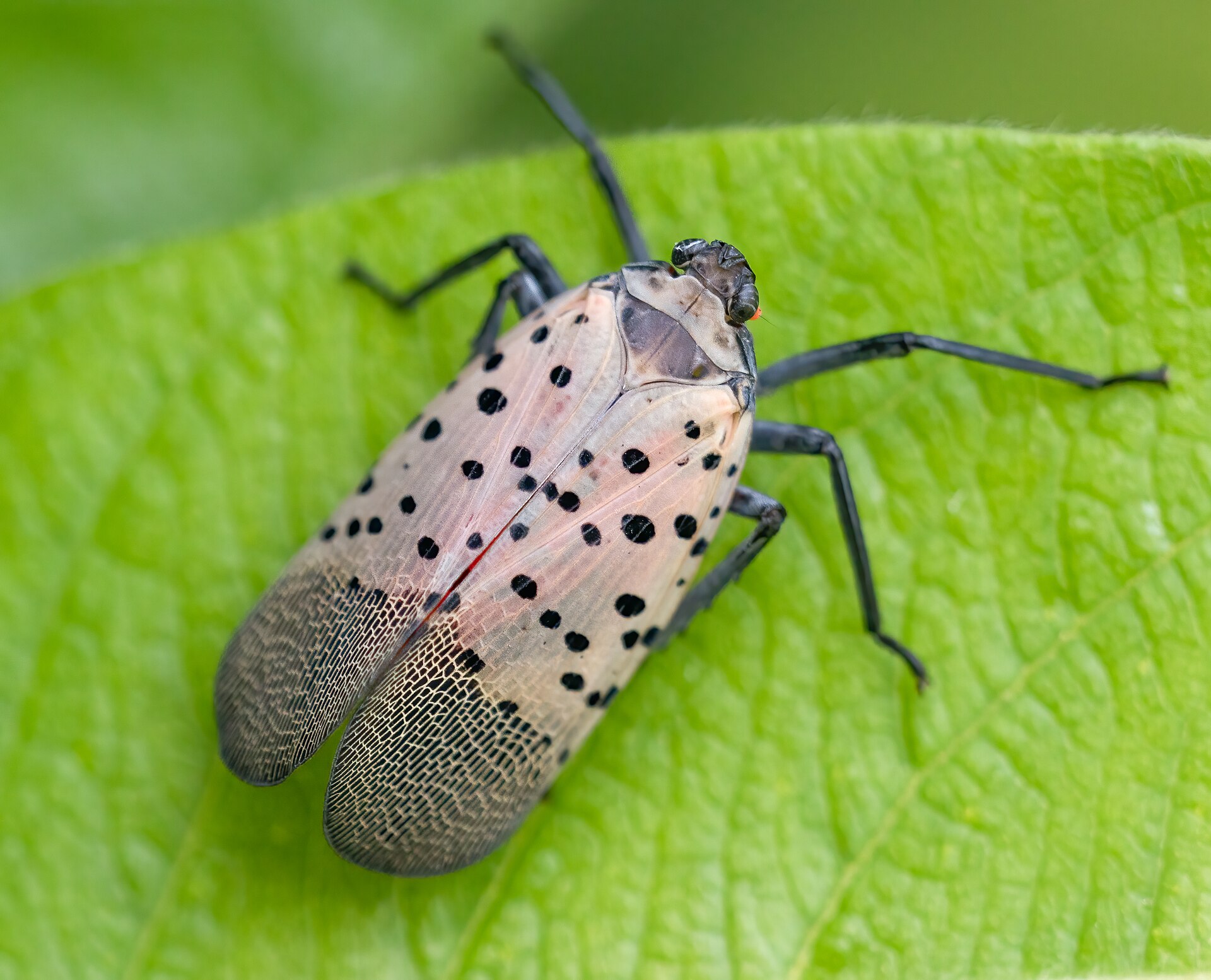
Spotted lanternflies are expected in at least 170 Massachusetts cities and towns by the end of the year, up from under 100 last season. That forecast comes from Jennifer Forman Orth, an environmental biologist with the Massachusetts Department of Agricultural Resources, who spoke to The Huntington News for a report published Nov. 23. Her advice for homeowners is just as specific: once the leaves come off the trees, scrape the egg masses off anything on the property and smash the eggs.
Forman Orth called scraping “probably the best” way for residents to cut the number of lanternflies next season. The state’s own egg mass scraping, its largest effort against the insect, keeps going through the winter, according to the same report.
The jump has been fast. This fall the insect turned up on the Virginia creeper in a Belmont gardener’s own back garden, and Greenfield asked residents to check trees, grapevines and car wheel wells after it reached that city.
From One Bug in Fitchburg to 50 on a Single Tree
Massachusetts confirmed its first established population in Fitchburg, in Worcester County, in September 2021, when the state announced a small breeding colony there, as UMass Amherst’s Center for Agriculture, Food and the Environment reported at the time. The insect had entered the United States in 2014 on a shipment from South Korea to a Pennsylvania business and spread across the Mid-Atlantic before reaching the state, according to The Huntington News.
Forman Orth told The Huntington News that the reports reaching her office have changed. Residents used to write in about seeing a single lanternfly. Now they send photos showing “like 50 lanternflies on a tree.” The department tracks confirmed towns on its public spotted lanternfly dashboard, and residents who find the insect in a town not yet on that map are asked to report it.
Newton is one of the newer arrivals. In a Nov. 18 column for the Newton Beacon, Boston University plant ecologist Richard Primack wrote that residents had logged 67 sightings on the iNaturalist app across the city. He said he expects a full outbreak there in 2027.
What an Egg Mass Looks Like on a Yard Tree, Fence or Patio Chair
The egg masses are easy to miss because they look like dirt. UMass Extension’s fact sheet describes rows of brown, seed-like eggs covered in a waxy coating that starts out white and turns gray-brown. Older masses look gray and cracked, like dried mud. Each one holds about 30 to 50 eggs, and Pennsylvania researchers believe each female lays at least two masses a season.
Females lay them on tree bark, but also on almost any smooth surface. UMass Extension lists bricks, stone, lawn furniture, RVs, play structures, gazebos and fencing. It notes that the masses on residential items carry the greatest risk of spreading the insect, because those are the things that get moved. The state’s Massachusetts Introduced Pests Outreach Project fact sheet says the insect overwinters as a gray egg mass that “resembles mud” on any smooth, flat surface.
Egg laying begins in September and can run into late November or early December, according to UMass Extension. The eggs then sit through the winter and hatch in May. That is why the bare-branch weeks after leaf drop matter: the masses that are on a tree or fence now are the ones that would hatch into next spring’s nymphs.
Which Yard Plants to Check First
Tree of heaven is the insect’s main host, and UMass Extension says adults gather on its trunks to feed and mate in the fall before scattering to lay eggs almost anywhere. The Massachusetts fact sheet lists other preferred hosts that are common in home yards: birch, black walnut, grapes, maple, rose, staghorn sumac and willow. It also names apple and crabapple, highbush blueberry, hops, lilac, mulberry, stone fruit, sycamore and Virginia creeper among the plants the insect has been found on.
Grapevines are the biggest agricultural concern, The Huntington News reported. Holly Shugart of Penn State told the paper that the insects feed on grapevine sugars and can kill the vine. In Newton, Primack wrote that one Newton Centre neighbor finds new lanternflies on a grapevine every morning.
Healthy, established shade trees are a different story. Newton Parks and Recreation Commissioner Marc Welch said the insects generally don’t kill them, Primack wrote, though heavy feeding can add stress to trees that are already weak. The bigger nuisance in a yard is the sticky honeydew the insects leave behind, which coats decks and furniture and grows sooty mold.
How to Scrape and Destroy Them
The method is simple. The University of Rhode Island’s Biocontrol Lab recommends crushing the masses to kill the eggs, or using a hard, flat edge to scrape them into a container of rubbing alcohol or hand sanitizer. URI entomologist Lisa Tewksbury, who directs the lab, said managing the eggs is the lab’s best bet against the insect, because every mass destroyed means fewer nymphs and adults feeding in spring and summer.
URI describes the masses as about an inch long and usually found on bark, though they also show up on cars, fence posts and outdoor furniture. The lab warns that spongy moth egg masses look similar but are tan. Squashing one of those by mistake does no harm.
For trees where masses sit too high or too thick to scrape, URI says horticultural oil can be applied to the egg masses from February through April, or a pest management professional can be hired.
What Not to Bother With
Primack advised against spraying insecticide, which he wrote is unlikely to help and can kill beneficial insects. He also warned about sticky tape wrapped around trunks: one Beacon Street homeowner’s tape caught hundreds of bees, flies and moths. He suggested lampshade-style traps around trunks during egg-laying season instead, and said checking cars before leaving town and not moving firewood or plants are the easiest ways to avoid carrying eggs to a new place.
UMass Extension also advises against preventive treatment in towns outside the areas marked on the state’s map. Residents who think they have found the insect in a new town can report it to the Department of Agricultural Resources, which uses those reports to add towns to its count before the next hatch in May.
This article was produced with AI assistance and edited for accuracy against the sources linked above.
Image: Rhododendrites – CC BY-SA 4.0/Wikimedia Commons