A Tree Service Crew Jumped a Homeowner’s Fence to Dump Debris in His Trash Bins. Then the Owner Claimed to Be a Police Officer.
Ten minutes after a homeowner told a tree-cutting company he would call the police if its workers came back, the company’s owner phoned him and, by the homeowner’s account, said he was a police officer and that the authorities would not do anything. The call capped a bad day in the homeowner’s garden, where a crew had allegedly jumped the fence from a neighbor’s yard to empty tree debris into his trash bins. The story was republished by Yahoo News on November 13, 2026 from the Cheezburger network, in a piece by Jesse Kessenheimer.
The homeowner and the company are not named, and the article does not say what city or state it happened in. Everything below comes from the homeowner’s telling as relayed by that write-up.
A Full Trash Can on the Wrong Side of the Fence
The homeowner was watering his garden when he spotted a worker about 10 feet away, on his side of the fence, carrying a full trash can. The yard is a shaded, wooded one along a shared fence line, and the workers belonged to a tree-removal service hired by a neighbor with whom he generally gets along.
The write-up describes the crew as “hopping the fence and galloping over his property” to get rid of the debris, a phrase from the author rather than the homeowner. He told the worker to leave, and the worker left.
The Phone Call With the Company Owner
The homeowner then called the company. He says the owner answered, got “extremely defensive” and referred to his property as “the woods.”
The homeowner told the owner that if he saw the workers on his property again, he would call the police. About ten minutes later the owner called back. In the homeowner’s telling, the owner said he was a cop and that the police “won’t do anything.” The owner then asked him to go down and clean up the debris himself. The homeowner declined, saying he was upset enough to consider calling the police anyway.
The claim that the owner is a police officer is unverified. The article does not confirm it, and it does not say whether the homeowner filed a report. It suggests the whole thing could have ended with an apology from the company.
What Counts as Illegal Dumping
The Yahoo headline refers to a $5,000 fine, but the write-up describes a possible penalty of $1,000 to $5,000 and not one that has been imposed. The figure comes from a commenter, the original poster, who said a neighbor whose husband is a police officer put it at $1,000 to $5,000 “around here.” Another commenter guessed at least $500. Those are unverified estimates, and the right number depends on local law.
Federal guidance on the subject is broad. An EPA Region 5 illegal dumping prevention guide defines illegal dumping as people disposing of waste in unauthorized locations, often to avoid disposal fees or because proper disposal is hard to reach. It lists construction, demolition, remodeling, roofing and landscaping contractors among the people who do it.
The same guide says local ordinances can bring fines, jail, vehicle impoundment, cleanup cost recovery, liens, license revocation or community service. Its examples show how much the numbers vary: Monroe County, Indiana, issues citations of up to $250 when the violator can be identified, and in Indianapolis, property owners who receive a notice must clean up dumped trash or file an affidavit within 10 days, or the city hires a cleanup and bills the owner.
For anyone who finds debris in a bin, the guide points to reporting channels such as 311, online reporting sites and crime stoppers tip lines, and to documentation like GPS-tagged photos and video. It also advises checking that video evidence would be admissible before relying on it.
Questions to Settle Before a Crew Arrives
A fence-hopping crew raises a question that applies to any yard with big trees: who is responsible for the debris, and who is responsible for the workers? University extension guides on hiring tree care companies do not address a fence-hopping dispute, but they cover the basics that protect a property owner.
A University of Illinois Extension guide by horticulture educator Sarah Vogel recommends asking for a contract if one is not offered, since a contract “holds both parties accountable in the event of miscommunication.” It also says to agree on what tasks will be performed and when, to ask about costs and payment terms, and to request proof of insurance before work begins. It describes liability insurance as covering damage to the property and workers’ compensation as covering injuries to employees.
A University of Georgia Extension circular, “Hiring a Tree Care Service,” by Keith Mickler, Jule-Lynne Macie, Timothy Daly and Ellen Bauske, speaks to the cleanup question directly. “The contract should include the responsibility for cleanup and disposal of tree wood residue,” it says. The same circular advises asking for certificates of insurance, including proof of liability for personal and property damage and proof of workers’ compensation, and getting written estimates from more than one company. It warns that a property owner could be held financially responsible if an uninsured worker is hurt on the property or damages a neighbor’s property.
A West Virginia University Extension page on hiring a certified arborist adds that, without insurance, “financial liability could fall back on the homeowner,” and suggests asking for references from recently completed jobs.
Where the debris goes is the point where this dispute began, and only the Georgia circular puts it in writing: cleanup belongs in the contract. A neighbor’s contractor can affect the next yard in other ways, too, as in a separate story about a neighbor’s workers sent to trim an overhanging tree.
For the homeowner in this story, the matter appeared unresolved when the article was published. The company owner had asked him to clean up the debris himself, and the homeowner had declined.
This article was produced with AI assistance and edited for accuracy against the sources linked above.
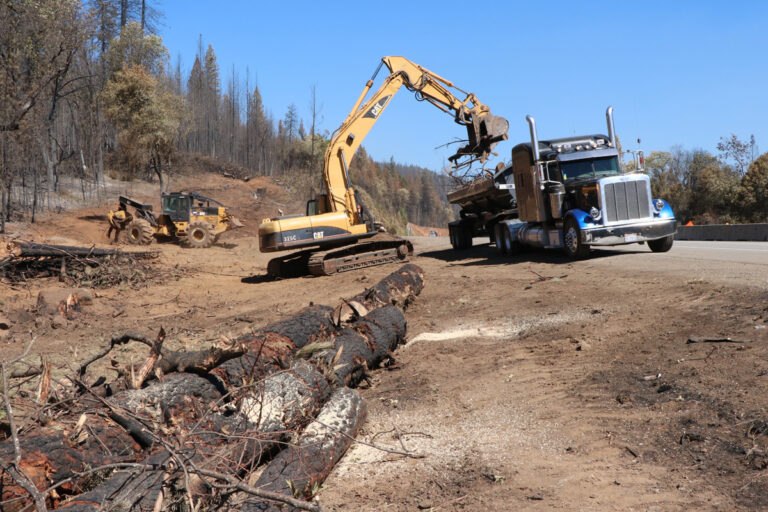
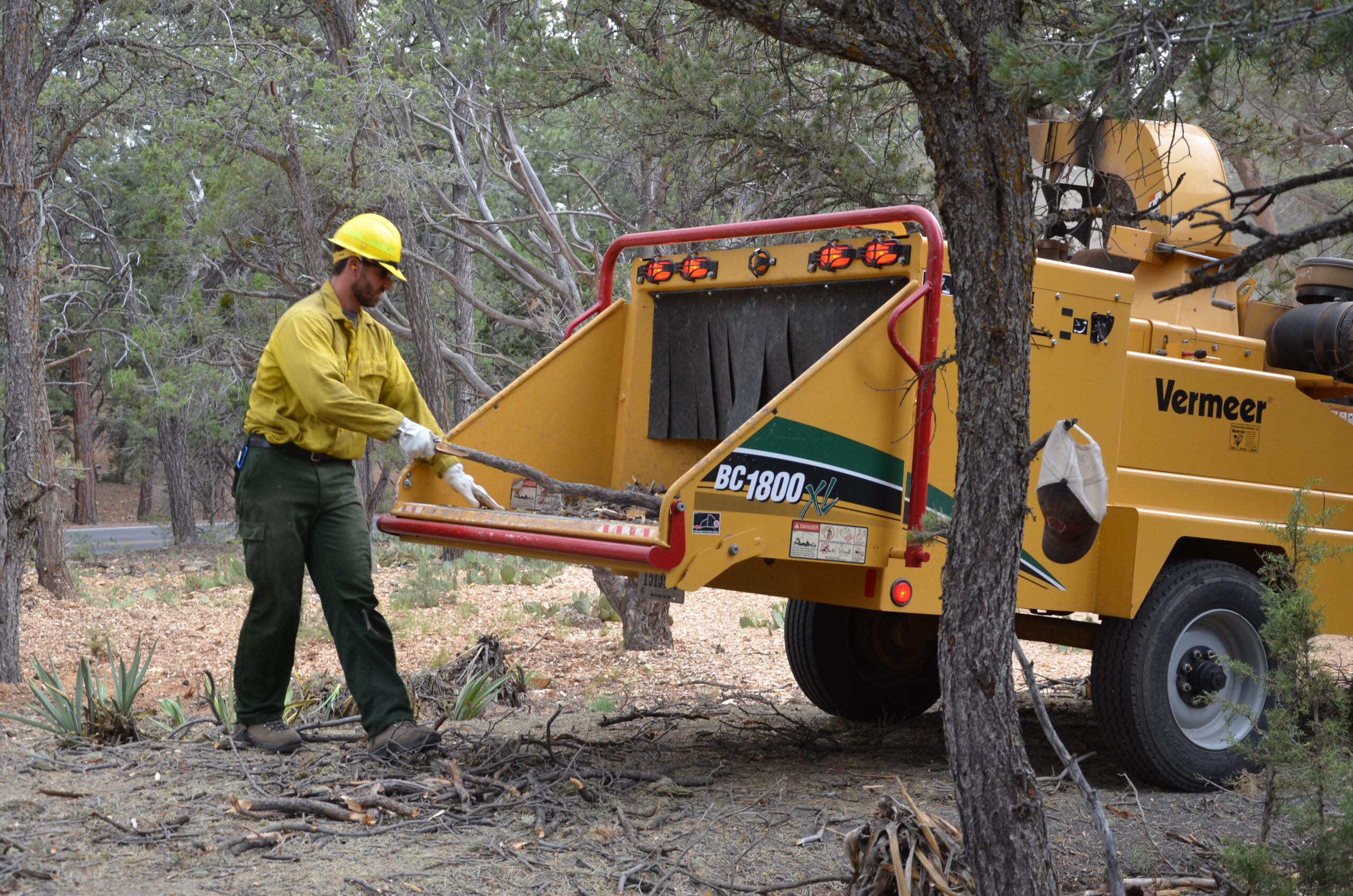
Image: “ASBandFireManagementTreeClearing 0148 (28741477610)” by Grand Canyon National Park is licensed under CC BY 2.0. To view a copy of this license, visit https://creativecommons.org/licenses/by/2.0/.