Heather Mehling Fell Down an Embankment Trimming the Overgrowth Beside Her Akron Driveway Herself. Now She’s Hired a Lawyer, and Summit County Won’t Comment.
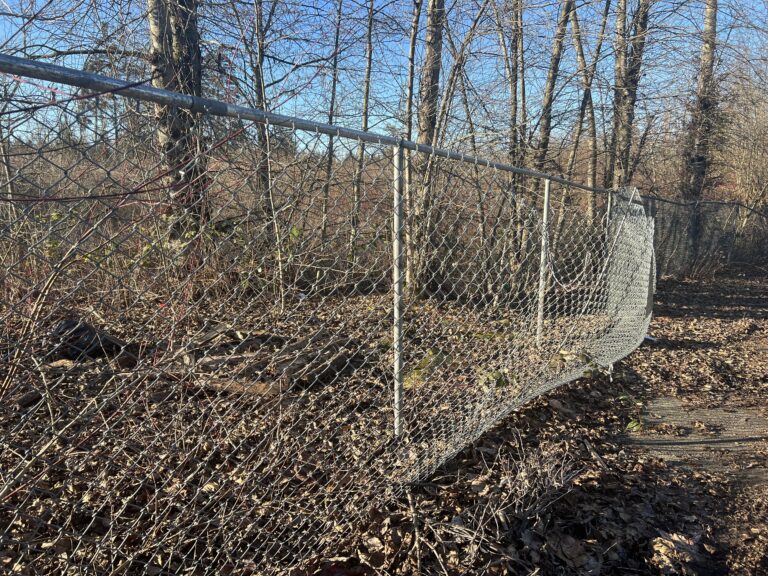
Every time Heather Mehling pulls out of her driveway onto Killian Road in Akron, she inches forward and hopes. The weeds and brush on the strip of county land beside her home grow tall enough to hide oncoming cars, and the road is busy, and a school bus route.
Two years ago she tried to fix it herself. She fell down a steep embankment into the ditch beside the road and was hurt. Now she has hired a lawyer.
Thirteen Years of Calls About One Strip of Brush
Mehling has lived on Killian Road for 13 years and has reported the overgrowth to the county and the Summit County Engineer’s office for years, Cleveland 19’s Katharine Huntley reported. The land sits in a Summit County right of way next to her house.
She told the station she is terrified of pulling out and getting T-boned. Her family ends up creeping closer and closer to the road before they can see, she said.
The fall happened while she was trimming the bushes and weeds on her own. She landed in the ditch next to the road with traffic passing and was injured.
Three Mowings and One Real Trim
County crews mowed the area three times this year, Mehling said, and it did not solve the problem. On Sept. 9, crews came back and trimmed the whole area by hand. That opened the sightline enough for the family to see when exiting the driveway.
She calls that a temporary fix. Two trees on the strip are also leaning toward the road, she said, and she wants the county to clear the right of way properly before someone is seriously hurt. She describes her request as proactive public safety, not a complaint after the fact.
The Summit County Engineer’s office declined to comment, citing possible litigation.
Who Is Supposed to Cut Roadside Weeds in Ohio
Ohio law puts the job on road authorities. Under Ohio Revised Code 5579.04, county commissioners, township trustees and municipal street commissioners must destroy brush, briers, burrs, vines and noxious weeds within the limits of the roads they control. The law sets cutting windows of June 1 to 20 and Aug. 1 to 20, plus Sept. 1 to 20 if needed, or whenever it is necessary to prevent or eliminate a safety hazard.
The Federal Highway Administration treats roadside growth as a safety issue for the same reason Mehling does: tall grass, weeds, brush and limbs can block a driver’s view of the road, approaching vehicles and pedestrians.
The agency’s vegetation control guide for local road crews says no shrubs or plants inside an intersection’s corner sight triangle should grow more than 3 feet high, and that tree limbs should be trimmed to at least 7 feet. A driver stopped to turn left onto a 45 mph two-lane road needs about 500 feet of clear view, by the guide’s table. It has no separate numbers for driveways.
A County Mowing Policy Other Residents Have Fought
Mehling is not the first Summit County resident to push the engineer’s office on roadside mowing. In 2024, Bath Township residents objected at a trustees meeting after Summit County Engineer Alan Brubaker stopped mowing along county roads, including areas next to deep ditches, ScripType reported.
A former trustee called the change “an unreasonable burden on the homeowner,” noting that many of those ditches need equipment a typical homeowner does not have and that elderly residents had not been considered.
Mehling’s own fall is the kind of accident those residents warned about. Other homeowners have taken on overgrowth outside their property lines too, like an Elkins Park man who trims his neighbors’ hedges off the sidewalk himself.
For now, the September trim is holding. Mehling wants the county to clear the strip for good before the brush grows back.
This article was produced with AI assistance and edited for accuracy against the sources linked above.
Image: “Roadside Weeds” by Tony Alter, CC BY 2.0, via Wikimedia Commons